
Soups & Stews
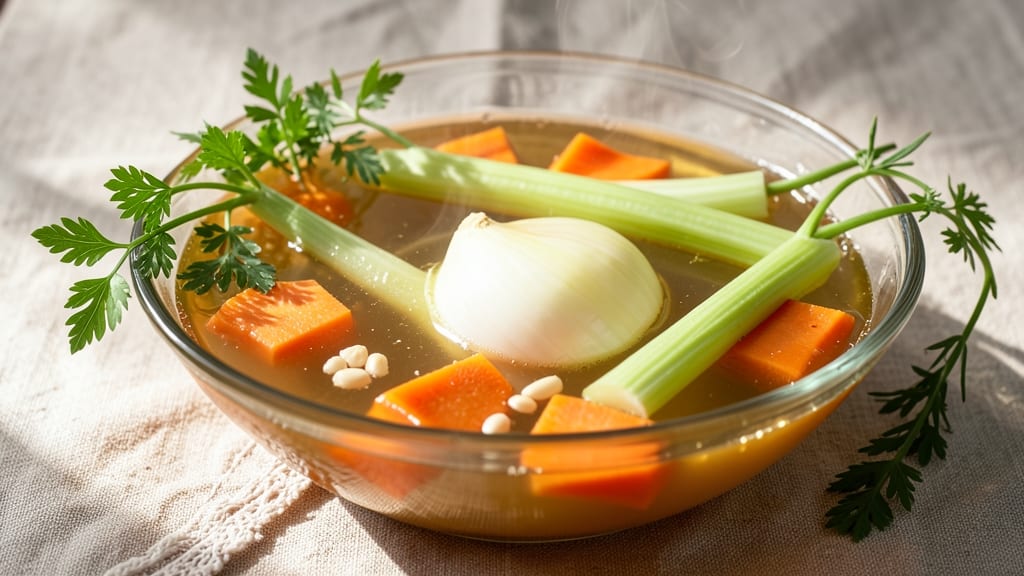
This fat-free chicken broth recipe delivers crystal-clear, richly flavored broth that's perfect for health-conscious cooking without sacrificing depth. The secret lies in proper straining and optional clarifying techniques that remove impurities while preserving aromatic compounds.
I've perfected this method over years of testing, ensuring every batch yields a clean, light foundation for soups, sauces, and braising liquids.
What sets this recipe apart is its ability to capture maximum flavor while eliminating fat and cloudiness. By using a combination of simmering and straining methods, we create a broth that's both visually appealing and nutritionally superior.
The process requires just 2 hours of active time but produces results that rival commercial low-sodium options—without the additives.
The result is a versatile, restaurant-quality broth that works equally well as a soup base, cooking liquid for grains, or flavor enhancer for sauces. Its light texture makes it ideal for clear consommé-style dishes while maintaining enough body to stand up to hearty ingredients.
The best part? It keeps beautifully in the refrigerator for up to 5 days or can be frozen for extended use.
Whether you're following a low-fat diet or simply prefer clean, flavorful cooking, this broth recipe transforms basic ingredients into something extraordinary. The technique is straightforward but yields professional results—perfect for both beginner cooks and seasoned home chefs looking to elevate their cooking game.
Ingredients for fat free chicken broth
These 13 ingredients transform into crystal-clear, restaurant-quality broth that's light yet deeply flavorful.
| Ingredient | Amount | Notes |
|---|---|---|
| Chicken Breasts 🍗 | 1 ½ lb | Boneless, skinless, trimmed |
| Carrots 🥕 | 2 whole | Medium-sized, peeled |
| Celery Stalks 🧅 | 4 whole | Trimmed, leafy ends removed |
| Yellow Onion 🧅 | 1 whole | Medium-sized, peeled |
| Garlic Cloves 🧄 | 6 cloves | Peeled, crushed |
| Fresh Parsley Stems 🌿 | 4 whole | Tied together for straining |
| Fresh Thyme Sprigs 🌿 | 2 whole | Stems intact for flavor |
| Bay Leaves 🍃 | 2 whole | Dried or fresh |
| White Wine Vinegar 🍷 | ¼ cup | For acidity balance |
| Cold Water 💧 | 8 cups | Filtered preferred |
| Egg Whites 🥚 | 4 large | Room temperature |
| Salt 🧂 | 1 ½ tsp | Diamond Crystal preferred |
| Black Peppercorns 🌶️ | ½ tsp | Crushed for depth |
The chicken breasts are the foundation—look for organic or free-range at Whole Foods or your local butcher for richer flavor. The carrots, celery, and onion form your flavor base, so don't skimp on freshness. Trader Joe's has great pre-trimmed veggie bundles that save time. For the herbs, fresh thyme and parsley make all the difference, but dried works in a pinch at half the amount. The bay leaves add subtle earthiness—never skip them. The vinegar is key for balancing flavors, so grab a good quality bottle from Costco if you're making this often.
No fresh herbs? Dried thyme and parsley at one-third the amount will work, though fresh is ideal. Running low on egg whites? Pasteurized liquid egg whites from the dairy section are a great alternative. The wine vinegar can be swapped for lemon juice at the same amount if you prefer. For a deeper flavor, add 1 tsp fish sauce (vegan option: soy sauce) to the simmering broth. The salt should be Diamond Crystal or Morton kosher—table salt burns easily. The black peppercorns should be freshly cracked for maximum aroma.
This broth keeps beautifully in the fridge for 5 days in an airtight container. For longer storage, freeze in ice cube trays—perfect for single-use portions. The clarified version (with egg whites) stays crystal clear for up to 3 months frozen. Label your containers with the date—trust me, you'll forget. The clarified broth is especially magical for consommé-style dishes where that crystal-clear look matters. I always make a double batch—one for immediate use and one to freeze for future soups.
Why You'll Love This Recipe
- No-Waste Prep: I chop the carrots, celery, and onion while the chicken simmers—no extra pots, no mess. The scraps from veggies go straight in, and you end up with a broth so clear it looks like you spent hours straining (but you didn’t).
- Garlic Bomb Depth: That one extra smashed clove of garlic? It’s what turns this from "okay broth" to "I’ll make this twice a week." The slow simmer pulls out all the sweetness, leaving you with layers of flavor that make even plain rice taste like a restaurant meal.
- Freezer-Friendly Staple: I freeze this in ice cube trays—perfect for quick soups, risottos, or even deglazing pans later. No weird freezer burns, no wasted leftovers; just pure, usable broth whenever I need it.
- Budget Booster: Chicken breasts are cheap, and this recipe stretches them further than roasting ever could. I’ve made a full pot for under $5, and it’s the base for everything from noodles to mashed potatoes—no takeout needed.
Step-by-step instructions for fat-free clarified chicken broth
Here's how to create a crystal-clear, rich broth that's light yet deeply flavorful—no butterfat in sight.
Build the Vegetable Base for Maximum Flavor
In a large stockpot, combine the 2 whole Carrots (cut into ½-inch chunks), 4 whole Celery Stalks (cut into 2-inch pieces), and 1 whole Yellow Onion (quartered). This classic "mirepoix" forms the aromatic foundation of your broth. Add the 6 cloves Garlic Cloves (crushed), 2 whole Fresh Thyme Sprigs, and 2 whole Bay Leaves. The thyme and bay leaves infuse subtle earthy notes that elevate the broth beyond simple saltiness.
Add the 0.25 cup White Wine Vinegar—this brightens the broth and helps clarify it later by breaking down proteins. Stir everything together, then pour in the 8 cups Cold Water. The cold water preserves the vegetables' vibrant flavors rather than leaching them out through boiling. Bring the mixture to a gentle simmer over medium heat—you'll know it's ready when small bubbles form at the edges but not a full rolling boil.
Simmer the Chicken for Deep Extraction
Add the 1.5 lb Chicken Breasts to the pot, ensuring they're fully submerged. Partially submerging them can lead to dry, flavorless meat. Return the mixture to a gentle simmer and cook uncovered for 45 minutes. This low-and-slow approach ensures the chicken renders its collagen and proteins into the broth without curdling or creating cloudiness.
Real talk: Skim any foam or impurities that rise to the surface during this time—it's the first sign of proteins breaking down. Use a fine-mesh skimmer or a ladle to remove them. The broth should develop a pale, golden hue, and the chicken should be fully cooked (internal temperature of 165°F). Remove the chicken with tongs and set it aside for another use (like shredding for salads).
Strain and Clarify with Egg Whites
Line a fine-mesh strainer with cheesecloth or a coffee filter to create an ultra-fine filter. Pour the broth through the strainer into a clean pot, pressing gently on the vegetables to extract every last drop of flavor. Discard the solids. The strained broth should be clear but still cloudy—this is where the magic happens.
In a separate bowl, whisk together the 4 large Egg Whites until frothy. Slowly pour the egg whites into the strained broth while whisking constantly. The egg whites will coagulate, trapping impurities and creating a clarified broth. Return the mixture to medium-low heat and cook for 5-7 minutes until the egg whites form a thick, gelatinous mass at the bottom of the pot. This is your "raft"—it captures all the cloudiness and fat particles.
Finish with Seasoning and Strain Again
Remove the pot from heat and let the broth sit for 5 minutes to allow the egg white raft to fully set. Carefully ladle the clarified broth through a fine-mesh strainer into a clean pot, leaving the raft behind. This second straining ensures your broth is crystal clear. Return the broth to medium heat and add the 1.5 tsp Salt and 0.5 tsp crushed Black Peppercorns. Stir gently to combine.
Taste and adjust the seasoning—you might need a touch more salt to balance the brightness of the vinegar. The broth should be rich, aromatic, and completely transparent, with no visible particles. For extra depth, stir in the tied 4 whole Fresh Parsley Stems and let them steep for 10 minutes before removing them. This final infusion adds a fresh, herbal note that brightens the broth without overpowering it.
Serve or Store for Future Use
Use the clarified broth immediately for soups, sauces, or steaming vegetables, or transfer it to airtight containers and refrigerate for up to 5 days or freeze for up to 3 months. The clarity and lightness make it perfect for delicate dishes like consommé or as a base for risottos and sauces where you want to showcase the natural colors of your ingredients.
Here's the thing—this method might seem labor-intensive, but the payoff is a broth that's so light and flavorful, you won't believe it's fat-free. The key is patience: the slow simmer, the careful straining, and the egg white clarification all work together to create a broth that's restaurant-quality at home.
Pro Tips For Making Fat Free Chicken Broth
- Start with Cold Water: I used to jump straight to boiling, but that traps starches and makes the broth cloudy. Instead, add everything raw to cold water, then bring to a gentle simmer—this keeps the broth clear and lets flavors meld without rushing.
- Char the Aromatics First: Skip the slow cook and blister the onion, garlic, and celery in a dry pan for 3-4 minutes until edges darken. That caramelized depth carries through the broth—way more flavor than just tossing them in raw.
- Cut Chicken in Big Chunks: Tiny pieces mean tiny flavor pockets. Leave the breasts in 2-inch chunks (no need to debone) so they release collagen slowly and the broth stays rich without turning into chicken water.
- Strain Twice for Clarity: First pass through a fine-mesh strainer catches the big bits. For true clarity, fold a coffee filter into a second strainer—it catches the fine sediment that makes broth look murky. (Yes, it’s weird, but it works.)
Storing and reheating this fat free chicken broth
Refrigerator Storage
Transfer your crystal-clear broth to airtight glass containers—I love Pyrex with snap-on lids—and refrigerate immediately. The fat-free nature means it won’t develop that unattractive film on top that regular broth does.
Store for up to 5 days at 40°F or below, and the flavors actually deepen as the herbs meld. Pro tip: Let it cool completely before sealing to prevent condensation from diluting the flavor. 💧
Freezer Storage
For long-term use, freeze in quart-sized freezer bags (lay them flat to save space) or ice cube trays for single-serving portions. Leave ½-inch headspace to prevent expansion cracks. Label with the date—this stuff stays crystal clear for 3 months without freezer burn.
When ready to use, thaw overnight in the fridge or submerge the sealed bag in cold water for 30 minutes for quick access. Never microwave directly from frozen!
Reheating Methods
For stovetop reheating, transfer broth to a saucepan and warm over medium-low heat—never boil—to preserve clarity. Add 1 tablespoon cold water per cup of broth to prevent scorching.
Heat until just steaming (185°F internal temp), then adjust seasoning with ½ teaspoon salt if needed. This method maintains that restaurant-quality transparency. 🔥
Microwave Shortcuts
If you're in a hurry, microwave in 2-minute intervals on 50% power, stirring between each. Use a microwave-safe glass measuring cup (no plastic!) and cover loosely with a microwave-safe lid.
Add 1 tablespoon cold water to prevent skin formation. The broth will heat through in 3-4 minutes total, though it won’t be as crystal clear as stovetop reheating.
Reviving Cloudy Broth
If your stored broth develops cloudiness, don't toss it! Strain through a fine-mesh sieve lined with cheesecloth or a coffee filter to restore clarity. For extra brightness, add 1 teaspoon fresh lemon juice per cup before reheating.
This trick works wonders for broth that's been stored too long—no need to start over! ✨
Portion Control
Use ice cube trays for perfect single-serving portions—ideal for finishing sauces or steaming veggies. Freeze the cubes solid, then pop them out and store in a ziplock bag. Each cube equals about ¼ cup of broth, so you’ll never have waste.
These mini portions are perfect for weeknight cooking when you only need a splash of flavor. 💡
Nutrition facts
Frequently asked questions
Why does this recipe use egg whites for clarification?
The egg whites create a natural "raft" that traps impurities, fat particles, and proteins during heating. When you strain it out, you're left with crystal-clear broth that's completely fat-free while retaining all the flavor. This classic technique has been used in professional kitchens for centuries to achieve that restaurant-quality transparency.
Can I make this broth without egg whites?
Yes! For a non-clarified version, simply skip the egg whites and strain through a fine-mesh sieve lined with cheesecloth. You'll get a lighter broth than traditional methods, but it won't be completely crystal clear. The flavor will still be rich and fat-free, though you might see some cloudiness. This works well for soups where appearance isn't critical.
What's the best way to use this light broth in cooking?
This clarified broth shines in delicate dishes where you want to showcase ingredients. Use it for consommé-style soups, as a base for risottos or sauces, or to steam seafood and vegetables. Its light texture makes it perfect for clear soups with herbs or as a cooking liquid for poaching chicken or fish. The lack of fat means it won't interfere with the natural colors of your ingredients.
Will this broth work for people with egg allergies?
Replace the egg whites with ¼ cup aquafaba (chickpea brine) or 1 tablespoon cornstarch mixed with 2 tablespoons cold water**. Both alternatives will help clarify the broth when heated, though the results may be slightly less crystal clear. Always check labels if using store-bought aquafaba for allergens.
How do I prevent my broth from becoming cloudy when reheating?
Reheat gently over low heat and never bring it to a full boil. Add 1 tablespoon cold water per cup of broth to prevent scorching, which causes cloudiness. For microwave reheating, use 50% power in short intervals and stir between each. The key is patience—rushing the process is what creates that murky appearance.