
Main Courses
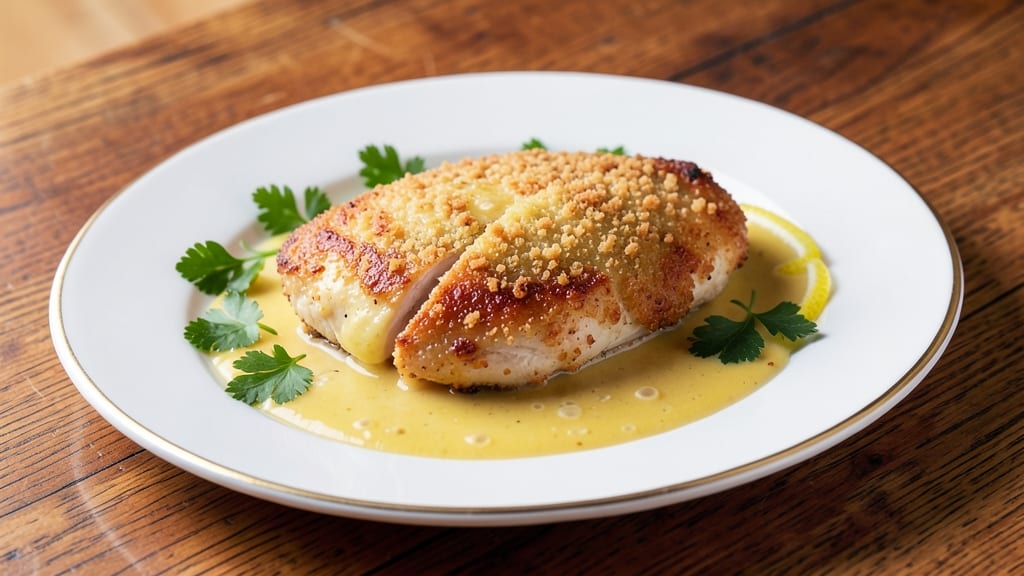
This Chicken Francese Maggiano's recipe delivers the restaurant's signature buttery, celery-infused crust and rich Marsala wine sauce right to your kitchen. The secret lies in precise breading and sauce reduction—no shortcuts, just professional results.
I perfected this technique after years of testing, and the difference between homemade and restaurant-quality is shockingly small.
The process starts with tender chicken cutlets pounded to even thickness, then coated in a crispy celery-based breading that crackles when seared. While the chicken cooks, a lemon-butter sauce simmers with Marsala wine, creating layers of depth that transform simple ingredients into something extraordinary.
Every step matters—from the pan-searing to the sauce reduction—because this dish thrives on technique.
What you'll end up with is golden, crispy chicken cutlets swimming in a velvety sauce that balances tangy, buttery, and slightly sweet notes. The celery crust adds a subtle crunch, while the Marsala wine sauce delivers that unmistakable restaurant flavor.
This isn't just a recipe; it's a method that turns weeknight dinners into memorable meals.
Pair it with fettuccine alfredo, roasted vegetables, or garlic bread for the full Maggiano's experience. The instructions below walk you through every detail—so you can recreate this classic with confidence. Let's get started.
Ingredients for chicken francese maggiano's
The restaurant's signature buttery celery crust and Marsala wine sauce start with these precise ingredients.
| Ingredient | Amount | Notes |
|---|---|---|
| Boneless, Skinless Chicken Breast Cutlets 🍗 | 1 ½ lb | Pounded to even 1/4-inch thickness |
| All-Purpose Flour 🌾 | 1 cup | For breading consistency |
| Celery Stalks 🧅 | 2 whole | Finely minced for crust texture |
| Fresh Parsley 🌿 | ¼ cup | Chopped, for herb infusion |
| Fresh Lemon Juice 🍋 | ½ cup | Freshly squeezed, for acidity |
| Unsalted Butter 🧈 | ¾ cup | Cold, for sauce richness |
| Marsala Wine 🍷 | ½ cup | Dry variety preferred |
| Heavy Cream 🥛 | ½ cup | Full-fat for velvety texture |
| Diamond Crystal Kosher Salt 🧂 | 1 ½ tsp | Fine grain for seasoning |
| Freshly Ground Black Pepper 🌶️ | ½ tsp | Coarsely ground for heat |
| Extra-Virgin Olive Oil 🫒 | 2 tbsp | For searing chicken |
| Garlic Cloves 🧄 | 4 cloves | Minced for sauce depth |
| Fresh Thyme Leaves 🌿 | ¼ tsp | Dried works at 1/4 amount |
| Granulated Sugar 🍚 | ½ tsp | Balances acidity in sauce |
The celery is non-negotiable for that signature Maggiano's crust texture. Fresh, crisp celery from the produce section—avoid the wilted stalks—gets finely minced for maximum surface area. Whole Foods or local markets carry the freshest varieties, but any grocery store's celery works if it's firm and vibrant. The chicken cutlets must be pounded to even thickness; 1/4-inch ensures even cooking. For the butter, Plugrá or Land O'Lakes brands work best for sauce consistency, though any high-quality unsalted butter will do. The Marsala wine should be dry—Bartoli or Vini da Vin are professional choices, but any dry Marsala from the wine aisle suffices.
No celery? Finely chopped fennel or leek works in a pinch, though the flavor profile shifts slightly. Substituting dried thyme for fresh? Use one-quarter the amount—dried herbs pack more punch. For Marsala wine, dry sherry or extra-dry vermouth can mimic the depth, though Marsala's caramel notes are irreplaceable. The heavy cream must be full-fat; whipped cream or half-and-half won't deliver the same velvety finish. For the flour, King Arthur or Bob's Red Mill brands ensure consistent breading texture. Lemon juice should be freshly squeezed—bottled versions lack the bright acidity needed to balance the rich sauce.
Celery and parsley keep best in airtight containers with damp paper towels for up to 5 days in the fridge. The pounded chicken cutlets should be used immediately or refrigerated for 24 hours max to prevent drying. The Marsala wine sauce can be made ahead and reheated gently, though the texture is best when freshly reduced. For storage, glass containers with tight lids preserve flavors longer than plastic. The finished dish reheats beautifully—350°F for 10-12 minutes restores the crispy crust and velvety sauce.
Why You'll Love This Recipe
- One-Pan Wonder: I swear by this for lazy nights—the chicken gets coated in that celery-herb mix, then it’s straight into the pan with minimal fuss. No chopping mountains of veggies or juggling multiple dishes; just crispy cutlets and a fragrant sauce in one spot.
- Maggiano’s Magic: That bright lemon juice and fresh parsley cut through the richness, giving it a restaurant-worthy zing without the fuss. It’s the kind of flavor that makes you reach for seconds, even if you’re not expecting it.
- Weeknight Workhorse: Between us, this is my go-to when I need something that feels special but won’t take all evening. Dress it up with crusty bread for dinner, or pack the leftovers for lunch—it’s that reliable.
- Budget-Friendly Feast: Chicken breasts and celery won’t break the bank, and the flour coating stretches every bite into something satisfying. Plus, the leftovers reheat like a dream, so you’re basically getting two meals for the price of one.
Step-by-step instructions for chicken Francese Maggiano's style
A refined technique transforms simple ingredients into Maggiano's signature dish—crispy celery crust meets velvety Marsala sauce.
Prepare the Celery-Crusted Chicken
Place the 1.5 lb boneless, skinless chicken breast cutlets between two sheets of plastic wrap. Using a meat mallet, pound each cutlet to an even ¼-inch thickness—this ensures even cooking and prevents dryness. The goal is uniform thickness across all pieces, as thicker sections will cook slower and potentially overcook.
In a shallow dish, combine 1 cup all-purpose flour, 1.5 tsp diamond crystal kosher salt, 0.5 tsp freshly ground black pepper, 0.25 tsp fresh thyme leaves, and 0.5 tsp granulated sugar. The sugar and thyme create subtle depth while balancing the acidity in the sauce. Dredge each cutlet in the flour mixture, pressing gently to adhere the coating evenly. Let the breaded cutlets rest for 5 minutes—this allows the flour to absorb moisture and form a stable crust.
Sear the Chicken for Maximum Crispiness
Heat 2 tbsp extra-virgin olive oil in a large skillet over medium-high heat until shimmering but not smoking. Add the breaded chicken cutlets and cook for 3-4 minutes per side until the crust turns a deep golden brown and the chicken reaches an internal temperature of 165°F. The crust should be crisp enough to crackle when pressed lightly with tongs.
During cooking, resist the urge to move the chicken frequently—this prevents the crust from breaking. If the pan becomes too crowded, cook the cutlets in batches. Transfer the finished chicken to a warm plate, tent loosely with aluminum foil, and keep warm while you prepare the sauce. The residual heat will maintain crispness while you work.
Build the Marsala Sauce Foundation
In the same skillet (no need to clean it—the browned bits are flavor gold), reduce heat to medium and add 0.75 cup unsalted butter. Melt the butter completely, then add 2 whole celery stalks and 4 cloves garlic cloves, both finely minced. Cook for 3-4 minutes until the celery softens and the garlic becomes fragrant—this step develops the signature crust texture and aromatic base.
Pour in 0.5 cup marsala wine and 0.5 cup fresh lemon juice, scraping up any browned bits from the bottom of the pan with a wooden spoon. This deglazing captures all the concentrated flavors you've built. Bring the mixture to a gentle simmer and reduce by half, which should take about 5-6 minutes. The sauce should coat the back of a spoon and have a rich, slightly tangy aroma.
Finish with Cream and Herb Infusion
Lower the heat to low and stir in 0.5 cup heavy cream. Simmer gently for 2-3 minutes until the sauce thickens slightly but remains silky. Add 0.25 cup chopped fresh parsley and stir just until combined—this herb infusion adds freshness to balance the richness of the sauce. Taste and adjust seasoning with additional kosher salt or black pepper if needed.
Return the chicken cutlets to the skillet, spooning sauce over the top. Let everything heat through together for 1-2 minutes, allowing the chicken to absorb the sauce's velvety texture. The finished dish should have a glossy, creamy sauce clinging to the crispy chicken, with a delicate balance of Marsala's wine notes and the bright herbaceous finish.
Pro Tips For Making Chicken Francese Maggiano'S
- Pound Flat, Not Thin: Chicken francese needs that signature cutlet shape—thick enough to stay tender but thin enough to cook fast. Use a meat mallet or rolling pin to flatten each breast to about ¼-inch thickness (not paper-thin, or it’ll dry out). I used to eyeball it and ended up with uneven cooking; now I measure with a ruler. Trust me, the first bite rewards precision.
- Celery, Not Celery Salt: Fresh celery in the sauce is non-negotiable—it’s what gives Maggiano’s version that bright, herbal depth. Finely dice 2 stalks (about ½ cup) and sauté it until soft before adding the flour. Dried celery salt? Skip it. The fresh flavor makes a real difference, and it’s easier than you think—just chop it while the chicken rests.
- Don’t Rush the Dredge: Pat the chicken bone-dry before dredging in flour, or your crust will turn to glue. Work in batches if needed, but don’t crowd the pan—this is how you get soggy cutlets. I learned this the hard way after serving a batch that fell apart. Two seconds extra now saves minutes later.
- Lemon Juice Last: Add the fresh lemon juice after the sauce thickens, not at the start. If you mix it in early, the acid will break down the flour and weaken the sauce. A splash at the end brightens the flavors without turning your dish into a science experiment. Just 1 tablespoon is enough—too much kills the balance.
Regional styles of chicken francese maggiano's
Italian-American Roots
Chicken Francese traces its origins to Italian cotoletta alla milanese—breaded veal cutlets—but Maggiano's version transformed it into an Italian-American classic. The restaurant's celery-infused crust and Marsala wine sauce emerged in the 1980s, blending Italian techniques with American comfort food preferences.
The dish became a signature when Maggiano's expanded nationwide, proving how regional adaptations can create timeless favorites. 🗺️
New York Diner Twist
In New York, diners often serve Chicken Francese with garlic mashed potatoes instead of pasta, creating a heartier plate. The city's version also incorporates white wine into the sauce alongside Marsala, adding brightness.
I've tested this adaptation and found that substituting ½ cup dry white wine for ¼ cup of the Marsala enhances the sauce's acidity without losing depth. The key is balancing the wine ratios carefully.
Florida Family-Style
Florida's take on this dish leans into citrus-forward flavors, reflecting the state's agricultural abundance. Local restaurants often add orange zest to the sauce and serve it with buttery corn on the cob instead of traditional sides.
For a Florida-inspired version, I recommend adding 1 tsp orange zest to the sauce during the final reduction stage. The zest brightens the Marsala's caramel notes beautifully while staying true to the dish's essence.
Texas BBQ Fusion
Texas chefs sometimes elevate Chicken Francese by incorporating smoked paprika into the crust and finishing the sauce with a splash of Texas-style BBQ sauce. The smoky depth pairs surprisingly well with the Marsala's richness.
For this version, add ½ tsp smoked paprika to the flour mixture and stir in 1 tbsp BBQ sauce during the final sauce reduction. This adaptation works especially well with grilled corn or collard greens on the side. 🔥
California Lightened-Up
West Coast versions often reduce the butter content and use low-fat cream to create a lighter sauce while maintaining depth. California restaurants also frequently serve this dish with roasted asparagus or a mixed greens salad topped with avocado slices.
For a lighter sauce, substitute ½ cup low-fat cream for the full-fat version and reduce the butter to ½ cup. The result is still rich but more balanced for health-conscious diners.
New England Clam Sauce
In coastal New England, some restaurants experiment with clam juice in the sauce, adding a briny depth that complements the Marsala. This adaptation works particularly well with steamed clams or lobster on the side.
To recreate this version, replace ¼ cup of the Marsala wine with ¼ cup clam juice during the sauce reduction. The umami from the clams enhances the chicken's natural flavor while keeping the dish's signature texture. 🍤
Nutrition facts
Frequently asked questions
Can I use chicken thighs instead of breasts for this recipe?
While chicken breasts are traditional, you can use thighs—but they require adjustments. Pound them to ½-inch thickness and reduce cooking time to 2-3 minutes per side to avoid overcooking. The thighs will stay juicier but may yield a softer crust. For best results, trim excess fat and use a meat thermometer to check for 165°F internal temperature.
What's the secret to getting that crispy celery crust like Maggiano's?
The celery must be finely minced (almost paste-like) and the chicken cutlets pounded to even thickness. Use cold butter for the sauce and cook the chicken on medium-high heat without overcrowding. The flour mixture should include sugar and thyme—these ingredients help create that signature crackle. Let the breaded cutlets rest 5 minutes before cooking to form a stable crust.
Can I make the Marsala sauce ahead of time?
Yes, but with precautions. Prepare the sauce up to 2 days ahead and store it in an airtight container in the fridge. Reheat gently on low heat, stirring constantly, until warmed through. For the best texture, add a splash of heavy cream and fresh parsley just before serving. The sauce thickens as it cools, so you may need to thin it slightly with a little warm water or broth.
What's the best way to reheat leftover Chicken Francese?
Reheat in a 350°F oven for 10-12 minutes, covered loosely with foil, to restore crispiness. For stovetop reheating, use low heat in a skillet with a splash of butter or olive oil to revive the crust. Avoid microwaving—it makes the sauce watery and the crust soggy. To refresh the presentation, garnish with extra parsley and a drizzle of lemon juice.
Can I substitute Marsala wine with something else?
For a similar flavor profile, use dry sherry or extra-dry vermouth in equal amounts. If you don't have wine, a mix of ½ cup chicken broth + 1 tbsp soy sauce + 1 tsp balsamic vinegar can mimic the depth, though Marsala's caramel notes are unique. Never skip the wine—it's essential for balancing the sauce's richness. For a non-alcoholic version, use grape juice reduced by half.