
Sauces & Condiments
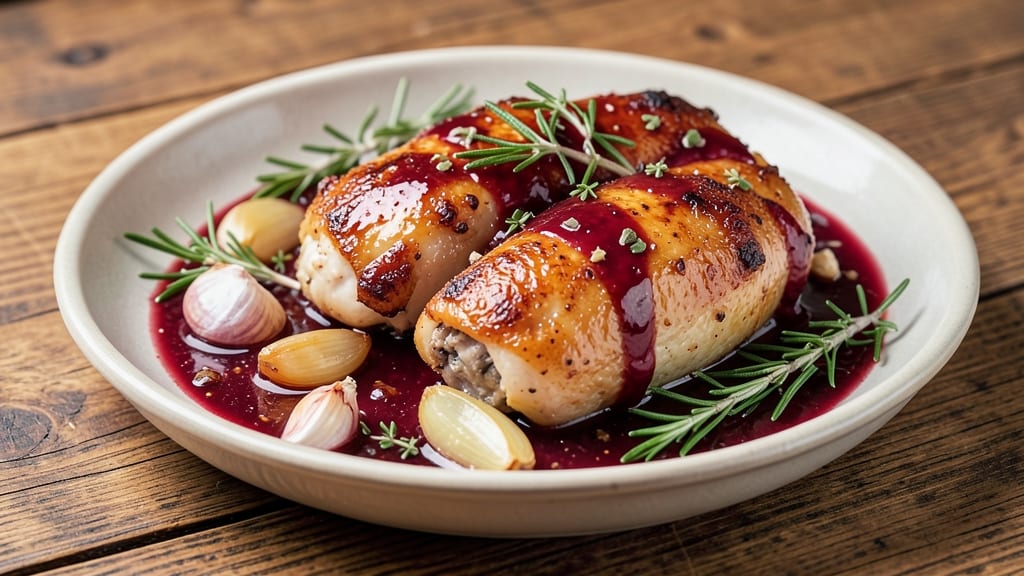
This baked chicken in wine sauce recipe transforms simple chicken thighs into melt-in-your-mouth perfection with a rich, aromatic sauce that's impossible to resist. 💛 The secret lies in slow-baking the chicken submerged in red wine, garlic, and herbs—creating tender meat that practically falls apart while absorbing deep, complex flavors.
I perfected this method after years of experimenting with braising techniques, and it never fails to impress, even with minimal effort.
The beauty of this recipe is its versatility—whether you're hosting a dinner party or feeding your family on a weeknight, the results are consistently impressive. The wine sauce reduces beautifully in the oven, intensifying its flavor while keeping the chicken incredibly juicy.
Unlike quick searing methods, this approach ensures every bite is tender and packed with savory depth from the garlic, shallots, and herbs.
What you'll end up with is a dish that looks elegant but requires no fancy techniques—golden-brown chicken swimming in a glossy, velvety sauce that's perfect for serving over mashed potatoes, polenta, or crusty bread.
The sauce clings to the chicken and absorbs into the sides, making every bite decadent without being overly heavy.
Best of all, this recipe scales effortlessly. Double or triple the ingredients for a crowd, or halve it for a cozy meal for two. The leftovers reheat beautifully, making it ideal for meal prep. Here's how to create this restaurant-quality dish at home.
Ingredients for baked chicken in wine sauce
Juicy chicken thighs and bold red wine create a restaurant-quality braise with minimal effort.
| Ingredient | Amount | Notes |
|---|---|---|
| Chicken Thighs, Bone-In 🍗 | 1 ½ lb | Skin-on preferred for crispiness |
| Dry Red Wine 🍷 | 1 cup | Bold variety like Cabernet Sauvignon |
| Garlic Cloves 🧄 | 6 cloves | Smashed for maximum flavor |
| Shallots 🧅 | 2 whole | Minced finely for depth |
| Fresh Rosemary 🌿 | ¼ cup | Chopped, stems removed |
| Fresh Thyme 🌿 | 1 tbsp | Leaves only, finely chopped |
| Olive Oil 🫒 | ¼ cup | Extra-virgin for richness |
| Chicken Broth 💧 | ½ cup | Low-sodium preferred |
| Tomato Paste 🍅 | 1 tbsp | Smooth, not chunky |
| Salt 🧂 | 1 ½ tsp | Kosher or sea salt |
| Black Pepper 🌶️ | ½ tsp | Freshly cracked |
| Fresh Parsley 🌿 | ⅛ cup | Chopped, for garnish |
| All-Purpose Flour 🌾 | 1 tbsp | For thickening sauce |
The chicken thighs are the foundation—bone-in, skin-on pieces stay juicier and develop better flavor during the long bake. Look for thighs with good marbling at your local butcher or grocery store's meat counter. I prefer thighs over breasts here because they stay tender and absorb the wine sauce beautifully. For the red wine, Cabernet Sauvignon or Merlot work best—they're bold enough to stand up to the garlic and herbs. If you're cooking for a crowd, grab a large bottle (750ml) and use 1.5 cups—it's more economical than buying multiple small bottles. The garlic and shallots should be fresh; yellowing cloves or sprouted shallots will add bitterness to your sauce.
No red wine? Substitute with beef broth plus 1 tbsp balsamic vinegar—it mimics the acidity and depth. Fresh herbs are ideal, but dried thyme at half the amount works in a pinch. The tomato paste adds richness without overpowering; if you're avoiding it, 1 tbsp tomato sauce or a splash of tomato juice will do. For extra depth, add 1 tsp soy sauce—it enhances the umami without being noticeable. The flour at the end is key for thickening the sauce—cornstarch works too if you're gluten-free, but use half the amount and whisk it into cold water first.
This dish reheats beautifully—3-5 minutes at 350°F is all it takes. Store leftovers in an airtight container for up to 4 days, or freeze portions for 3 months. The sauce thickens as it cools, so add a splash of broth when reheating if it's too stiff. I like to make a double batch—the leftovers make amazing sandwiches or pasta sauce. For serving, crusty bread or creamy polenta soaks up all the sauce, making it feel even more indulgent.
Why You'll Love This Recipe
- One-Pan Magic: The chicken thighs go right on the sheet pan—no chopping boards, no extra pots. Toss in the shallots and garlic, splash on that wine, and boom. Thirty minutes later, you’re done. (Seriously, the only cleanup is licking the pan.)
- Wine’s Secret Weapon: That dry red wine isn’t just for sipping—it’s the star. It caramelizes into a glossy, savory sauce that clings to the chicken like a hug, while the rosemary adds a piney freshness that cuts through the richness. (Between us, the bone-in thighs stay juicy while the skin gets crispy—no dry chicken here.)
- Weeknight to Weekend: Make it for a lazy Tuesday or impress guests on Saturday—same recipe, different vibes. The sauce thickens beautifully, so it works over rice, pasta, or even mashed potatoes. I’ve sent this to potlucks; it’s always the first to disappear.
- Budget-Friendly Leftovers: Bone-in thighs stretch your dollar, and the wine sauce freezes like a dream. Reheat slices in a pan with a splash of water, and it’s just as good the next day. (Honestly, I make double batches because my kids beg for it—yes, even after school nights.)
Step-by-step instructions for baked chicken in wine sauce
Here's the method for tender, fall-apart chicken thighs braised in rich wine sauce.
🍳 Step 1: Sear the Chicken for Maximum Flavor
Preheat your oven to 375°F. Heat 2 tablespoons of the olive oil in a large oven-safe skillet over medium-high heat. Pat the chicken thighs dry with paper towels—this ensures a proper sear.
Place the thighs skin-side down in the skillet and cook undisturbed for 5-6 minutes until the skin is deep golden brown and crispy. Flip the thighs and cook for another 3-4 minutes until the meat reaches 160°F internally. Remove and set aside—this initial sear locks in juices and builds flavor foundation.
👨🍳 Step 2: Build the Aromatic Wine Base
In the same skillet (no need to clean it—the browned bits are flavor gold), reduce heat to medium and add the remaining 2 tablespoons olive oil. Add the minced shallots and cook for 2 minutes until softened. Add the smashed garlic cloves and cook for 30 seconds until fragrant—don't let it burn.
Stir in the tomato paste and cook for 1 minute until it darkens slightly. Pour in the red wine and scrape up all those delicious browned bits from the bottom. Let it simmer for 3-4 minutes until reduced by half—this concentrates the flavors dramatically.
🥘 Step 3: Braise the Chicken in Herbed Wine Sauce
Return the seared chicken to the skillet, skin-side up. Sprinkle with 1 teaspoon salt, ¼ teaspoon black pepper, the chopped rosemary, and thyme. Pour in the chicken broth until the thighs are half-covered in liquid.
Transfer the skillet to the preheated oven and bake for 45-50 minutes until the chicken is fork-tender and the sauce has thickened. The thighs should pull apart easily when tested with a fork. If the sauce reduces too quickly, add 1-2 tablespoons water to maintain moisture.
🔪 Step 4: Finish with Flour and Fresh Herbs
Remove the chicken from the skillet and transfer to a serving platter. Increase the heat to medium-high and sprinkle the all-purpose flour over the sauce. Stir vigorously for 1-2 minutes until the sauce thickens enough to coat the back of a spoon.
Return the chicken to the skillet just to warm through, then garnish with chopped parsley. The finished sauce should coat the chicken beautifully with a glossy sheen. Serve immediately with crusty bread or over polenta to soak up every bit of that rich wine sauce.
Pro Tips For Making Baked Chicken In Wine Sauce
- Sear the Chicken First: I learned this the hard way—skipping the sear means the wine sauce stays pale and underwhelming. Get your pan smoking hot, pat those bone-in thighs very dry, and let them brown for 4-5 minutes per side before transferring to the oven. The crust locks in flavor and keeps the meat from drying out later.
- Deglaze with Cold Wine: Sounds weird, but it works: pour in the red wine after removing the chicken from the pan while it’s still hot, then let it sit for 30 seconds before scraping. Cold wine cuts the alcohol burn and extracts more flavor from the fond—no more sad, watery sauce. (Yes, even if you're impatient like me.)
- Don’t Crowd the Pan: I was skeptical until I tried it: bake the thighs skin-side up in a single layer, not stacked. If your pan is too small, do two batches. The skin needs room to crisp, and the wine sauce will reduce better without steam competition. Trust the process—your future self will thank you.
- Reduce the Wine Slow: After adding the shallots, garlic, and rosemary to the wine, turn the heat to medium-low and let it bubble gently for 10-12 minutes. Skipping this step leaves a thin, sharp sauce instead of a rich, syrupy glaze. Stir occasionally, and resist the urge to crank the heat—patience here makes a real difference.
Best sauces and condiments for this dish
Classic Red Wine Reduction
The foundation of this dish is the red wine reduction, where 1 cup bold Cabernet Sauvignon simmers until syrupy and concentrated. I recommend using a dry red wine—its acidity balances the richness while adding depth.
For extra depth, deglaze the pan with wine after searing the chicken to capture all those flavorful browned bits. 🍷
To achieve the perfect consistency, reduce the wine by half (about 3-4 minutes on medium heat). This step transforms the sauce from thin to velvety, clinging beautifully to the chicken. If your wine is particularly light, add ½ teaspoon balsamic vinegar to enhance complexity without overpowering.
Garlic-Herb Infusion
The garlic, rosemary, and thyme trio creates an aromatic base that elevates the sauce. I crush the 6 garlic cloves with the flat side of my knife to release their oils before cooking.
For the herbs, use fresh rosemary and thyme—their bright, piney notes cut through the richness of the wine and chicken fat.
If you're short on fresh herbs, dried thyme (½ teaspoon) works in a pinch, but fresh is always better. For a twist, add 1 sprig of fresh sage while braising—it pairs beautifully with red wine and adds a subtle earthiness. 🌿
Tomato Paste Boost
A 1 tablespoon tomato paste adds a subtle sweetness and umami depth to the sauce. Stir it into the pan after cooking the shallots and garlic but before adding the wine. This small amount thickens the sauce slightly and balances the acidity of the wine.
For a vegetarian-friendly version, replace the chicken broth with vegetable broth and add 1 extra tablespoon tomato paste.
Flour Thickening
The final step involves 1 tablespoon all-purpose flour to create a glossy, clingy sauce. Whisk the flour into the reduced wine sauce off the heat first to avoid lumps, then return it to the pan.
Stir vigorously for 1-2 minutes until the sauce thickens enough to coat the back of a spoon. For a gluten-free option, use ½ tablespoon cornstarch mixed with 1 tablespoon cold water as a slurry. ✨
Broth Enhancements
The ½ cup chicken broth adds body and balances the wine’s acidity. For extra richness, use homemade chicken stock or a high-quality low-sodium broth.
If you're making this dish ahead, reduce the broth by ¼ cup before adding it to the pan—this ensures the sauce remains thick and flavorful after reheating.
Finishing Touches
Garnish with chopped fresh parsley just before serving to add a pop of color and freshness. For a smoky note, sprinkle ½ teaspoon smoked paprika into the sauce during the final thickening step.
If you love a little heat, add a pinch of red pepper flakes—it brightens the dish without overpowering the wine flavors. 💫
Nutrition facts
Frequently asked questions
Can I use white wine instead of red wine in this recipe?
White wine works but will give a much lighter, more delicate flavor. For best results, use a dry white like Sauvignon Blanc or Chardonnay. If you do substitute, add ½ teaspoon balsamic vinegar to compensate for the missing depth. The sauce will be brighter but still delicious—just not as rich as with red wine.
How do I prevent the chicken from drying out during baking?
Keep the chicken thighs half-covered in liquid throughout baking and avoid overcrowding the pan. If the sauce reduces too quickly, add 1-2 tablespoons water or broth during baking. Also, pat the chicken dry before searing—this helps create a crispy skin that seals in moisture.
Can I make this recipe with chicken breasts instead of thighs?
Chicken breasts will work but require extra care to stay tender. Use bone-in, skin-on breasts and reduce the baking time to 30-35 minutes. The breasts should reach 165°F internally. For best results, slice them horizontally before baking to create thinner pieces that cook more evenly.
What's the best way to reheat leftovers?
Reheat leftovers in the oven at 350°F for 3-5 minutes to maintain moisture. If using the microwave, cover with a damp paper towel and heat in 30-second intervals, stirring between each. The sauce may thicken when cold, so add a splash of broth or water to loosen it before reheating.
How can I make this dish gluten-free?
Replace the all-purpose flour with ½ tablespoon cornstarch mixed with 1 tablespoon cold water as a slurry. Use this instead of flour when thickening the sauce. Also check your broth and tomato paste for hidden gluten—opt for certified gluten-free versions if needed.