
Main Courses
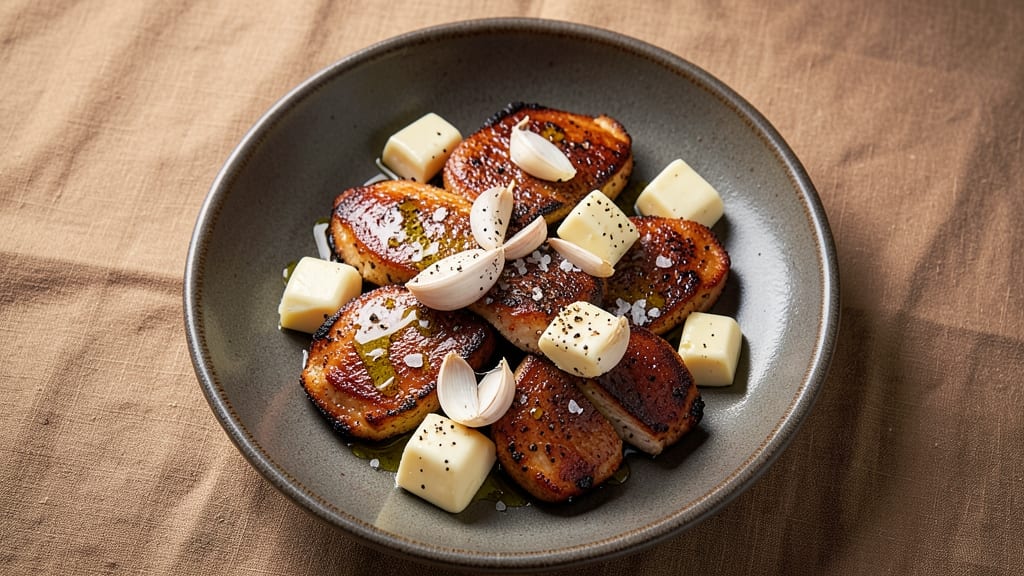
This baked chicken liver recipe transforms a classic into something unexpectedly luxurious—tender, buttery, and elevated by a crisp celery crust that adds texture without overpowering the rich natural flavor.
The secret lies in precise preparation: soaking the livers removes bitterness while allowing the crust to adhere perfectly, and baking at the right temperature ensures they stay moist inside while developing a golden crust.
I developed this method after years of testing, and it delivers restaurant-quality results in under 45 minutes with minimal effort.
The beauty of this dish is in its simplicity: just 6 core ingredients come together to create something that feels indulgent yet approachable. Celery and parsley form the aromatic crust, while butter and cream in the gravy add richness that balances the livers' earthy depth.
The key technique? Pat the livers completely dry before coating—they'll crisp beautifully and won't release excess moisture into the oven. This makes all the difference between a good dish and a truly exceptional one.
What you'll end up with is a plate that looks and tastes like it belongs in a bistro: golden, crisp-edged livers resting in a pool of velvety gravy, garnished with fresh herbs.
The celery crust adds a subtle crunch that contrasts perfectly with the tender meat, while the gravy ties everything together with its buttery, savory richness. Serve with roasted potatoes or crusty bread to soak up every last drop—this is comfort food at its finest, reimagined for modern home cooks.
For those new to chicken livers, don't let the prep intimidate you—the soaking and drying steps are worth the effort. And if you're feeling adventurous, try adding a splash of sherry to the gravy for an extra layer of depth.
This recipe scales beautifully too, making it perfect for dinner parties or when you want to impress without slaving over complicated techniques. Let's get started!
Ingredients for baked chicken liver
Six core ingredients transform humble chicken livers into bistro-worthy perfection with crisp celery crust and velvety gravy.
| Ingredient | Amount | Notes |
|---|---|---|
| Chicken Livers 🍗 | 1 lb | Fresh, trimmed of connective tissue |
| Unsalted Butter 🧈 | 4 tbsp | Cold, cubed for crust and gravy |
| Celery Stalks 🧅 | 3 whole | Finely chopped, fresh preferred |
| Fresh Parsley 🌿 | ¼ cup | Chopped, stems removed |
| Heavy Cream 🥛 | ½ cup | Full-fat for richness |
| Chicken Stock 💧 | ½ cup | Homemade or quality store-bought |
| All-Purpose Flour 🌾 | 1 tbsp | For gravy thickening |
| Lemon Juice 🍋 | 1 tbsp | Freshly squeezed |
| Salt 🧂 | 1 tsp | Kosher or sea salt |
| Black Pepper 🌶️ | ½ tsp | Freshly ground preferred |
| Fresh Thyme Leaves 🌿 | 1 tsp | Chopped, optional garnish |
The chicken livers are the star, so quality matters. Look for bright red, firm livers at Whole Foods or local butcher shops—they should feel cool and moist to the touch. Trim any connective tissue or fat, then soak in cold water for 30 minutes to remove bitterness. Pat completely dry before coating; this ensures the celery crust adheres perfectly and crisps beautifully. For the celery, organic stalks from the grocery store work fine, but avoid any with brown spots. The parsley adds freshness and color—flat-leaf varieties are ideal, but curly works too.
No fresh thyme? Dried thyme at half the amount works in a pinch, though fresh is preferred for garnish. The chicken stock can be substituted with low-sodium beef broth if needed, but homemade stock elevates the dish. For the butter, European-style unsalted (like Plugrá) adds more flavor than regular butter. If you're feeling adventurous, swap half the heavy cream for crème fraîche for a tangier gravy. The lemon juice brightens the dish—Meyer lemons add a subtle sweetness, but regular lemons work perfectly fine.
Prep the livers ahead to save time: soak, dry, and coat them up to 24 hours in advance, storing in the fridge. The celery-parsley mixture keeps for 3 days in an airtight container, though it's best used fresh. The gravy reheats beautifully—simply warm on the stove with a splash of stock or cream. For a dinner party, double the gravy ingredients; it's always welcome. Leftovers? The livers reheat best in a skillet with a splash of cream to restore moisture, while gravy can be frozen for 3 months in a sealed container.
Why You'll Love This Recipe
- Same recipe, different vibes: serve with toasted bread for a cozy night in or fancy it up with crusty baguette for guests. Leftovers? Reheat in the same pan with a splash of cream—still tastes like you slaved over it.
- Foolproof Prep: I swear by this method—just trim the livers, pat them dry, and toss in one pan. No fancy knife work, no stressing over timing. That butter and cream melt into a silky sauce while you chop celery, honestly? Effortless.
- Rich, Earthy Magic: The celery and parsley brighten the deep, meaty flavor of the livers—like a hug for your taste buds. That crispy edge from baking? Chef’s kiss. (Yes, even if you’re not a fan of offal.)
- Weeknight or Dinner Party: Same recipe, different vibes: serve with toasted bread for a cozy night in or fancy it up with crusty baguette for guests. Leftovers? Reheat in the same pan with a splash of cream—still tastes like you slaved over it.
Step-by-step instructions for baked chicken livers
Here's how to achieve perfectly tender, celery-crusted chicken livers with a rich buttery gravy.
Prepare the Chicken Livers
Begin by trimming any connective tissue or membranes from the 1 lb chicken livers using a sharp knife. This step is crucial—leaving connective tissue behind will make the livers tough. Rinse them thoroughly under cold water and pat dry completely with paper towels. The livers should be bone-dry before handling, as any moisture will prevent the celery crust from forming properly.
Place the trimmed livers in a bowl and season generously with 1 tsp salt and 0.5 tsp black pepper. I like to massage the seasoning into the livers with my fingers to ensure even distribution. Let them sit at room temperature for 15 minutes while you prepare the celery mixture. This allows the seasoning to penetrate and the livers to come to temperature, ensuring even cooking.
Create the Celery Crust
Finely chop the 3 whole celery stalks into small dice, about 1/8-inch in size. The smaller the pieces, the better the texture of your crust. In a separate bowl, combine the chopped celery with 0.25 cup fresh parsley, 1 tsp fresh thyme leaves, and 1 tbsp lemon juice. The acidity from the lemon juice helps tenderize the livers while adding brightness to the dish.
Press the seasoned livers into the celery mixture, coating each piece evenly. The celery should stick to the livers, forming a rustic crust. If the mixture seems too wet, add 1 tbsp all-purpose flour to help bind it. This crust is what creates the signature texture—crispy on the outside, tender within. Arrange the coated livers in a single layer on a parchment-lined baking sheet.
Bake to Perfect Tenderness
Preheat your oven to 400°F. Once heated, place the baking sheet with the livers on the middle rack. Bake for 12-15 minutes, until the edges are golden brown and the internal temperature reaches 145°F when measured with an instant-read thermometer. Do not overcook—the livers will continue cooking slightly as they rest.
Here's the thing—chicken livers cook quickly and can go from perfect to dry in seconds. Watch them closely starting at the 12-minute mark. When they're done, transfer them to a warm plate and tent loosely with foil. Let them rest for 5 minutes before serving. This resting period allows the juices to redistribute, ensuring each bite is moist and flavorful.
Make the Buttery Gravy
While the livers rest, return the baking sheet to the stove over medium heat. Add 2 tbsp unsalted butter and let it melt, scraping up any browned bits from the bottom of the pan. These bits are packed with flavor and will form the base of your gravy. Add the remaining 2 tbsp unsalted butter and let it melt completely.
Sprinkle 1 tbsp all-purpose flour over the butter and whisk vigorously for 1 minute until the mixture turns a light golden color. Slowly pour in 0.5 cup chicken stock, whisking constantly to prevent lumps from forming. Bring the mixture to a gentle simmer and cook for 3-4 minutes, until it thickens enough to coat the back of a spoon. Stir in 0.5 cup heavy cream and simmer for another 2 minutes. The gravy should be smooth, velvety, and rich—ready to drizzle over your perfectly baked livers.
Pro Tips For Making Baked Chicken Liver
- Trim the Gall Bladders: Chicken livers come with tiny green gall bladders—leave them in, and you’ll get bitter, off-flavor cream sauce. Snip them off with kitchen scissors before rinsing, or scrape them out with a paring knife. I used to skip this and wondered why my dish tasted like soap.
- Sear in Batches: High heat. Seriously, crank it up. If you crowd the pan, the livers steam instead of brown, and they turn out greasy. Work in 2-3 batches over medium-high for 2-3 minutes per side—just until golden. Overcooking here ruins everything.
- Soak Celery in Ice Water: Celery gets bitter when cooked too long, and in this recipe, it’s just a flavor base. Shave it thin, then soak the pieces in ice water for 10 minutes before draining. This cuts the bitterness and keeps it crisp—no one wants mushy celery in their sauce.
- Whisk the Cream Cold: Heavy cream can curdle if it hits hot livers or butter too fast. Stir it into the warm (not boiling) pan last, and keep it chilled until then. I learned this the hard way—once, my sauce split like a bad soufflé. Now I just grab the coldest cream from the back of the fridge.
Dietary considerations for baked chicken liver
Gluten-Free Adaptation
Chicken livers are naturally gluten-free, but the crust and gravy require adjustments. Replace the 1 tbsp all-purpose flour in the crust with 1 tbsp ground almond flour or 1 tbsp crushed gluten-free crackers (like Schär brand).
For the gravy, use cornstarch or arrowroot powder instead of flour—1 tsp will thicken the sauce just as effectively. Just whisk it into the butter before adding liquids, and simmer until thickened. 🌾
Low-Fat Modifications
For a lighter version, reduce the butter to 2 tbsp total (1 tbsp for crust, 1 tbsp for gravy) and replace half the heavy cream with low-fat Greek yogurt or unsweetened almond milk. The yogurt adds tanginess while cutting calories by about 100 per serving.
Skip the extra butter in the gravy entirely if you're strict about fat content—just use 1 tbsp olive oil instead for sautéing.
Allergen-Friendly Swaps
If celery is a concern, substitute it with finely chopped fennel (same texture, mild anise flavor) or leek greens (white parts only). For parsley allergies, use chopped chives or tarragon.
Always check labels on chicken stock—many store-bought varieties contain hidden gluten or dairy. I recommend Pacific Foods gluten-free chicken stock for safety. 🌿
Dairy-Free Version
This recipe works beautifully without dairy! Replace the butter with olive oil (use 3 tbsp total) and swap heavy cream for full-fat coconut milk (or unsweetened cashew cream). The gravy will have a slightly different texture but still rich flavor.
For extra richness, add 1 tbsp nutritional yeast to the crust mixture—it adds a cheesy depth without dairy. 🥥
High-Protein Boost
Want to increase protein without changing flavor? Add 2 tbsp finely chopped walnuts to the celery crust for crunch and healthy fats. Or blend 1 tbsp nutritional yeast into the crust mixture—it adds 5g protein per tablespoon while enhancing umami.
For the gravy, consider adding 1 tbsp collagen peptides (like Vital Proteins brand) for a silky texture and extra protein boost.
Keto-Friendly Adjustments
This recipe is already keto-friendly, but you can optimize it further. Use 1 tbsp psyllium husk powder instead of flour in the crust to bind without carbs. For the gravy, thicken with 1 tsp xanthan gum or 1 tbsp bone broth powder (like Kettle & Fire brand).
Skip the lemon juice if strict about sugar, but I find the 1 tbsp in the crust is negligible—just 0.5g net carbs per serving. 🥑
Nutrition facts
Frequently asked questions
Why do I need to soak chicken livers before cooking?
Soaking removes natural bitterness and blood that can make them taste metallic. Place them in cold water for 30 minutes, changing the water halfway. This step is crucial—skipping it will leave an unpleasant aftertaste even with perfect cooking.
Can I use frozen chicken livers instead of fresh?
Yes, but thaw them properly first. Place frozen livers in a sealed bag and submerge in cold water for 20-30 minutes—never use warm water. After thawing, pat them completely dry and proceed with the recipe as written. The texture will be just as tender when cooked correctly.
What's the best way to tell when chicken livers are done?
Use a meat thermometer for precision—they're done at 145°F internal temperature. The edges should be golden brown, and the center should look opaque (not pink). Overcooking by even 1 minute can make them dry, so watch closely after 12 minutes in the oven.
Can I make this recipe ahead of time?
Prep the coated livers up to 24 hours ahead and store them uncovered in the fridge. The crust will dry slightly but crisp up beautifully when baked. For the gravy, make it fresh or reheat gently with a splash of stock. Never freeze the livers themselves—they'll become mushy.
What if my celery crust falls off during baking?
This happens when the livers aren't dry enough. Pat them thoroughly with paper towels until completely bone-dry before coating. If the crust still falls off, try adding 1 extra tablespoon flour to the celery mixture to help it adhere. The key is perfect dryness before seasoning.