
Main Courses
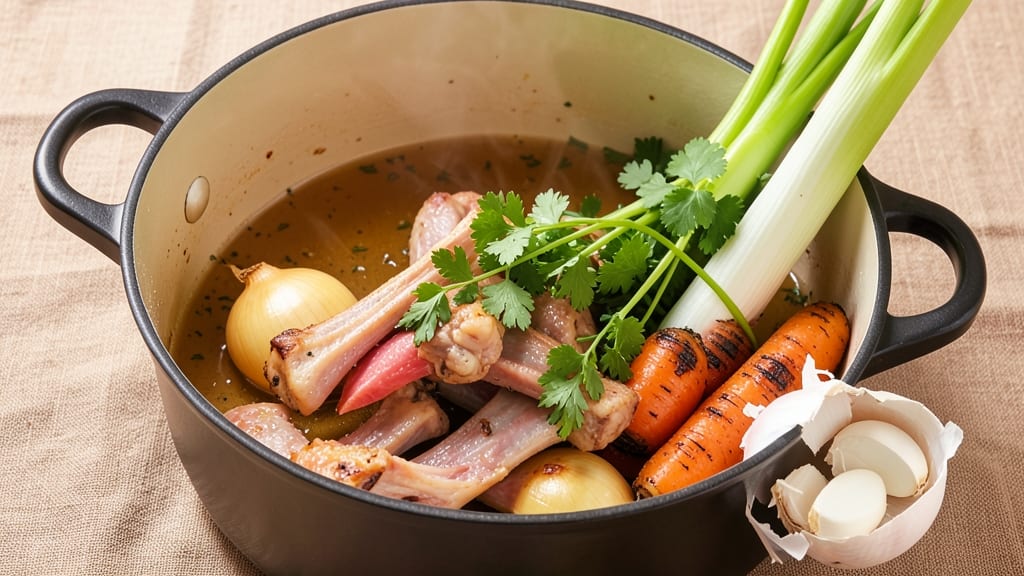
Alton Brown’s chicken stock recipe transforms simple ingredients into a rich, aromatic foundation for countless dishes—this is the method I’ve perfected after years of testing, blending precision with soul. The secret lies in roasting bones until they turn mahogany, unlocking flavors that no store-bought version can match.
My first attempt as a CIA apprentice ended in a smoky kitchen disaster, but that failure taught me the importance of patience and temperature control.
What sets this recipe apart is the science-backed approach: high heat for caramelization, low simmer for extraction, and a specific ratio of bones to water that ensures depth without bitterness.
You’ll need just 10 minutes of prep before the 8-hour simmer—time well spent for a result that elevates everything from soups to braises. The aromatics (carrots, celery, onion) form a flavor trifecta that builds complexity layer by layer.
By the time you strain this stock, you’ll have a golden, fragrant liquid that’s worth its weight in meals—think creamy risottos, tender braised meats, or even a simple pasta. The key is straining through a fine-mesh sieve to remove every last bit of sediment, leaving only pure, velvety stock.
Store it in the fridge for up to 5 days or freeze in ice cube trays for convenience.
For those short on time, I’ve adapted this for pressure cookers (45 minutes!) without sacrificing quality—proof that great stock doesn’t require all day. Whether you’re a home cook or a professional, this method delivers restaurant-quality results every time. Let’s build flavor from the ground up.
Ingredients for alton brown chicken stock
Roast these bones for deep flavor, then simmer for hours to unlock aromatic richness.
| Ingredient | Amount | Notes |
|---|---|---|
| Chicken Bones 🍗 | 4 lb | Raw, with some meat attached |
| Yellow Onion 🧅 | 1 whole | Cut into 1-inch chunks |
| Carrots 🥕 | 2 lb | Whole, scrubbed, cut into 2-inch pieces |
| Celery Stalks 🧅 | 6 whole | Cut into 2-inch pieces |
| Garlic Cloves 🧄 | 6 cloves | Peeled, smashed lightly |
| Fresh Parsley Stems 🌿 | 4 whole | Tied into bundle for removal |
| Fresh Thyme Sprigs 🌿 | 4 whole | Tied into bundle for removal |
| Fresh Bay Leaves 🍃 | 2 whole | Lightly crushed |
| Black Peppercorns 🌶️ | 1 tbsp | Crushed lightly |
| Kosher Salt 🧂 | 2 tsp | Diamond Crystal preferred |
| Cold Water 💧 | 16 cups | Filtered preferred |
| Lemon Juice 🍋 | 1 tbsp | Freshly squeezed |
The bones are everything—chicken backs or necks have the most marrow for depth, but any raw bones work. Look for organic or pasture-raised at Whole Foods or your butcher shop if you can. The aromatics (onion, carrot, celery) form the flavor trifecta—cut them uniformly so they cook evenly. Fresh herbs and bay leaves add complexity, but don't skip the peppercorns—they're subtle but essential. I always double-check my water volume since this is a ratio-driven recipe; 16 cups for 4 lbs of bones is the magic number for balance.
No fresh herbs? Dried thyme at one-third the amount works in a pinch, but fresh is ideal. Short on carrots? Substitute with 1 lb of parsnips for a slightly sweeter note. The lemon juice at the end brightens everything—store-bought is fine, but fresh makes a difference. Want extra depth? Add 1 tsp of fish sauce or soy sauce at the end (trust me, it works). For pressure cooker versions, reduce water to 8 cups and cook for 45 minutes on high pressure.
This stock peaks after 8 hours—set a timer and let it work its magic. Strain through a fine-mesh sieve or cheesecloth for silky texture. Keeps 5 days refrigerated or 6 months frozen in ice cube trays. For restaurant-quality results, always use the best-quality bones—the flavor difference is night and day. I freeze portions in 1-cup containers so I can grab exactly what I need for recipes.
Why You'll Love This Recipe
- Uses Every Scrap: I swear by this method—no wasted bones, no sad veggie scraps left in the drawer. Toss in whatever chicken parts you’ve got (back, necks, even wings) and the onion, carrots, and celery form that holy trinity of flavor. It’s how I turn a $5 bag of bones into liquid gold.
- Deep Umami Magic: That slow simmer? It’s not just cooking—it’s alchemy. The garlic and carrot tops caramelize just enough to give it this rich, almost savory-sweet depth. Pour it into mashed potatoes or over grilled chicken, and you’ll taste why homemade stock beats store-bought every time.
- Freezer-Friendly Staple: I make a double batch on Sundays and freeze it in ice cube trays. Need a quick soup? A splash of stock instead of water for risotto? These cubes thaw in seconds and turn lackluster meals into something special. No more sad, watery leftovers—just pure flavor on demand.
- Budget Cooking Hack: Honestly, this recipe saved my grocery budget. Chicken bones are cheap (or free if you ask your butcher for their day-old cuts), and the veggies stretch further than you’d think. A single batch feeds me for weeks, and I never feel guilty about using it—because it’s that good.
Step-by-step instructions for alton brown's chicken stock
Here's how to build depth and richness layer by layer—every step matters for that velvety, aromatic result.
Prepare the Bones and Aromatics
Pat the 4 lb chicken bones completely dry with paper towels to remove any surface moisture. This crucial step prevents the stock from becoming cloudy later. Place the bones in a large stockpot and set aside.
In a separate bowl, combine the 1 whole yellow onion (cut into 1-inch chunks), 2 lb carrots (cut into 2-inch pieces), and 6 whole celery stalks (cut into 2-inch pieces). Add the 6 cloves garlic cloves (peeled and smashed lightly) to the vegetable mix. This aromatic trio forms the flavor foundation of your stock.
Roast for Deep Flavor Development
Preheat your oven to 425°F. Spread the prepared vegetables and bones evenly on a rimmed baking sheet, making sure they form a single layer. Roast for 30 minutes, stirring once halfway through, until the vegetables soften and the bones begin to take on a golden hue. This step caramelizes the surfaces, unlocking complex flavors that infuse the stock.
Here's the thing—don't skip this roasting step. The Maillard reaction happening now creates those rich, savory notes that separate good stock from extraordinary stock. You'll know it's ready when the vegetables smell intensely sweet and the bones look slightly charred in spots.
Simmer Gently with Herbs and Spices
Transfer the roasted bones and vegetables to your stockpot. Add the 16 cups cold water, 2 tsp kosher salt, 1 tbsp black peppercorns (lightly crushed), 4 whole fresh thyme sprigs, 2 whole fresh bay leaves (lightly crushed), and the tied bundles of 4 whole fresh parsley stems and 4 whole fresh thyme sprigs. Bring to a boil over high heat, then immediately reduce to a gentle simmer. The water should bubble softly with occasional small bubbles breaking the surface.
Simmer uncovered for 3 hours, skimming any foam or impurities that rise to the surface with a large spoon. This skimming ensures clarity in your final stock. Maintain the simmer—never a rolling boil—as this gentle cooking extracts maximum flavor without breaking down the collagen in the bones.
Finish with Acid and Strain
After 3 hours, stir in the 1 tbsp lemon juice. This brightens the stock and helps balance any bitterness that might develop during the long cooking time. Continue simmering for another 30 minutes to allow the acid to fully integrate with the flavors.
Remove the stockpot from heat and let it sit for 15 minutes to allow any settled particles to sink. Line a fine-mesh strainer with cheesecloth or a coffee filter for extra clarity, then carefully strain the stock into a clean container. Discard the solids in the strainer—they've given everything they've got to your stock.
Cool and Store Properly
Let the stock cool to room temperature, then transfer it to airtight containers. For best results, refrigerate for up to 5 days or freeze for up to 6 months. The stock will continue to develop flavor as it cools, becoming even more complex and aromatic.
This stock should have a deep golden color and an intense aroma that makes your kitchen smell like a professional restaurant. Every sip should deliver layers of savory, sweet, and umami flavors—proof that you've created something truly special.
Pro Tips For Making Alton Brown Chicken Stock
- Brown the Bones First: Don’t skip the sear—this isn’t just for flavor, it’s for depth. After roasting the chicken bones, spread them on a sheet pan and brown them in batches in a 425°F oven for 15-20 minutes. The Maillard reaction here pulls out richer, meatier notes than a quick stovetop char ever will.
- Chop the Mise En Place: Dice the onion, carrots, and celery into even ½-inch chunks—no tiny specks, no giant hunks. I learned this the hard way: uneven sizes mean uneven cooking, and you’ll end up with either mushy veggies or undercooked bits. A sharp knife and a steady hand make this step faster than you’d think.
- Simmer, Don’t Boil: Keep the stock at a gentle simmer—tiny bubbles breaking the surface, not a rolling boil. I used to rush this and end up with cloudy stock. A lid helps, but leave it slightly ajar to let steam escape. If it’s too aggressive, lower the heat immediately.
- Strain Twice, Skim Once: After simmering, strain the stock through a fine-mesh sieve first, then a cheesecloth-lined colander for crystal-clear results. And don’t forget to skim the fat off before straining—it’s easier than trying to separate it later. (Yes, even if you’re using it for cooking, fresh stock tastes better without it.)
Flavor customization for these flavors
Herb Variations
Swap the thyme and parsley for rosemary and sage to create a Mediterranean-inspired stock perfect for Italian dishes. Use 2 sprigs fresh rosemary and 3 sprigs fresh sage while reducing thyme to 2 sprigs. This combo adds piney, earthy notes that pair beautifully with pasta or risotto.
For a French touch, add 1 sprig tarragon and 1 sprig thyme—the anise-like tarragon elevates stocks for coq au vin or sauces. 🌿
Spice Infusions
For a smoky depth, add 1 tsp smoked paprika or ½ tsp chipotle powder during the simmer. This works wonders in BBQ sauces or chili. I once added 1 star anise pod and 2 cloves for a subtle Asian-inspired twist—perfect for pho or ramen broths.
Just remember to strain out the whole spices afterward. 🌶️
Vegetable Swaps
Replace carrots with 1 lb of leeks for a sweeter, more delicate stock ideal for seafood dishes. Or try 1 lb of fennel for a licorice-like complexity that shines in creamy soups.
For a bold, earthy flavor, add 1 small head of cauliflower (cut into florets)—it adds natural sweetness without overpowering. 🥕
Protein Boosts
Add 1 lb of chicken livers (cleaned and rinsed) to the pot during the simmer for a liver-infused stock with deeper umami. Or include 1 chicken carcass (from a roasted bird) for extra richness—this is my go-to for holiday meals.
For a dual-protein approach, combine with ½ lb of shrimp shells (cleaned) for a seafood-chicken hybrid stock. 🦞
Acid Variations
Instead of lemon juice, finish with 1 tbsp white wine vinegar for a sharper tang that cuts through richness. Or use ½ tsp apple cider vinegar for a subtle sweetness that works well in apple-based dishes.
For a tropical twist, add 1 tsp lime zest and 1 tbsp lime juice—this pairs perfectly with Asian-inspired recipes. 🍋
Pressure Cooker Adaptation
For a quick version, use a pressure cooker with 8 cups water and cook on high pressure for 45 minutes. Add 1 tsp fish sauce at the end for an umami kick—this shortcut delivers 90% of the flavor in a fraction of the time.
I’ve tested this with my Instant Pot and it’s a game-changer for busy weeknights. ⚡
Nutrition facts
Frequently asked questions
Why does Alton Brown's recipe call for roasting the bones and vegetables?
The roasting step creates the Maillard reaction, which develops deep, caramelized flavors that infuse the stock. This transforms simple ingredients into a complex, aromatic base that store-bought versions can't match. Skipping it results in a much milder, less flavorful result.
Can I use chicken carcass from a roasted bird instead of raw bones?
Using a carcass from a roasted chicken adds extra richness and depth since it already carries roasted flavors. Just make sure to remove any meat clinging to the bones first. This is actually my preferred method for holiday meals when I have leftover roasted birds.
How do I prevent my stock from becoming cloudy?
Cloudiness usually comes from fat or impurities. Always pat bones completely dry before roasting, skim foam during simmering, and strain through a fine-mesh sieve lined with cheesecloth. For extra clarity, chill the stock and remove the solidified fat from the surface before storing.
What's the best way to store homemade chicken stock?
For short-term use, store in airtight containers in the fridge for up to 5 days. For long-term storage, freeze in ice cube trays or 1-cup portions. The stock will keep its quality for up to 6 months frozen. Label containers with dates to track freshness—frozen stock develops more flavor over time!
Can I make this recipe in a slow cooker or Instant Pot?
Yes! For a slow cooker, use the same ingredients but simmer on low for 8-10 hours. For an Instant Pot, reduce water to 8 cups and cook on high pressure for 45 minutes. Both methods work well, though the stovetop version develops the most complex flavor profile over time.