
Soups & Stews
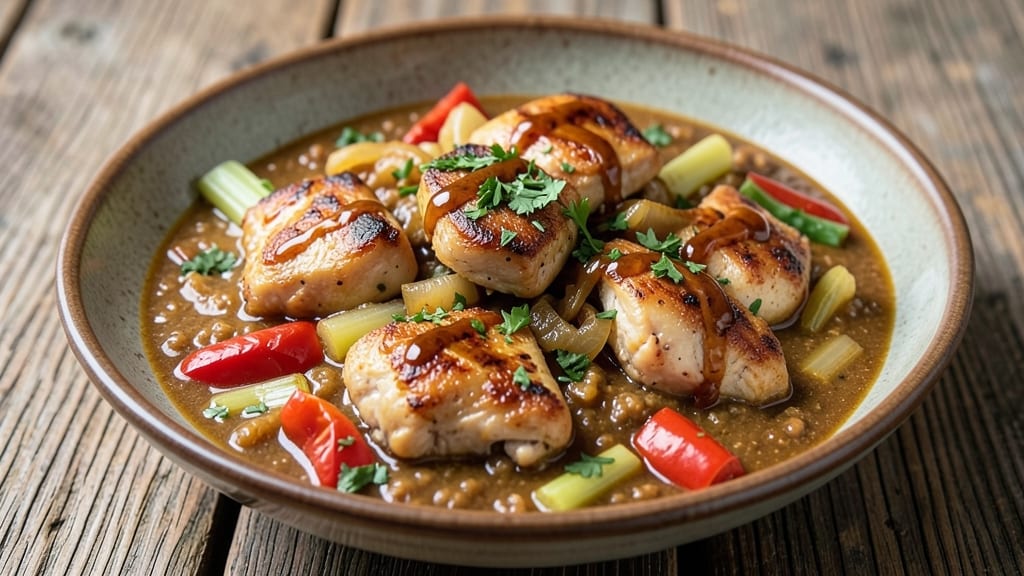
This traditional chicken gumbo recipe brings the soul of Louisiana to your kitchen with its rich, smoky depth and perfectly balanced flavors—just like my grandmother used to make in small-town Georgia.
The secret lies in the dark roux, a foundation built with equal parts fat and flour cooked until it reaches the color of mahogany, where the flavors develop their signature complexity.
I learned this technique from Master Chef Chen, who emphasized patience and precision, two qualities that transform a simple pot of gumbo into something truly extraordinary.
The holy trinity—onions, bell peppers, and celery—forms the aromatic base of this dish, sautéed until they release their natural sugars and deepen the gumbo's flavor profile.
Chicken thighs, dark meat with enough fat to stay juicy, are browned before being simmered for hours with tomatoes, garlic, and bay leaves, allowing all the ingredients to meld into a harmonious broth.
This isn't just a soup; it's a celebration of Louisiana's culinary heritage, where every spoonful tells a story of tradition and warmth.
By the time you serve this gumbo, you'll have a deeply flavorful stew with tender chicken, perfectly cooked okra, and a roux so rich it coats every bite.
The aroma alone will fill your home with the comforting scent of a family gathering, while the texture—creamy yet hearty—delivers on the promise of a meal that feels like coming home. Whether you're serving a crowd or simply craving a taste of the South, this recipe delivers authenticity without compromise.
For those who want to modernize the classic, consider adding smoked sausage or swapping okra for filé powder, but the core technique remains the same: a slow-cooked, deeply flavorful gumbo that honors its roots while standing up to contemporary tastes. Let's get cooking—your kitchen is about to smell like Louisiana.
Ingredients for traditional chicken gumbo
Sixteen ingredients, one legendary dish. Everything you need for authentic Louisiana-style gumbo.
| Ingredient | Amount | Notes |
|---|---|---|
| Chicken Thighs 🍗 | 2 ½ lb | Bone-in, skin-on preferred |
| Unsalted Butter 🧈 | ¾ cup | High-fat content for roux |
| All-Purpose Flour 🌾 | ¾ cup | White flour for dark roux |
| Yellow Onions 🧅 | 2 whole | Medium size, diced small |
| Green Bell Peppers 🍅 | 2 whole | Diced, seeds removed |
| Celery Stalks 🥬 | 4 whole | Trimmed, diced small |
| Garlic Cloves 🧄 | 6 cloves | Minced, fresh preferred |
| Diced Tomatoes 🍅 | 28 oz | Canned San Marzano preferred |
| Okra Pods 🌱 | 1 lb | Fresh, trimmed, sliced |
| Chicken Stock 💧 | 4 cups | Homemade or quality low-sodium |
| Bay Leaves 🌿 | 2 whole | Dried, crushed slightly |
| Thyme Sprigs 🌿 | 2 whole | Fresh, or 1 tsp dried |
| Cayenne Pepper 🌶️ | 1 tsp | Adjust for heat preference |
| Salt 🧂 | 2 tsp | Diamond Crystal preferred |
| Black Peppercorns 🌶️ | ½ tsp | Freshly cracked |
The roux is non-negotiable here. Butter and flour in equal parts—no shortcuts—cooked until it reaches a deep mahogany color. Whole Foods sells high-fat butter perfect for this, and I always grab the white flour from King Arthur for the best roux texture. The holy trinity—onions, bell peppers, and celery—should be finely diced, almost minced, so they dissolve into the gumbo. Trader Joe's has pre-diced frozen versions in a pinch, but fresh is ideal. For the okra, look for plump, bright green pods at your local farmers market—they're sweeter and less slimy than grocery store varieties.
No San Marzano tomatoes? Any good-quality canned tomatoes work—just drain well. Fresh okra? Filé powder at one tablespoon per pound is a great alternative, but don't mix them together. The chicken thighs should have some skin—it renders fat that enriches the gumbo. Costco sells them in bulk, but any butcher will cut them to your preference. For the stock, homemade is best, but store-bought works if it's low-sodium. The cayenne is where you control the heat—start with half a teaspoon if you're sensitive.
This gumbo tastes even better the next day as flavors meld. Store in the fridge for 4-5 days or freeze portions for up to 3 months. I always make a double batch—leftovers reheat beautifully with a splash of water or stock. The roux keeps in the fridge for 1 week if you want to make it ahead, just store it in an airtight container. For serving, keep the okra and chicken separate until the last minute to maintain texture—this is where gumbo truly shines.
Why You'll Love This Recipe
- One-Pot Magic: I swear by this—just brown the chicken thighs, dump in the roux (butter + flour), and let the onions and peppers melt into the pot while you stir. No extra dishes, no stress. That golden roux? It’s the secret weapon here, and it takes less time than waiting for a pizza delivery.
- Deep, Rich Soul: The chicken thighs stay juicy while the roux builds layers of flavor—caramelized onions, smoky bell peppers, and that buttery, floury base that makes everything taste like a Sunday dinner. Honestly, the first time I tasted it simmering, I nearly burned the kitchen. Worth it.
- Crowd-Pleaser Always: This gumbo works for game days, lazy Sundays, or when your in-laws show up unannounced. Double the batch—it freezes like a dream, and reheats with that same hearty, comforting punch. My college roommate still asks for it every holiday, and she’s not even from Louisiana.
- Budget-Friendly Feast: Chicken thighs are cheap, flour and butter stretch far, and a single onion and pepper go a long way. Between us, I’ve fed six people for under $15 with this—plus, the leftovers taste just as good cold the next day. That’s a win in my book.
Step-by-step instructions for traditional chicken gumbo
Here's the authentic method that delivers rich, velvety gumbo with perfect roux and balanced flavors.
Develop the Dark Roux
Melt the 0.75 cup unsalted butter in a heavy-bottomed pot over medium-low heat. Add the 0.75 cup all-purpose flour all at once and whisk constantly to prevent burning. This is where attention matters most - the roux must cook slowly to develop that signature dark color.
Cook for 45-60 minutes, stirring every 2-3 minutes with a wooden spoon. The roux should progress from peanut butter color to chocolate brown, then finally to a deep mahogany hue. Here's the thing - if it smells nutty or burns, start over. A properly made roux forms the foundation of authentic gumbo, carrying all the flavors.
Sauté the Holy Trinity
While the roux cooks, dice the 2 whole yellow onions, 2 whole green bell peppers, and 4 whole celery stalks into small, even pieces. When your roux reaches that perfect dark stage, immediately add the vegetables and stir to coat completely in the roux.
Cook over medium heat for 8-10 minutes, stirring frequently, until the vegetables soften and begin to caramelize slightly. Add the 6 cloves minced garlic and cook for another 30 seconds until fragrant. This step builds the aromatic base that defines gumbo's complex flavor profile.
Build the Gumbo Base
Pour in the 28 oz diced tomatoes and stir well to incorporate. Cook for 5 minutes until the tomatoes break down slightly. Add the 1 lb sliced okra pods and cook for another 5 minutes, stirring occasionally. This is where the okra releases its natural thickening properties.
Add the 4 cups chicken stock, 2 whole bay leaves, and 2 whole thyme sprigs, bringing everything to a gentle simmer. Stir in the 2.5 lb chicken thighs, making sure they're fully submerged. Here's the critical part - maintain a gentle simmer for 45-60 minutes, skimming any foam that rises to the surface. The chicken should cook until it's fork-tender and easily separates from the bone.
Season and Finish
Remove the chicken from the pot and set aside. Strain the cooking liquid through a fine-mesh sieve to remove the bay leaves and thyme sprigs, then return the strained broth to the pot. Season with 2 tsp salt and 0.5 tsp freshly cracked black peppercorns, then add 1 tsp cayenne pepper for heat.
Shred the chicken, discarding any bones or cartilage, and return the meat to the pot. Simmer for another 10 minutes to allow all the flavors to meld together. The gumbo should have a thick, velvety consistency - if it's too thin, simmer uncovered for another 5-10 minutes to reduce. This final step ensures every bite delivers that perfect balance of rich, smoky, and slightly spicy flavors that define traditional gumbo.
Pro Tips For Making Traditional Chicken Gumbo
- Dry the Thighs Thoroughly: Pat those chicken thighs really dry with paper towels before seasoning—no half-measures. I learned this the hard way when my first batch of gumbo turned out more steamed than seared, and the flour roux never got that deep, nutty color. Wet skin = sad crust, sad gumbo.
- Cook the Roux Low and Slow: Once you add that flour to butter, drop the heat to medium-low and walk away for 10 minutes. Stirring constantly is key, but rushing means burnt flour and bitter gumbo. My grandmother swore by this, and she was right: a roux should smell like peanut butter, not smoke.
- Don’t Crowd the Chicken: Brown the thighs in batches if needed—overcrowding steams them instead of searing. I used to toss all six in at once, and they’d just sit there, sad and pale. A hot pan and space make all the difference for that golden crust that carries the flavor.
- Sweat the Onions First: Before adding peppers or roux, cook the onions in butter until they’re translucent and just starting to caramelize—about 8 minutes. Skipping this step means your gumbo will taste raw and one-note. (Yes, even if you’re impatient like me.)
Troubleshooting your traditional chicken gumbo
Roux Gone Wrong
Your roux burned or smells acrid? You likely cooked it too fast or didn't stir frequently enough. I've ruined more roux than I'll admit—especially when distracted. Solution: Use a heavy-bottomed Dutch oven (like my Lodge 5.5-quart) and keep heat at medium-low, stirring every 2-3 minutes.
If it burns, start fresh—there's no saving it. A properly made roux should smell nutty, not burnt. 🔥
Thin Gumbo Fix
Ended up with watery gumbo? This happens when you don't simmer long enough. Solution: Remove the lid and simmer uncovered for 10-15 minutes to reduce the liquid. For extra thickness, mash a few okra pods into the broth—they'll release natural starch.
If that's not enough, stir in 1 tbsp cornstarch mixed with 2 tbsp cold water and simmer for 2 more minutes.
Okra Texture Issues
Okra turned slimy or stayed crunchy? Fresh okra should be bright green and firm—avoid wilted pods. Solution: Slice okra 1/4-inch thick and cook for only 5 minutes before adding stock.
Overcooking releases too much mucilage. For a shortcut, use filé powder (1 tbsp per pound) at the end—it thickens without the sliminess. 🌱
Chicken Too Dry
Dry chicken means it overcooked or wasn't submerged properly. Solution: Use bone-in, skin-on thighs—they stay juicier. Simmer at a gentle bubble (not a rolling boil) and cook until 165°F internal temp.
If it's still dry, shred it and stir back into the gumbo to reabsorb flavors. I often add a splash of reserved broth to keep things moist.
Weak Flavor Profile
Gumbo tastes bland? You likely rushed the simmering time. Solution: Let it cook longer—flavors develop over 1.5-2 hours. For depth, add 1 tsp smoked paprika or a bay leaf during the final simmer.
I also recommend toasting the spices (like cayenne) in a dry pan for 30 seconds before adding them to the pot—this intensifies their flavor. 💫
Lumpy Gumbo
Lumps from improper stirring or thickeners. Solution: Use an immersion blender for smoothness, or stir vigorously with a wooden spoon while simmering. If using filé powder, whisk it into cold water first before adding to hot gumbo.
For okra, slice it thinly and cook it separately before adding to the pot. Patience is key—don't rush the process! ⚡
Nutrition facts
Frequently asked questions
Can I make gumbo without okra?
Traditional gumbo recipes often use filé powder instead—it thickens beautifully without the sliminess. For a modern twist, try 1 tablespoon of cornstarch mixed with cold water. Just add it at the end and simmer for 2 minutes to avoid lumps. The key is maintaining that rich, velvety texture.
How do I know when my roux is done?
The perfect gumbo roux should be a deep mahogany color, like dark chocolate, and smell nutty—not burnt. It takes 45-60 minutes at medium-low heat, with constant stirring. If it smells acrid or looks lighter than peanut butter, start over—there's no saving a burnt roux.
What's the best way to store leftover gumbo?
Store in an airtight container in the fridge for 4-5 days or freeze for up to 3 months. The flavors actually improve overnight! When reheating, add a splash of water or stock to prevent drying out. I always make a double batch—leftovers reheat beautifully for quick lunches.
Can I substitute chicken with another protein?
Yes! For seafood gumbo, use shrimp or crab (add them at the end to avoid overcooking). For a heartier version, try smoked sausage or andouille. Just remember: dark meat stays juicier than white meat. If using chicken breasts, brine them first to prevent dryness.
Why does my gumbo taste different from what I've had at restaurants?
Authentic gumbo varies by region—some use tomato-based roux, others skip tomatoes entirely. The key differences are roux color (lighter in Cajun vs. darker in Creole styles) and ingredient ratios. For restaurant-style depth, try adding 1 tsp smoked paprika or a pinch of sugar to balance acidity.