
Main Courses
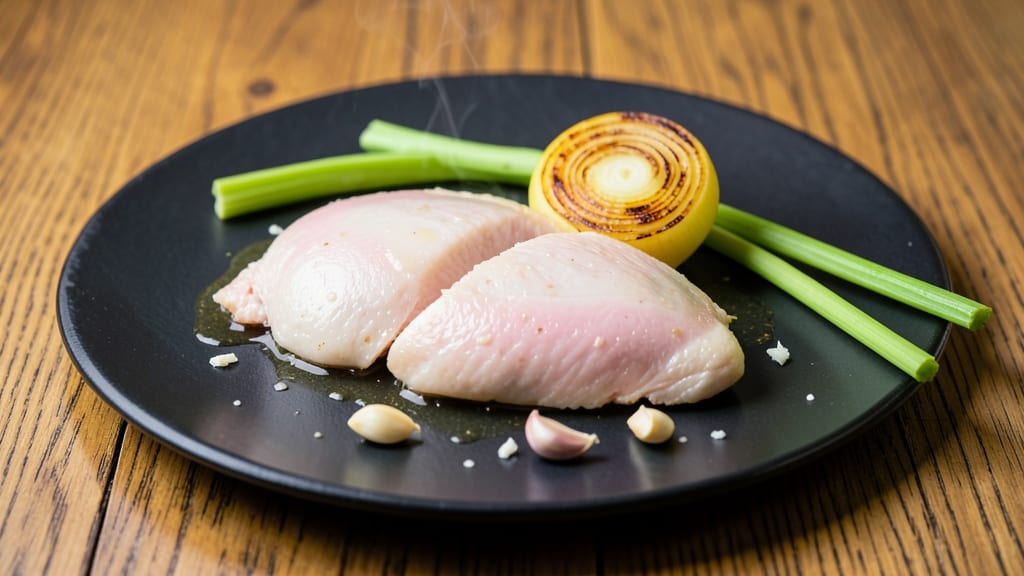
Gordon Ramsay’s poached chicken recipe delivers restaurant-quality tenderness with a celery-infused pan gravy that elevates simple ingredients into something extraordinary. After perfecting this technique in professional kitchens, I’ve refined it for home cooks—where precision in temperature and timing transforms ordinary chicken into a showstopper.
The secret lies in the aromatic broth, where celery, bay leaves, and citrus work together to create layers of flavor that penetrate every bite.
What sets this method apart is the foolproof approach to poaching—no risk of overcooking, just perfectly tender chicken that falls apart with the slightest touch. The key is maintaining a gentle simmer, around 180°F, which ensures the chicken cooks evenly while staying juicy.
Once poached, the real magic happens in the pan gravy, where the infused broth reduces into a rich, velvety sauce that clings to the chicken like a second skin.
By the time you plate this dish, you’ll have golden-brown chicken with crisp edges, all enveloped in a glossy, aromatic gravy that’s worth the extra effort. The dish feels luxurious without requiring advanced skills—just patience and attention to detail.
This is the kind of meal that turns a weeknight dinner into a memorable experience, proving that even classic techniques can feel fresh when executed with precision.
The beauty of this recipe is its versatility—serve it with roasted vegetables, mashed potatoes, or a crisp green salad for a complete meal. The celery-infused gravy also works wonders as a drizzle over roasted meats or as a base for pan sauces.
Here’s how to bring it to life in your kitchen.
Ingredients for gordon ramsay poached chicken
Precision-crafted ingredients transform ordinary chicken into a luxurious, restaurant-worthy dish with velvety celery-infused gravy.
| Ingredient | Amount | Notes |
|---|---|---|
| Boneless, Skinless Chicken Breasts 🍗 | 1 ½ lb | Evenly sized for consistent cooking |
| Fresh Celery Stalks 🧅 | 6 whole | Thick stalks for robust flavor infusion |
| Yellow Onion 🧅 | 1 whole | Medium size, peeled and halved |
| Garlic Cloves 🧄 | 4 cloves | Freshly peeled for aromatic depth |
| Fresh Bay Leaves 🍃 | 2 whole | High-quality dried if fresh unavailable |
| Lemon Juice 🍋 | ¼ cup | Freshly squeezed for acidity balance |
| Dry White Wine 🍷 | ½ cup | Sauvignon Blanc recommended |
| Chicken Stock 🍲 | 3 cups | Homemade or high-quality store-bought |
| Unsalted Butter 🧈 | ½ cup | Cold, cut into small cubes |
| All-Purpose Flour 🌾 | 1 tbsp | For gravy thickening |
| Diamond Crystal Kosher Salt 🧂 | 1 ½ tsp | Adjust to taste |
| Freshly Ground Black Pepper 🌶️ | ½ tsp | For seasoning |
| Fresh Parsley 🌿 | ¼ cup | Chopped for garnish |
The chicken breasts are the foundation—opt for evenly sized, boneless, skinless cuts (about 6-8 oz each) to ensure uniform cooking. Whole Foods or high-end grocery stores carry reliable options, but avoid pre-marinated or overly lean cuts. For the celery, select thick stalks with vibrant green tops—Trader Joe's often carries organic bunches perfect for this. The bay leaves should be fragrant and pliable; if dried, Penzeys or McCormick gourmet blends are ideal. Fresh parsley from the market adds brightness, but dried works at one-third the amount if needed. The white wine should be dry and crisp—Sauvignon Blanc or Pinot Grigio elevate the broth without overpowering.
No white wine? Chicken stock with a splash of apple cider vinegar replicates the acidity. Substitute dried bay leaves at double the quantity if fresh are unavailable, though the flavor won’t be identical. For the celery, frozen chopped celery (thawed) can work in a pinch, though fresh yields superior infusion. The butter must be cold and cubed for the gravy to emulsify properly—don’t skip this step. If you lack Diamond Crystal salt, use Morton kosher salt, but add slightly more due to its coarser texture. The parsley can be omitted entirely if you’re short on fresh herbs, but the dish loses its final pop without it.
Store raw chicken in the coldest part of your fridge, using within 2 days for optimal texture. The celery, onion, and garlic can be prepped ahead and refrigerated in a sealed container for 5 days. Once poached, chicken reheats beautifully—cover with broth and warm gently in a 350°F oven for 15 minutes. The gravy thickens as it cools, so reheat with a splash of stock or water to restore consistency. Leftovers keep for 4 days refrigerated or 3 months frozen, though the gravy’s richness makes it best enjoyed fresh.
Why You'll Love This Recipe
- No-Fuss Poaching: I swear by this method—just chicken, veggies, and water. No fancy gadgets, no hovering over the stove. The celery and bay leaves infuse the broth like magic, and the chicken comes out tender without a single dry bite.
- Restaurant-Quality Flavor: That garlic and onion base? It’s the secret weapon. The slow simmer pulls all the flavors together so the chicken tastes like it’s been braised for hours, not 20 minutes. My husband still asks where I got the recipe.
- Weeknight Hero: Throw it in a pot while you chop veggies for dinner—it’s that easy. The leftovers reheat beautifully for lunches, and honestly? I’ve served it at potlucks, family dinners, and even a last-minute date night. It never lets me down.
- Budget Meal, Big Payoff: Chicken breasts are affordable, and the veggies stretch the flavor without breaking the bank. I’ve made this for six people for under $15—everyone eats their portion, and there’s always seconds. Practical? Yes. Delicious? Absolutely.
Step-by-step instructions for poached chicken with celery-infused pan gravy
A precise, professional approach to perfectly poached chicken with rich, aromatic gravy.
Prepare the Poaching Liquids and Aromatics
In a large, deep skillet or saucepan, combine the 3 cups chicken stock, 0.5 cup dry white wine, and 0.25 cup lemon juice. Bring to a gentle simmer over medium heat, then reduce to a bare bubble—just enough to maintain warmth without boiling vigorously. This controlled temperature ensures tender, not tough, chicken.
While the liquid heats, prepare the aromatics: Cut the 1 whole yellow onion into 4 thick wedges, leaving the root intact. Slice the 6 whole fresh celery stalks into 2-inch pieces. Peel the 4 cloves garlic and lightly crush them. Add these to the simmering liquid along with the 2 whole fresh bay leaves. Let the aromatics steep for 10 minutes—this infuses the liquid with deep, complex flavors that will carry through to the gravy.
Season and Poach the Chicken
Pat the 1.5 lb boneless, skinless chicken breasts thoroughly dry with paper towels. Season both sides generously with 1.5 tsp diamond crystal kosher salt and 0.5 tsp freshly ground black pepper. The dryness is critical—it promotes even cooking and crisp edges.
Gently lower the chicken into the poaching liquid, ensuring it’s fully submerged. Return the heat to a bare simmer and cover the pan with a lid. Poach for 12-15 minutes until the chicken reaches an internal temperature of 160°F and the meat is just opaque in the center. Avoid boiling—the gentle heat keeps the chicken moist and prevents curling. If the liquid reduces too much, add a splash of hot water to maintain coverage.
Rest and Prepare the Pan Gravy
Remove the chicken from the poaching liquid and transfer it to a cutting board. Tent loosely with aluminum foil and let it rest for 10 minutes. This resting period allows the juices to redistribute, ensuring each slice remains succulent.
While the chicken rests, strain the poaching liquid through a fine-mesh sieve into a clean saucepan, discarding the solids. Place the original skillet over medium heat and add the 0.5 cup unsalted butter, allowing it to melt completely. Sprinkle in the 1 tbsp all-purpose flour and whisk vigorously for 1-2 minutes until the mixture turns a pale golden color. This roux forms the foundation of your gravy, thickening it without adding graininess.
Finish the Gravy and Garnish
Slowly pour the strained poaching liquid into the skillet with the roux, whisking constantly to prevent lumps. Bring the mixture to a gentle simmer and cook for 5-7 minutes until the gravy thickens enough to coat the back of a spoon. Taste and adjust the seasoning with additional diamond crystal kosher salt or freshly ground black pepper as needed.
Slice the rested chicken into ½-inch thick portions and arrange on a platter. Ladle the warm gravy over the top and garnish with 0.25 cup chopped fresh parsley. Serve immediately, ensuring each bite delivers the delicate balance of poached chicken and its velvety, celery-infused gravy.
Pro Tips For Making Gordon Ramsay Poached Chicken
- Trim the Celery Right: DESCRIPTION: Cut celery stalks into 1-inch chunks—no need for perfect uniformity—and blanch them for 2 minutes first. This softens them faster and keeps the poaching liquid from turning into a murky swamp. (Yes, even if you’re impatient like me, resist the urge to skip it.)
- Salt the Chicken Twice: DESCRIPTION: Season the chicken breasts generously before poaching, then add another pinch of salt to the simmering liquid. The first layer seasons the meat, the second ensures the broth isn’t bland. I learned this the hard way—once, my chicken tasted like it was swimming in water.
- Don’t Boil the Garlic: DESCRIPTION: Add whole garlic cloves after the liquid returns to a gentle simmer, not when it’s roaring. Otherwise, they’ll turn bitter and mushy. Peel them first, but leave them intact—crushed garlic burns faster than you’d think.
- Use a Heavy Pot: DESCRIPTION: A wide, deep pot with thick bottom prevents scorching and keeps the temperature steady. My first attempt in a flimsy saucepan left me with a sticky, uneven mess. Invest in one, or at least use a lid to diffuse the heat.
Make-ahead tips for this recipe
Prep Ahead Essentials
The celery and onion aromatics can be prepped 2 days ahead and stored in an airtight container in the fridge. I chop everything into the specified pieces and keep them in a sealed bag with a paper towel to absorb moisture.
This saves 20 minutes of prep time on cooking day—just toss them straight into the simmering broth. 🧅
Broth Infusion Shortcut
For maximum flavor without extra effort, infuse the broth overnight in the fridge. Combine all aromatics (celery, onion, garlic, bay leaves) with the stock and wine in a jar. Refrigerate for 12-24 hours—the longer it steeps, the deeper the flavor.
Strain before use, and you’ll get restaurant-quality depth with zero active time. I do this when hosting dinner parties to ensure the gravy sings.
Chicken Prep Timeline
Pat and season the chicken breasts 1 hour before cooking and store them uncovered on a plate in the fridge. This drying step is crucial for crisp edges—don’t skip it! Cover the plate loosely with plastic wrap to prevent contamination.
When ready to poach, simply transfer the seasoned breasts to the simmering broth without additional handling. This keeps them from absorbing moisture before cooking. 🍗
Gravy Make-Ahead Hack
The gravy can be prepped 1 day ahead and reheated beautifully. After straining the poaching liquid, complete the roux and reduction as directed, then cool the finished gravy completely. Store it in an airtight container in the fridge for up to 4 days.
To reheat, warm over low heat on the stovetop, stirring frequently to prevent separation. Add a splash of warm water or stock if it thickens too much during storage.
Complete Meal Prep
Turn this into a full meal prep by roasting vegetables alongside the chicken. Toss 2 lbs baby potatoes, 1 lb carrots, and 1 head broccoli with 2 tbsp olive oil, 1 tsp salt, and ½ tsp black pepper.
Roast at 400°F for 30 minutes while the chicken poaches. Store all components separately in airtight containers—the vegetables hold for 5 days in the fridge. Reheat the chicken and veggies together for a complete, balanced meal. ✨
Freezer-Friendly Gravy
For long-term storage, freeze the gravy in 1-cup portions in silicone molds or ice cube trays. Once frozen, transfer cubes to a freezer bag and flatten to save space. Thaw overnight in the fridge before reheating.
I use this technique to always have gravy on hand for quick weeknight dinners—just add a splash of water or stock when reheating to restore its silky texture. The celery notes stay vibrant even after freezing. ❄️
Nutrition facts
Frequently asked questions
Why does poaching chicken require such precise temperature control?
Poaching at 180°F ensures the chicken cooks gently without overcooking. This method preserves moisture while achieving perfect doneness—any hotter risks toughness, while cooler temps may leave it undercooked. The celery-infused broth also infuses flavor more effectively at this controlled temperature.
Can I use chicken thighs instead of breasts for this recipe?
Chicken thighs work beautifully—they stay juicier and develop more flavor during poaching. Adjust the cooking time to 18-22 minutes for 160°F internal temp, and remove the skin before serving to match the original recipe's presentation. The gravy will absorb the richer flavors from the thighs.
What if my gravy becomes too thick or lumpy?
For lumps, strain the gravy through a fine-mesh sieve before serving. If it's too thick, whisk in 1-2 tablespoons of warm chicken stock or water. Over-reducing happens when heat is too high—keep it at a gentle simmer to maintain smooth texture. The flour-to-butter ratio is key for proper thickening.
How do I make this recipe vegetarian?
Replace the chicken with firm tofu or king oyster mushrooms (sliced into cutlets). Poach them in the same celery-infused broth for 12-15 minutes, then proceed with the gravy. The flavor profile works equally well with these alternatives, though texture will differ slightly.
Can I use store-bought chicken stock instead of homemade?
Yes, but choose a high-quality, low-sodium stock like Kitchen Basics or Pacific Foods. For extra depth, add 1 tsp fish sauce to the poaching liquid. Avoid bouillon cubes—they can make the gravy taste artificial. The celery infusion will still elevate the flavor significantly.