
Main Courses
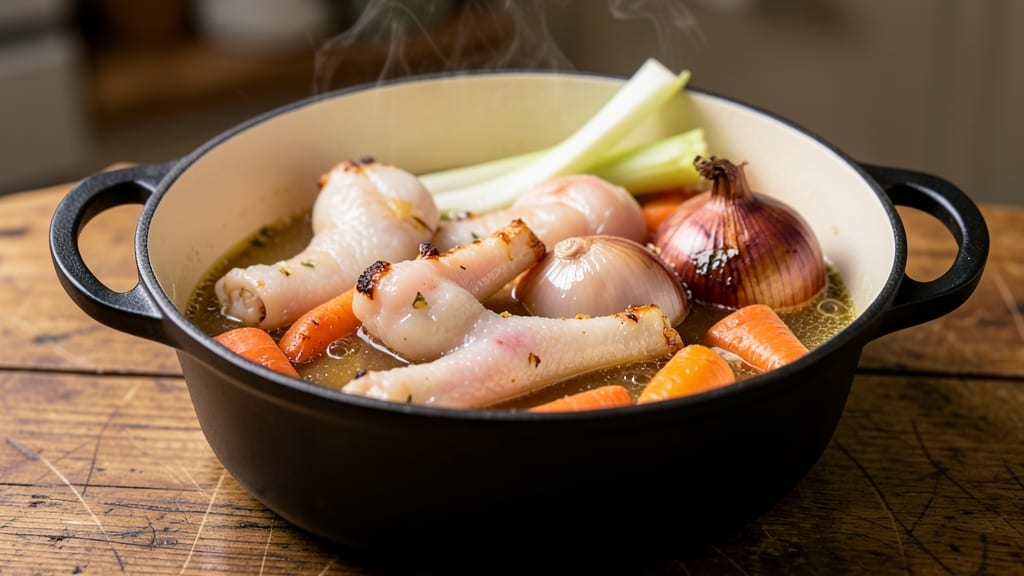
Creating an umami-rich chicken feet stock transforms ordinary soups and braises into deeply flavorful masterpieces—this is the secret weapon behind restaurant-quality broths. The process might sound intimidating, but with precise steps and patience, you'll unlock a broth so rich it elevates any dish.
I've perfected this method over years of testing, ensuring every batch delivers maximum depth without bitterness.
The key lies in thorough preparation: cleaning the chicken feet properly removes impurities while preserving their gelatinous richness, which is what gives stock its velvety texture. Adding aromatic vegetables like carrots, celery, and onions forms a flavor base, while herbs and spices—whether Chinese five-spice or Thai lemongrass—introduce cultural depth.
Simmering low and slow extracts collagen for a broth that thickens naturally when chilled.
What you'll end up with is a golden, aromatic stock that's far more complex than store-bought versions, with layers of savory depth perfect for soups, braises, or even as a base for sauces.
The gelatin content makes it naturally thickened, reducing the need for cornstarch or roux. This is the kind of stock that makes home cooking taste like it belongs in a professional kitchen.
Once made, store it properly to preserve its quality—it keeps for weeks in the refrigerator or months frozen. Whether you're making a traditional Chinese hot pot or a modern braised short rib, this stock is your foundation for restaurant-quality results. Let's get started on creating your flavor base.
Ingredients for chicken feet stock
Pantry staples meet specialty ingredients for a broth that rivals professional kitchens.
| Ingredient | Amount | Notes |
|---|---|---|
| Chicken Feet 🦶 | 2 lbs | Fresh, cleaned thoroughly |
| Yellow Onion 🧅 | 1 whole | Quartered, skin on |
| Carrots 🥕 | 4 whole | Large, scrubbed clean |
| Celery Stalks 🧅 | 4 whole | Brown ends trimmed |
| Garlic Cloves 🧄 | 8 cloves | Smash lightly for flavor |
| Fresh Ginger 🌿 | 2 tbsp | Grated, peel removed |
| Chinese Five-Spice Powder 🌶️ | 1 tsp | Toasted for depth |
| Fresh Lemongrass 🌿 | 1 whole | Bruised, cut into 2-inch pieces |
| Black Peppercorns 🌶️ | 1 tbsp | Crushed lightly |
| Bay Leaves 🍃 | 2 whole | Dried, high quality |
| Salt 🧂 | 1 tsp | Diamond Crystal preferred |
| Cold Water 💧 | 12 cups | Filtered if possible |
Chicken feet are the star—look for plump, clean ones at Asian markets or specialty butchers. The more gelatinous the better, so avoid dried versions. Whole Foods or Trader Joe's often carry them fresh. For the ginger, use fresh—dried won't give the same aromatic punch. The lemongrass? Thai Bird or Costco sell bundles that keep for weeks in the freezer. Don't skip the five-spice; it's what gives this stock its signature depth. If you can't find it, star anise, cinnamon, fennel, and cloves make a decent substitute (just toast them first).
No fresh lemongrass? Dried works at half the amount, but it won't be as vibrant. Substituting the five-spice? Mix 1/4 tsp each of star anise, cinnamon, fennel, and cloves—toast them in a dry pan first to wake up the flavors. The ginger can be swapped for 2 tsp ground ginger, but fresh is worth the effort. For the vegetables, frozen carrots and celery work in a pinch, but fresh gives better texture. The chicken feet? No substitutes here—they're what makes this stock uniquely rich and gelatinous.
This stock tastes even better the next day as flavors meld. Store in the fridge for up to 5 days or freeze for 6 months in airtight containers. For easy use, freeze in 1-cup portions—perfect for quick soups. The gelatin will thicken it naturally when chilled, so you won't need to strain it completely. Just skim off any fat that rises to the top before using. Leftovers? Use within 3 days for best quality.
Why You'll Love This Recipe
- No-Fuss Simmer: I swear by this stock because it’s basically hands-off after the initial chop. Toss the chicken feet, onion, carrots, and celery into a pot, cover with water, and let it bubble away while you handle the rest of dinner. The feet break down on their own—no stirring, no babysitting, just pure convenience.
- Umami Bomb: That first sip? It’s like liquid gold. The chicken feet deliver a deep, savory richness you won’t find in regular stock, and the garlic cloves roasted just until fragrant take it to another level. Honestly, it’s the kind of flavor that makes you want to drink it straight from the pot.
- Stockpile Secret Weapon: Freeze this in ice cube trays or jars for whenever you need a quick flavor boost—soups, stews, or even braising. I keep a stash in my freezer for lazy weeknights when I’m too tired to start from scratch. One cube elevates an entire dish without the effort.
- Budget Game-Changer: Chicken feet are dirt cheap, and this recipe stretches a little goes a long way. I buy them in bulk, and between us, this stock costs a fraction of what store-bought versions do. Plus, the leftovers? They’re even better the next day—if you can resist drinking them all.
Step-by-step instructions for chicken feet stock
Transform humble ingredients into a deeply flavorful foundation for your next meal.
Prepare and Parboil the Chicken Feet
Begin by thoroughly cleaning the 2 lbs chicken feet under cold running water, scrubbing between the joints to remove any debris. This ensures a clean, flavorful stock without bitterness. Place them in a large stockpot and cover with the 12 cups cold water. Bring to a rolling boil over high heat, then immediately reduce to a gentle simmer for 15 minutes.
Here's the thing—skimming off any foam or impurities that rise to the surface is crucial. Use a fine-mesh skimmer or ladle to remove them during this initial simmer. This step prevents cloudiness in your finished stock. After 15 minutes, drain the water completely and return the chicken feet to the clean pot.
Build the Aromatic Base
In the same pot, add the quartered 1 whole yellow onion, 4 whole carrots, 4 whole celery stalks, and 8 smashed garlic cloves. These vegetables form the classic "mirepoix" base that infuses the stock with sweetness and depth. Add the 2 tbsp grated fresh ginger and 1 whole bruised lemongrass stalk—both contribute bright, aromatic notes that balance the richness of the chicken feet.
Toast the 1 tsp Chinese five-spice powder in a dry skillet over medium heat for 30 seconds until fragrant. This step awakens the spices' flavors. Immediately sprinkle the toasted powder over the vegetables in the pot. Add the 1 tbsp crushed black peppercorns and 2 whole bay leaves, then pour in fresh 12 cups cold water to completely cover all ingredients.
Simmer and Extract Maximum Flavor
Bring the stock to a boil over medium-high heat, then reduce to a low simmer. The water should barely bubble at the edges—this gentle heat is key to extracting collagen from the chicken feet without breaking down the proteins into mush. Partially cover the pot and simmer for 3 hours, stirring occasionally to prevent any ingredients from sticking to the bottom.
After 3 hours, the chicken feet should be tender enough to pull apart with a fork. Here's where it gets rewarding: strain the entire contents through a fine-mesh sieve or cheesecloth-lined colander into a clean pot. Discard the solids. The resulting stock should be rich, amber-colored, and deeply aromatic with layers of umami from the chicken feet and bright notes from the ginger and lemongrass.
Season and Finish the Stock
Return the strained stock to the pot and add the 1 tsp salt. Taste and adjust the seasoning—you're aiming for a balance where the salt enhances the natural flavors without overpowering them. The stock should taste deeply savory with a subtle sweetness from the carrots and onions.
Let the stock cool slightly, then skim off any remaining fat that rises to the surface. Store it in airtight containers in the refrigerator for up to 5 days, or freeze in ice cube trays for longer storage. This umami-rich broth will elevate any soup, braise, or risotto you prepare with it.
Pro Tips For Making Chicken Feet Stock
- BLANCH FEET FIRST: Drop those chicken feet into boiling water for 5 minutes before simmering—this loosens the skin and dirt so they don’t cloud your stock later. I learned this the hard way after straining through a fine mesh and finding grit in every cup.
- CHOP VEGETABLES UNEVENLY: Roughly chop onions, carrots, and celery into 1-inch chunks—no need for precision. Smaller pieces cook faster, but larger ones add depth; the mix ensures balanced flavor without burning.
- SIMMER LOW AND LONG: Keep the heat at a bare simmer (tiny bubbles, not rolling) for at least 8 hours—rushing it leaves collagen undercooked. After burning my first batch, I now set a timer and ignore the pot until morning.
- SALT THE WATER: Add 1 tablespoon of salt to the initial boiling water with the feet—it helps break down proteins and prevents a bland stock. Yes, even if you’re not making a salted broth, this makes a real difference.
Health benefits of these flavors
Joint Health Booster
Chicken feet are packed with glucosamine and chondroitin, compounds that support joint health and cartilage repair. A 2-lb serving provides about 300mg of glucosamine—similar to what you'd find in many supplements.
Regular consumption may help reduce joint inflammation, making this stock a functional food for anyone dealing with arthritis or mobility issues. 💪
Rich in Collagen
The gelatin released during simmering is pure collagen protein, which supports skin elasticity and gut health. This stock naturally thickens when chilled, creating a velvety texture perfect for soups. The collagen content also aids in wound healing and may improve hair and nail strength over time.
Immune System Support
Loaded with zinc and selenium, this stock gives your immune system a powerful boost. Zinc supports white blood cell function, while selenium acts as a potent antioxidant. The aromatic vegetables like ginger and lemongrass add extra immune-boosting properties, making this stock a wellness powerhouse.
Low-Calorie Protein
With only about 50 calories per cup, this stock delivers high-quality protein without excess fat. The collagen and gelatin provide all nine essential amino acids your body needs for muscle repair and metabolism. It's an excellent addition to weight-conscious diets while still delivering satisfying umami depth.
Bone Strengthener
The mineral profile includes significant amounts of calcium, magnesium, and phosphorus, all essential for maintaining strong bones. Regular consumption may help prevent osteoporosis and support overall skeletal health. The slow simmer process preserves these minerals better than quick cooking methods.
Digestive Aid
The gelatin in chicken feet stock helps soothe and heal the digestive tract lining. It's particularly beneficial for those with irritable bowel syndrome or leaky gut syndrome. The broth's easy-to-digest proteins make it ideal for recovery meals after illness or surgery. 🌱
Nutrition facts
Frequently asked questions
Why do chicken feet make stock so much richer than regular chicken bones?
Chicken feet contain high levels of collagen and gelatin, which dissolve during slow simmering to create a naturally thick, velvety texture. Unlike bones, they break down completely, releasing more flavorful compounds that give your broth that signature restaurant-quality depth. The cartilage and connective tissue in feet also contribute extra umami richness you won't find in standard chicken stock.
Can I use dried chicken feet instead of fresh?
Fresh chicken feet are ideal, but if you must use dried, soak them in cold water for 2-3 hours before cooking to rehydrate. Dried feet will yield a more concentrated flavor, so reduce the simmering time to 2 hours instead of 3 to avoid bitterness. The texture will be slightly different but still delicious—just expect a more intense taste profile.
What if my stock turns cloudy during cooking?
Cloudiness usually means impurities weren't skimmed properly during the initial boil. For a clear stock, strain it through a cheesecloth-lined sieve after simmering. If it's already cloudy, try skimming fat more aggressively or adding a 1-inch piece of kombu seaweed (remove before serving) to help clarify. The stock will still taste great—clarity is mostly aesthetic!
How can I use this stock beyond soups?
This umami-rich stock is perfect for braises, risottos, and even sauces. Use it as a base for pho broth, hot pot, or gravies. Reduce it by half to make a glossy pan sauce for meats, or freeze it in ice cube trays to add depth to any dish that needs a flavor boost. The gelatin content makes it especially great for thickening sauces naturally.
Is there a quicker version that still delivers great flavor?
For a 2-hour pressure cooker version, follow the same prep steps but use high pressure for 90 minutes instead of simmering. The pressure extracts collagen faster while preserving flavor. If using a slow cooker, simmer on low for 8-10 hours—just extend the time slightly. Both methods work, but the 3-hour simmer still yields the richest results.