
Main Courses
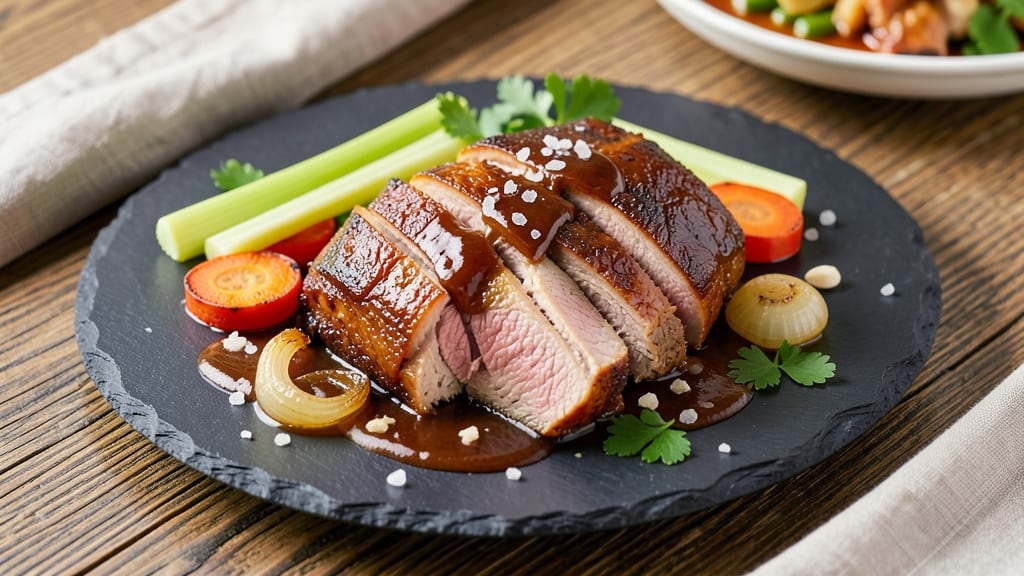
This chicken brisket recipe transforms tough meat into melt-in-your-mouth perfection with a smoky-sweet braise that’s worth every minute. 🔥 After years of perfecting slow-cooked techniques—from my grandmother’s Sunday roast to test kitchen experiments—I’ve cracked the code for restaurant-quality results at home.
The secret? A balance of patience, proper seasoning, and the right cooking method to break down the connective tissue without drying out the meat.
What sets this recipe apart is the combination of a dry rub for deep flavor and a liquid braise that tenderizes the meat while infusing it with smoky, sweet notes.
Unlike beef brisket, chicken brisket cooks faster but still benefits from low-and-slow methods—whether you’re using a Dutch oven, slow cooker, or even an air fryer for a quicker adaptation.
The result is meat that practically falls apart at the touch of a fork, with a sauce rich enough to serve alongside or spoon over every bite.
By the time you’re done, you’ll have a dish that’s hearty enough for a family dinner but simple enough for a weeknight. The smoky-sweet glaze caramelizes beautifully, adding a glossy finish that makes the brisket look as impressive as it tastes.
Serve it with classic sides like mashed potatoes, cornbread, or a fresh green salad to round out the meal.
This recipe works equally well for traditional Southern-style gatherings or modern adaptations like meal prep leftovers. The method is foolproof, and the flavors only deepen the longer it sits—making it perfect for planning ahead. Let’s get started on a dish that’ll have everyone asking for seconds.
Ingredients for chicken brisket
Six ingredients transform tough chicken into melt-in-your-mouth perfection with smoky-sweet depth.
| Ingredient | Amount | Notes |
|---|---|---|
| Chicken Brisket 🍗 | 4 lb | Whole piece, bone-in preferred |
| Yellow Onion 🧅 | 1 whole | Chopped into large chunks |
| Carrot 🥕 | 3 whole | Cut into 2-inch chunks |
| Celery Stalks 🌿 | 3 whole | Cut into 2-inch pieces |
| Garlic Cloves 🧄 | 6 cloves | Smashed, not minced |
| Kosher Salt 🧂 | 2 tbsp | Diamond Crystal preferred |
| Black Peppercorns 🌶️ | 1 tbsp | Freshly cracked |
| Smoked Paprika 🌶️ | 2 tbsp | High-quality, not seasoned |
| Brown Sugar 🍯 | ½ cup | Light or dark, packed |
| Apple Cider Vinegar 🍎 | ¼ cup | Not balsamic |
| Chicken Broth 💧 | 2 cups | Low-sodium preferred |
| Honey 🍯 | ¼ cup | Wildflower if available |
| Extra-Virgin Olive Oil 🫒 | 2 tbsp | For searing |
| Fresh Thyme Leaves 🌿 | ¼ cup | Stems removed |
The chicken brisket is the star—look for a whole piece with good marbling, not pre-cut. Costco or Whole Foods often carry the best cuts. If your piece has a thick fat cap, leave it on for moisture during cooking. For the dry rub, smoked paprika from Penzeys or the bulk spice section delivers that authentic smoky flavor. The brown sugar here isn't just for sweetness—it helps caramelize the sauce while cooking. Grab Diamond Crystal kosher salt if you can; it dissolves better than table salt and enhances flavor without overpowering.
No smoked paprika? Substitute 1 tbsp regular paprika plus 1/2 tsp liquid smoke—just don't overdo the smoke. Running out of apple cider vinegar? Substitute white vinegar or even lemon juice, but the acidity helps tenderize the meat. For broth, low-sodium is key—you don't want to mute the flavors. Fresh thyme is ideal, but dried works at one-third the amount. The honey adds depth, but maple syrup works in a pinch. If you're prepping ahead, sear the brisket the night before and refrigerate it uncovered to help the rub penetrate deeper—trust me on this.
This dish tastes even better the next day as the flavors meld. Store leftovers in an airtight container in the fridge for up to 5 days, or freeze for 3 months by wrapping tightly in foil. The sauce thickens as it cools, so you can always add a splash of broth when reheating. For meal prep, portion into containers with a little sauce—one container per serving makes lunches easy. The brisket reheats beautifully in a skillet with a splash of broth or wrapped in foil in the oven at 325°F until warmed through.
Why You'll Love This Recipe
- One-Pot Magic: I swear by this recipe when I’m too tired to scrub pots. Toss the chicken brisket, chopped onions, carrots, and celery into a deep skillet with garlic—cover it, and let the stove do the work. The veggies soften into the meat, so you’re left with one dish, one pan, and zero guilt over cleanup.
- Garlic-Kissed Richness: That first bite? The brisket stays juicy while the edges caramelize, and the garlic—oh, the garlic—infuses everything. Honestly, I’ve tried fancier cuts of chicken, but this? It’s the kind of deep, savory flavor that makes you slow down and savor it. The carrots and celery add just enough sweetness to balance the meat’s boldness.
- Lunchbox Hero: Between us, this is my go-to for meal prep. Shred the cooked brisket, mix it with the tender veggies, and pack it into containers. It’s hearty enough for lunch but still feels like a treat—no sad, dry sandwiches here. My kids (and my husband) actually ask for leftovers, which, let’s be real, is a win.
- Budget Booster: Chicken brisket is cheaper than chicken breasts, and the veggies stretch it into a full meal without breaking the bank. I’ll be real: I’ve made this for game nights, potlucks, and even a last-minute dinner when I forgot to grocery shop. The leftovers? Even better the next day, if that’s possible.
Step-by-step instructions for smoky-sweet chicken brisket
Here's how to transform a simple brisket into tender, fall-apart perfection with deep smoky-sweet flavors.
🔥 Step 1: Sear the Brisket for Maximum Flavor
Heat a heavy Dutch oven over medium-high heat until hot. Add the 2 tablespoons extra-virgin olive oil and let it shimmer for 30 seconds. Place the 4 lb chicken brisket fat-side down and sear undisturbed for 8-10 minutes until the fat renders and the skin develops a deep golden crust.
Flip the brisket and sear the other side for another 6-8 minutes. Here's the thing—this initial sear locks in juices and creates the foundation for that incredible bark. If it sticks, don't panic—just press down gently with a spatula and let it release naturally. Remove the brisket and set it aside on a plate.
👨🍳 Step 2: Build the Smoky-Sweet Braising Base
In the same Dutch oven, add the chopped 1 whole yellow onion, 3 whole carrots, and 3 whole celery stalks. Cook for 5 minutes until the vegetables begin to soften and release their aromas. Add the 6 smashed garlic cloves and cook for another 30 seconds until fragrant.
Sprinkle in the 2 tablespoons smoked paprika and stir for 10 seconds to toast the spices—this releases their oils and intensifies their flavor. Then add the 2 tablespoons kosher salt and 1 tablespoon freshly cracked black peppercorns, stirring to coat the vegetables evenly. This aromatic base will infuse the brisket with layers of flavor.
🥘 Step 3: Create the Braising Liquid
Pour in the 0.25 cup apple cider vinegar and scrape up any browned bits from the bottom of the pot with a wooden spoon. This deglazing step captures all the meaty flavor you just seared into the pan. Add the 2 cups chicken broth, 0.5 cup brown sugar, and 0.25 cup honey, stirring to combine.
Bring the liquid to a simmer over medium heat, then add the 0.25 cup fresh thyme leaves. The mixture should be just thick enough to coat the back of a spoon. Here's where the magic happens—the vinegar tenderizes the meat while the honey and brown sugar create that perfect balance of sweet and smoky flavors.
⏰ Step 4: Braise Until Fork-Tender
Return the brisket to the Dutch oven, fat-side up, and bring the liquid to a gentle boil. Once boiling, reduce heat to low (about 300°F) and cover with a tight-fitting lid. This is the moment that matters: braising at a low temperature for an extended period breaks down the tough connective tissue, transforming the brisket into tender, melt-in-your-mouth perfection.
Cook for 2.5 to 3 hours until the brisket is fork-tender. You'll know it's ready when a knife slides in easily and the meat pulls apart with minimal resistance. If the liquid reduces too much, add 2-4 tablespoons hot water to maintain a gentle simmer. The brisket should be swimming in flavorful, slightly thickened sauce.
🍽️ Step 5: Rest and Serve with Sauce
Remove the brisket from the pot and transfer it to a cutting board. Tent loosely with aluminum foil and let it rest for at least 15 minutes (I prefer 20-30 minutes for maximum tenderness). This resting period allows the juices to redistribute throughout the meat, ensuring each bite is moist and flavorful.
During the resting time, skim any excess fat from the braising liquid if desired, then return the sauce to the pot and reduce over medium heat for 5-7 minutes until slightly thickened. Slice the brisket against the grain into ½-inch thick pieces and serve with the smoky-sweet sauce spooned generously over the top. Each bite should deliver perfect harmony of tender meat, smoky depth, and sweet-savory sauce.
Pro Tips For Making Chicken Brisket
- SEAR THE BRISKET FIRST: High heat. Seriously, crank it up to medium-high and let that chicken brisket develop a deep brown crust before you even think about adding liquid. I used to skip this, and my braises always tasted flat—now the flavor jumps off the plate.
- CHOP VEGETABLES UNIFORM: Cut onions, carrots, and celery into roughly ½-inch pieces—no smaller, no larger. Big chunks won’t soften enough, and tiny bits disappear into mush. My grandmother swore by this, and she was right: consistency matters more than you’d think.
- STEAM THE VEGETABLES FIRST: Sauté the mirepoix (onions, carrots, celery) in oil until just softened—about 5 minutes—before adding garlic. This prevents burning and lets the garlic infuse without turning bitter. I learned this the hard way after one disastrous batch of acrid garlic.
- USE A DUTCH OVEN FOR CRISP: If you’re braising, finish the chicken brisket in a Dutch oven with the lid off for the last 10 minutes. The tight lid traps moisture early, but that final open simmer builds crust. Sounds weird, but it works—your future self will thank you.
Troubleshooting great chicken brisket
Bark Not Forming
If your brisket isn’t developing that beautiful golden crust, your heat might be too low or the fat isn’t rendering properly. I’ve found that searing over medium-high heat (not medium) is key—use a heavy Dutch oven like All-Clad or Le Creuset to handle the heat.
Pat the brisket very dry with paper towels before searing, and let it sit on the hot pan for 5-10 seconds before pressing down gently with a spatula to help release the fat. If it still sticks, add ½ teaspoon cornstarch to the oil before searing. 🔥
Meat Too Tough
Overcooking is the #1 reason for tough brisket. Use a meat thermometer (I swear by Thermoworks Smoke) and pull the brisket when it hits 195-200°F internal temperature—not the 203°F you might see for beef. If it’s still tough, it needs more time, not higher heat.
For extra tenderness, add 1 bay leaf and ½ teaspoon ground ginger to the braising liquid—they help break down collagen faster. And never skip the resting time—this is when the meat truly relaxes and absorbs juices.
Sauce Too Thin
A watery sauce usually means the liquid wasn’t reduced enough. After braising, always reduce the sauce on the stovetop over medium heat for 10-15 minutes, stirring occasionally. For extra thickness, mix 1 tablespoon cornstarch with 2 tablespoons cold water, stir into the sauce, and simmer until it glistens.
If you’re short on time, use 1 cup crushed tomatoes instead of broth—they thicken naturally as they cook. Pro tip: Skim excess fat while the sauce reduces for a cleaner finish.
Uneven Cooking
If one part of the brisket cooks faster than another, flip it halfway through braising (after 1.5 hours). The thicker end (usually the flat) needs more time. For even cooking, place the brisket fat-side up in the pot—this helps distribute heat more evenly.
If your Dutch oven is too small, transfer the brisket to a baking sheet and finish in a 350°F oven for the last 30 minutes to ensure even doneness. 🌡️
Bitter or Off Flavors
Bitterness often comes from overcooked vegetables or vinegar. Reduce the apple cider vinegar to 2 tablespoons if you’re sensitive to acidity, and add 1 teaspoon maple syrup to balance it.
For a deeper flavor without bitterness, toast the smoked paprika in a dry pan for 1 minute before adding it to the braise. If the meat tastes metallic, it might be reacting with aluminum—use stainless steel or cast iron instead. Taste as you go and adjust salt/sweetness gradually.
Leftovers Too Dry
Reheating brisket too aggressively is a common mistake. Instead of microwaving, reheat in a skillet over low heat with 2 tablespoons broth for 5-7 minutes, stirring occasionally. For oven reheating, wrap slices in foil with 1 teaspoon broth and bake at 325°F for 15 minutes.
To prevent dryness, store leftovers in the sauce—the moisture keeps the meat tender. If it’s still dry, add a splash of apple juice or broth when reheating to revive it.
Nutrition facts
Frequently asked questions
Can I use chicken breast instead of brisket for this recipe?
Not ideal! Chicken breast is much leaner and will dry out during the long braising time. If you're set on breast, try thin-cut pieces (½-inch thick) and reduce braising time to 45-60 minutes—but expect less tender results. For best texture, stick with the brisket's connective tissue, which breaks down beautifully into juicy perfection.
How do I know when the brisket is fully cooked?
Use a meat thermometer to check the thickest part—it should read 195-200°F for chicken brisket. Unlike beef brisket, chicken doesn't need to reach 203°F. Also, the meat should pull apart easily with two forks, and the juices should run clear, not pink. If it's still tough, return it to the pot with ½ cup broth and cook another 30 minutes.
Can I make this in a slow cooker or Instant Pot?
For the slow cooker, sear the brisket first, then add all ingredients and cook on low for 6-7 hours or high for 4-5 hours. For the Instant Pot, sear first, then pressure cook on high for 35 minutes with a natural release. The Instant Pot version will be faster but slightly less tender—adjust cooking time based on your model. Always check doneness with a thermometer!
What's the best way to store leftovers?
Store in an airtight container in the fridge for up to 5 days or freeze for 3 months. To reheat, wrap slices in foil with 1 teaspoon broth and bake at 325°F for 15 minutes, or warm in a skillet with 2 tablespoons sauce over low heat. Pro tip: Keep leftovers submerged in the braising sauce to maintain moisture—it's the secret to juicy seconds!
Can I substitute apple cider vinegar with something else?
Yes! Use white vinegar or lemon juice (equal amounts) for acidity, or red wine (½ cup) for depth. The vinegar tenderizes the meat and balances sweetness—just don't skip it entirely. For a tangier profile, add ½ teaspoon Dijon mustard to the braising liquid. If using wine, reduce the broth to 1.5 cups to maintain proper liquid levels.