
Main Courses
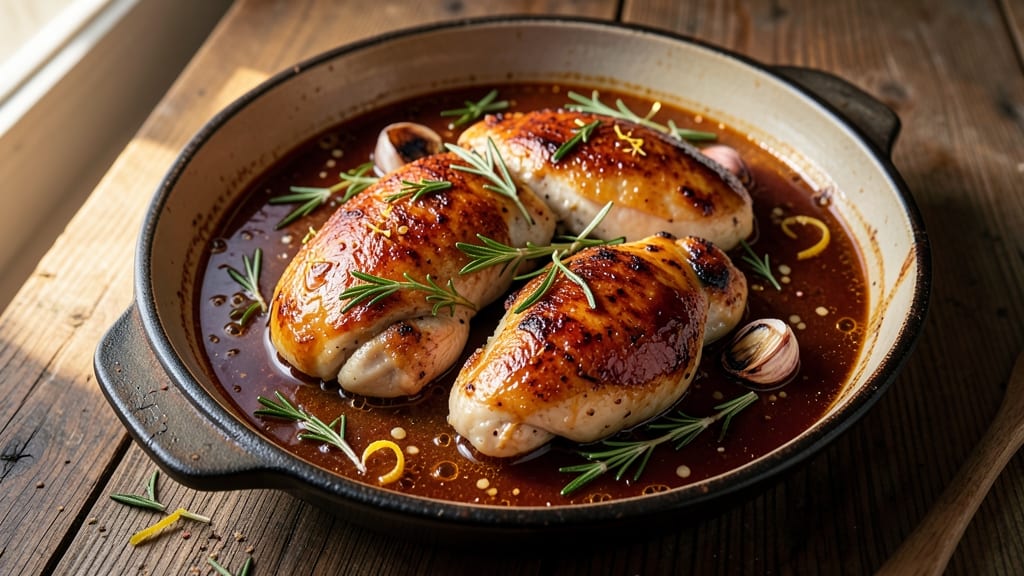
This baked honey Dijon mustard chicken recipe delivers the perfect balance of crispy golden skin and impossibly tender, juicy meat—every time. The secret lies in a sweet-tangy glaze that caramelizes beautifully in the oven while keeping the chicken succulent inside.
I developed this technique after years of experimenting with glazes that either burned the edges or left the meat dry.
The process is straightforward but yields restaurant-quality results: a simple marinade of Dijon mustard, honey, and aromatics transforms ordinary chicken into something extraordinary. Baking at 375°F for 25–30 minutes ensures the glaze develops a glossy sheen while the skin becomes irresistibly crisp.
The mustard adds depth, while the honey creates a sticky, caramelized crust that clings to every bite.
What you’ll end up with is a dish that’s equally impressive for weeknight dinners or special occasions—juicy enough to satisfy meat lovers and crispy enough to tempt even the pickiest eaters. The glaze isn’t just decorative; it’s the star, balancing sweet, tangy, and savory notes in every forkful.
Pair it with roasted potatoes or a fresh green salad to round out the meal. The technique is foolproof, and the results are consistently delicious. Let’s get started!
Ingredients for baked honey dijon mustard chicken
Restaurant-quality glaze meets home-cooked simplicity with these 12 essential ingredients.
| Ingredient | Amount | Notes |
|---|---|---|
| Boneless, Skinless Chicken Thighs 🍗 | 1 ½ lb | Evenly sized for consistent cooking |
| Dijon Mustard 🍯 | ¼ cup | High-quality, smooth variety |
| Honey 🍯 | ⅓ cup | Wildflower or clover preferred |
| Olive Oil 🫒 | 2 tbsp | Extra-virgin for richness |
| Garlic Cloves 🧄 | 4 cloves | Minced for marinade |
| Fresh Rosemary 🌿 | ½ tsp | Finely chopped, fresh preferred |
| Salt 🧂 | 1 ½ tsp | Diamond Crystal kosher salt |
| Black Pepper 🌶️ | ½ tsp | Freshly ground for best flavor |
| Yellow Onion 🧅 | 1 whole | Finely diced, yellow or red |
| Fresh Thyme Leaves 🌿 | ¼ cup | Chopped, fresh preferred |
| Balsamic Vinegar 🍷 | 1 tbsp | For depth of flavor |
| Granulated Sugar 🍚 | 1 tbsp | Balances sweetness |
The chicken thighs are the foundation—bone-in, skin-on gives you the best crispy skin, but boneless works if that's what you've got. Whole Foods or Trader Joe's carry excellent pre-cut thighs, but any grocery store's fresh cut will do. Look for pieces with good marbling and bright red color. The Dijon mustard should be smooth, not grainy—Maille is my go-to, but any high-quality brand works. Honey matters too; local wildflower adds subtle floral notes that complement the mustard beautifully. If you're in a pinch, clover honey still delivers that caramelized crust.
No Dijon mustard? Whole-grain mustard thinned with water works in a bind, though it won't be as smooth. Fresh herbs can be swapped for dried at a one-third ratio—so 1 tsp dried thyme for the 0.25 cup fresh. The balsamic vinegar isn't just for flavor; it helps the glaze cling to the chicken. Store-bought glaze mixes can be used, but homemade always tastes better. For the onions, yellow or red both work, but red adds a subtle sweetness that pairs perfectly with the honey. The sugar isn't just for sweetness—it helps the glaze caramelize for that perfect golden finish.
Store raw chicken in the coldest part of your fridge and use within 2 days for best results. Fresh herbs last 5-7 days wrapped in damp paper towels. The glaze components (honey, mustard, vinegar) can be pre-mixed and stored in the fridge for up to 1 week, though it's best used fresh. Once glazed, chicken can be prepped 6 hours ahead—just bake straight from the fridge, adding 5-10 minutes to the cooking time. The leftovers reheat beautifully; 350°F for 15 minutes restores that crispy skin.
Why You'll Love This Recipe
- Five-Ingredient Magic: I swear by this combo—chicken thighs stay juicy while the honey and Dijon caramelize into a sticky, tangy glaze. No fancy prep, just toss, bake, and let the oven do the work.
- Weeknight Hero: Between us, this is the dish I make when I’m too tired to think. Twenty minutes in the oven while I chop veggies or throw together a side salad—minimal effort, maximum flavor.
- Leftovers That Don’t Suck: Honestly, the second day is even better. The glaze thickens slightly, clinging to the chicken like a sweet, savory hug. Pack it for lunch or reheat it for dinner—no one will complain.
- Budget-Friendly Feast: Chicken thighs are cheaper than breasts, and this recipe stretches easily for four servings. The honey and Dijon add richness without breaking the bank, and the garlic? Just one clove makes everything sing.
Step-by-step instructions for baked honey Dijon mustard chicken
Here's the method for achieving that perfect balance of crispy skin and tender, flavorful meat.
Prepare the Glaze and Marinate the Chicken
In a medium bowl, whisk together the 0.25 cup Dijon mustard, 0.33 cup honey, 2 tbsp olive oil, 1 tbsp balsamic vinegar, and 1 tbsp granulated sugar until fully combined. The mixture should be smooth with no visible streaks of sugar. This glaze forms the foundation of the dish, delivering both sweetness and tangy depth.
Next, add the 1 whole yellow onion that's been finely diced, 4 minced garlic cloves, 0.5 tsp finely chopped fresh rosemary, 0.25 cup chopped fresh thyme leaves, 1.5 tsp salt, and 0.5 tsp freshly ground black pepper. Stir well to distribute all the seasonings evenly. Place the 1.5 lb boneless, skinless chicken thighs in a separate bowl and pour the marinade over them. Use your hands to coat each piece thoroughly, ensuring the mustard mixture clings to the meat. Cover and refrigerate for at least 2 hours or up to overnight for maximum flavor penetration.
Preheat and Prepare the Baking Setup
Preheat your oven to 425°F. The high temperature is crucial for achieving that crispy skin while keeping the meat juicy. Line a rimmed baking sheet with aluminum foil for easy cleanup. Arrange a wire rack on top of the foil to allow air to circulate underneath the chicken, which promotes even browning.
Remove the marinated chicken from the refrigerator and let it sit at room temperature for 15-20 minutes before baking. This step ensures even cooking throughout. Arrange the chicken thighs on the prepared wire rack, skin-side up, leaving about 1 inch of space between each piece. This spacing allows the glaze to crisp properly without steaming.
Bake for Crispy Skin and Juicy Centers
Place the baking sheet in the preheated oven and bake for 25 minutes. After this initial period, you'll want to flip each piece of chicken and baste with any accumulated pan juices. The skin should be golden brown and starting to crisp, while the internal temperature should reach 165°F when checked with an instant-read thermometer.
Return the chicken to the oven for another 10-15 minutes or until the skin is deep golden brown and crispy, and the internal temperature reaches 175°F. The longer bake time at this temperature ensures the chicken is fully cooked while maintaining moisture. If the skin isn't crispy enough after baking, transfer the chicken to a broiler-safe pan and broil for 1-2 minutes on high, watching closely to avoid burning.
Rest and Serve with Glazed Perfection
Remove the chicken from the oven and transfer it to a cutting board. Let it rest for 5-10 minutes before serving. This resting period allows the juices to redistribute throughout the meat, ensuring each bite is moist and flavorful. During this time, you can place the baking sheet under the broiler for 1-2 minutes to caramelize any remaining glaze in the pan, creating a delicious sauce.
Serve the chicken immediately, spooning any caramelized glaze from the pan over the top. The result should be crispy, golden-brown skin that gives way to tender, juicy meat infused with the sweet-tangy Dijon mustard glaze. Pair with roasted vegetables or a fresh salad to complete the meal, and enjoy the perfect balance of textures and flavors.
Pro Tips For Making Baked Honey Dijon Mustard Chicken
- Preheat Like It’s 1999: Your oven’s gonna be hot—425°F (220°C) is non-negotiable for this dish. I learned this the hard way after baking a batch at 375°F and ending up with soggy, undercooked chicken that tasted more like a sad sandwich than a restaurant-worthy bite. Crank that heat and let it blast for 10 minutes before adding the thighs.
- Whisk That Mustard: Dijon mustard clumps like a grumpy cat if you don’t whisk it first. Mix 2 tablespoons of Dijon with 1 tablespoon of honey right in the bowl before adding olive oil and garlic—this ensures a smooth, glossy glaze that sticks to the chicken instead of sliding off in uneven patches. (Yes, even if you’re impatient like me.)
- Skip the Overcrowding: Pile those thighs too close together, and you’re asking for steam instead of a caramelized crust. Arrange them in a single layer with space between each piece—think "snug but not suffocating." If your pan’s too small, bake in batches. Trust me, the difference in texture is like night and day.
- Rest Before Serving: The moment you pull the chicken out of the oven, tent it with foil and let it sit for 5-10 minutes. I used to cut into it immediately, and the glaze would pool like a sad puddle while the juices escaped. This step guarantees the sauce stays where it belongs—on the chicken, not your plate.
Common mistakes when making perfect results
Over-Marinating Risks
Leaving your chicken in the glaze for more than 4 hours can break down the proteins too much, resulting in mushy meat. I’ve seen this happen when people forget about their chicken overnight.
The 2-4 hour marinade is perfect—enough time for flavor penetration without compromising texture. Always set a timer if you’re multitasking! 🕒
Skipping the Rest Time
Cutting into chicken immediately after baking causes juices to spill out, leaving you with dry meat. That 5-10 minute rest is non-negotiable—it lets the muscle fibers relax and redistribute moisture. I’ve made this mistake too many times, and the difference is night and day. Trust the process! 💫
Uneven Glaze Application
If your glaze isn’t clinging evenly, the skin won’t crisp properly. Use your hands to coat every inch of the chicken, especially the skin. I recommend reserving 2 tbsp of glaze to brush on during the last 5 minutes of baking for extra shine and crispiness.
A thin layer is better than thick clumps! 🍯
Baking at Wrong Temperature
Using 350°F instead of 425°F will give you tender meat but soggy skin. The high heat is key for that perfect crust while keeping the inside juicy. If your oven runs hot, reduce to 400°F—just don’t go lower. An oven thermometer helps avoid surprises! 🌡️
Ignoring the Wire Rack
Baking chicken directly on the pan traps steam, leading to steamed (not crispy) skin. That wire rack creates airflow underneath, promoting even browning. If you don’t have one, use a cooling rack or even crumpled foil—just elevate the chicken! 🔥
Overcrowding the Pan
Placing chicken pieces too close together causes uneven cooking and steaming. Leave at least 1 inch between thighs for proper airflow. I’ve had to rebake crowded chicken because the centers stayed undercooked while the edges burned. Patience pays off here! 🍗
Nutrition facts
Frequently asked questions
Can I use chicken breasts instead of thighs?
Chicken breasts will work, but they cook faster and dry out more easily. For best results, use bone-in, skin-on breasts (like drumsticks) or pound them to ½-inch thickness. Reduce baking time to 20-25 minutes total and watch closely after 15 minutes to avoid overcooking. The skin won't be as crispy as thighs, but the flavor will still be fantastic!
How do I adjust the recipe for a slow cooker?
For a slow cooker, marinate the chicken as directed, then place it in the pot with ¼ cup water or broth. Cook on low for 4-5 hours or high for 2-3 hours. The glaze will thicken as it cooks—brush extra on during the last 30 minutes for shine. The skin won't be crispy, but the meat stays juicy and flavorful. Perfect for meal prep!
Why is my glaze turning too runny?
The glaze may separate if the honey and mustard aren't fully combined or if you add too much liquid. Whisk vigorously until smooth, then simmer the glaze for 2-3 minutes on the stove to thicken it slightly. For extra stability, add 1 tsp cornstarch mixed with 1 tbsp water to the marinade before cooking. Always reserve 2 tbsp of glaze for basting during baking!
What sides pair best with this dish?
This sweet-tangy chicken shines with crispy roasted potatoes (tossed in olive oil and rosemary) or garlic mashed potatoes for comfort food vibes. For lighter options, try quinoa salad with cucumber and feta, or steamed green beans with lemon zest. The glaze's bold flavor cuts through rich sides beautifully—just avoid overly sweet vegetables like carrots!
Can I make this gluten-free?
Yes! Simply replace the Dijon mustard with gluten-free mustard (like Annie's or Primal Kitchen brands). Double-check all other ingredients for hidden gluten—some honey and vinegars may contain traces. The recipe remains completely gluten-free while keeping all the flavor. Always verify labels, as gluten-free mustards can vary in tanginess!