
Main Courses
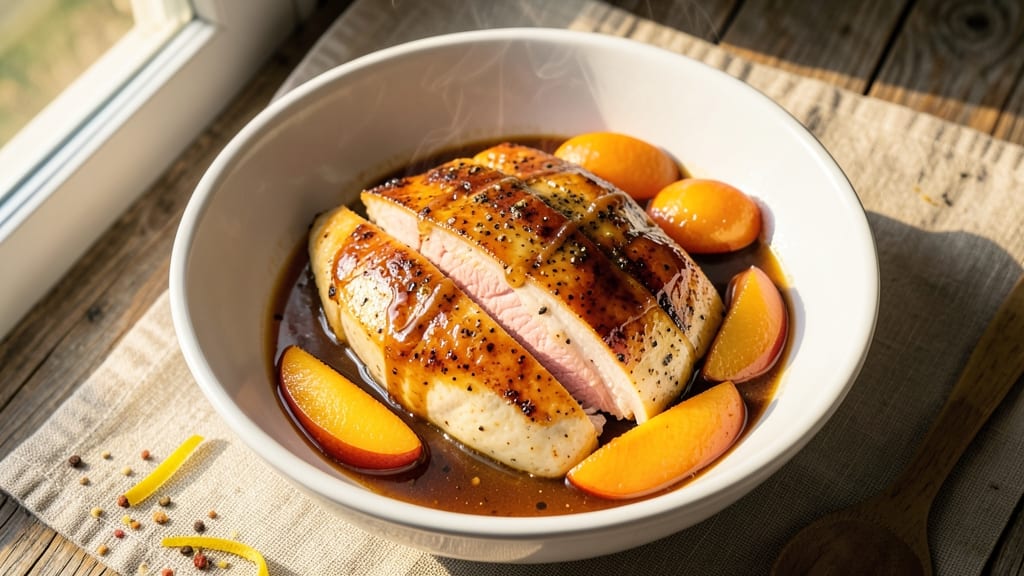
This baked chicken with canned peaches recipe transforms a simple weeknight meal into something unexpectedly elegant. The sweet-tart glaze caramelizes beautifully, creating edges that are crispy and golden, while the tender chicken absorbs just enough fruit sweetness to balance its savory depth.
I first tried this when I had leftover canned peaches and a chicken breast that needed rescuing—what started as a last-minute solution became my go-to summer dish.
The secret lies in the glaze: simmering the peaches with a touch of brown sugar and mustard creates a sticky, caramelized sauce that clings to the chicken without overwhelming it. A splash of apple cider vinegar cuts through the sweetness, ensuring the dish remains sophisticated rather than cloying.
This technique works with any canned peaches, so you can use what you have on hand without sacrificing flavor.
What you'll end up with is golden, juicy chicken with a glossy, caramelized crust that's both sweet and savory—a perfect balance of textures and flavors. The peach glaze adds a hint of summer freshness, while the mustard and vinegar keep the dish from feeling too heavy.
It's the kind of meal that feels special but doesn't require hours in the kitchen.
Serve with a simple side of roasted green beans or a crisp salad to let the chicken shine. The glaze also works beautifully drizzled over roasted potatoes or even as a quick sauce for grilled fish. Here's how to make it—simple, foolproof, and impossible to resist.
Ingredients for baked chicken with canned peaches
Sweet-tart glaze meets juicy chicken—all you need for this elegant weeknight dinner.
| Ingredient | Amount | Notes |
|---|---|---|
| Boneless, Skinless Chicken Breast 🍗 | 1 ½ lb | Pounded to even thickness |
| Canned Peaches 🍑 | 15 oz | Drained, any variety |
| Brown Sugar 🍚 | ¼ cup | Packed lightly |
| Apple Cider Vinegar 🍏 | 2 tbsp | For tangy balance |
| Dijon Mustard 🌶️ | 1 tbsp | For depth of flavor |
| Olive Oil 🫒 | 2 tbsp | Extra-virgin preferred |
| Garlic Cloves 🧄 | 2 cloves | Minced for aroma |
| Salt 🧂 | 1 tsp | Kosher or sea salt |
| Black Pepper 🌶️ | ½ tsp | Freshly ground |
| Fresh Rosemary 🌿 | 1 tbsp | Chopped, for herbal note |
| Green Onion 🧅 | 2 whole | Sliced, for garnish |
The canned peaches are the star, so grab the juicy, ripe-looking ones—none of that mushy, watery stuff. Del Monte or Libby's are my go-tos, but any brand with good drainage works. The chicken? Boneless, skinless breasts are easiest, but thighs stay juicier if you're feeling fancy. Pound them to even thickness so they cook uniformly. For the brown sugar, lightly packed means no compacting—just scoop and go. And that rosemary? Fresh is best, but dried works in a pinch if you've got it.
No Dijon mustard? Yellow mustard at double the amount gets you close. Short on apple cider vinegar? White vinegar or lemon juice works too—just taste as you go. Using frozen peaches? Thaw and drain them first. The glaze is forgiving, so don't stress if measurements aren't perfect. The garlic can be pre-minced from a jar if you're in a rush, but fresh is always better. And if you're serving this to kids, set aside some plain chicken—the sweetness might be too much for little palates.
Make the glaze ahead and store it in the fridge for up to 5 days. The chicken itself keeps for 3 days in the fridge, but honestly, it reheats even better the next day. For leftovers, wrap tightly in foil to keep that caramelized crust intact. I like to portion the glaze into small jars—great for drizzling on toast or roasted veggies later. Freeze the glaze for up to 3 months if you're not using it all at once.
Why You'll Love This Recipe
- I swear by this combo: chicken, peaches, brown sugar, and vinegar. That mustard glaze? It cuts through the sweetness like a perfect balance—tangy, sticky, and just sweet enough to make you lick the plate.
- Five-Ingredient Magic: I swear by this combo: chicken, peaches, brown sugar, and vinegar. That mustard glaze? It cuts through the sweetness like a perfect balance—tangy, sticky, and just sweet enough to make you lick the plate.
- Peach Glaze Perfection: The brown sugar caramelizes into a glossy coat while the peaches melt into the chicken, turning it tender and juicy. One bite and you’ll forget it’s canned fruit—honestly, it tastes like summer in a pan.
- Weeknight Wonder: Throw everything on a sheet pan, pop it in the oven, and walk away. Twenty minutes later, dinner’s ready—no chopping, no fuss. (Yes, even on a Tuesday night when you’re exhausted.)
Step-by-step instructions for baked chicken with canned peaches
This sweet-tart glaze transforms simple chicken into a restaurant-worthy centerpiece.
Pound and Season the Chicken
Place the 1.5 lb boneless, skinless chicken breast between two sheets of plastic wrap. Using a meat mallet, pound it to an even ½-inch thickness—this ensures even cooking and prevents dryness. I press firmly but evenly, working from the center outward.
Season both sides generously with 1 tsp salt and ½ tsp black pepper, then rub with 1 tbsp chopped fresh rosemary. The rosemary adds an herbal depth that pairs beautifully with the sweet peaches. Let the seasoned chicken rest at room temperature for 15 minutes while you prepare the glaze.
Make the Sweet-Tart Glaze
In a medium bowl, combine 15 oz drained canned peaches, ¼ cup packed brown sugar, 2 tbsp apple cider vinegar, 1 tbsp Dijon mustard, and 2 minced garlic cloves. Stir until the brown sugar dissolves completely—this creates a smooth, flavorful base for the glaze. I like to mash the peaches slightly with a fork to help thicken the mixture.
In a separate small bowl, whisk together 2 tbsp olive oil with the peach mixture. The oil helps the glaze cling to the chicken and adds richness. Taste and adjust seasoning if needed—you might want to add a pinch more salt or a splash of vinegar to balance the sweetness.
Bake the Chicken with Glaze
Preheat your oven to 375°F. Place the seasoned chicken in a baking dish just large enough to hold it snugly. Pour the peach glaze evenly over the top, coating it completely. The glaze should pool slightly in the bottom of the dish—this ensures maximum flavor transfer.
Bake uncovered for 25-30 minutes, until the chicken reaches an internal temperature of 165°F and the edges are deep golden brown with caramelized glaze. I check the temperature with a meat thermometer inserted into the thickest part of the breast. If the glaze starts to bubble vigorously before the chicken is done, tent loosely with foil to prevent over-browning.
Rest and Garnish
Remove the chicken from the oven and let it rest for 5 minutes before slicing. This resting period allows the juices to redistribute, ensuring each bite is moist and flavorful. While it rests, spoon any remaining glaze from the baking dish over the chicken.
Garnish with 2 sliced green onions just before serving. The bright green color contrasts beautifully with the golden chicken and adds a fresh finish. Serve immediately with roasted vegetables or crusty bread to soak up that delicious peach glaze.
Pro Tips For Making Baked Chicken With Canned Peaches
- Pound the Chicken: Thin breasts to even thickness—about ½-inch—before baking. I learned this the hard way: uneven thickness means some parts dry out while others stay undercooked. Use a meat mallet or roll them firmly with your palm.
- Drain and Pat Those Peaches: Syrup in canned peaches adds sweetness but also makes the sauce gloppy. Drain them well, then blot with a paper towel to cut excess moisture. Trust me, your sauce will be smoother and stickier in the right way.
- Don’t Skip the Vinegar Rest: Mix the apple cider vinegar, mustard, and brown sugar at least 10 minutes before coating the chicken. Letting it sit breaks down the mustard’s bite and lets flavors meld—rushing this step means a sharper, less cohesive glaze.
- Bake at 375°F, Not Higher: Cranking the heat to 400°F might seem faster, but it’ll dry out the chicken before the peaches soften. Stick to 375°F and tent with foil halfway through if the edges brown too soon—this keeps the chicken juicy while the peaches caramelize.
Pro cooking tips for this recipe
Glaze Consistency Matters
The key to that perfect caramelized crust is getting the glaze just right—not too thin or it’ll run off, not too thick or it won’t stick. I like to mash the peaches slightly with a fork before mixing to help thicken the glaze naturally.
If it’s still too runny after adding the brown sugar, let it simmer in a small saucepan over low heat for 3-4 minutes to reduce it. The glaze should coat the back of a spoon but still be pourable. 💫
Pounding for Perfection
Don’t skip pounding the chicken! Even thickness is everything—½-inch is ideal. I use a rolling pin or meat mallet (like the OXO Good Grips one I got at the grocery store) because it’s easier to control than a heavy hammer.
If you’re nervous about tearing the chicken, wrap it in plastic wrap first. And remember: room temperature chicken cooks more evenly, so let it rest for 15 minutes before baking.
Oven Temp Control
That 375°F setting is non-negotiable for this recipe. Too low and the glaze won’t caramelize; too high and the chicken will dry out before the edges get crispy.
I use an oven thermometer (like the Thermoworks Oven Thermometer) to double-check my oven’s accuracy—some run hot or cold without realizing it. If your oven runs hot, reduce to 350°F and add 5-10 extra minutes to the bake time.
Glaze Rescue Tips
If your glaze separates or looks grainy, don’t panic! Blend it briefly in a mini food processor or immersion blender until smooth. For extra richness, stir in 1 tsp butter at the end—it’ll make the glaze silky and help it cling better to the chicken.
And if the glaze is too sweet after baking, balance it with a squeeze of lemon juice or a sprinkle of flaky sea salt right before serving.
Make-Ahead Glaze
Make the glaze a day ahead and store it in an airtight container in the fridge. The flavors meld beautifully overnight, and it reheats perfectly in the microwave for 30 seconds before drizzling over the chicken.
Pro tip: If the glaze thickens in the fridge, thin it with 1 tsp water or apple cider vinegar before reheating. The chicken itself can be marinated in the glaze for up to 4 hours before baking—just cover and refrigerate.
Caramelized Edge Trick
For extra crispy, caramelized edges, broil the chicken for 1-2 minutes at the very end—just watch it like a hawk! I place the baking dish on the top rack and use the broil setting (not convection broil).
If your oven runs hot, start with 1 minute and check frequently. The glaze should bubble and turn deep amber, but not burn. This step adds that restaurant-quality finish that makes the dish feel special. 🔥
Nutrition facts
Frequently asked questions
Can I use frozen peaches instead of canned?
Just thaw the frozen peaches first and drain any excess liquid. For best results, squeeze out extra moisture with a paper towel—this helps the glaze thicken properly and stick to the chicken. The texture will be slightly different but still delicious.
What if my chicken turns out dry?
Pounding the chicken to even thickness and letting it rest at room temperature helps prevent dryness. If it's still dry, try using bone-in thighs next time—they stay juicier. For this recipe, always check the internal temperature with a meat thermometer (165°F is perfect) and avoid overbaking.
How can I make this dish kid-friendly?
Set aside some plain chicken before adding the glaze—kids often prefer the savory chicken without sweet elements. You can also reduce the brown sugar to 2 tablespoons and add a pinch of cinnamon to the glaze for a milder sweetness. Serve with their favorite veggies or mac and cheese on the side.
Can I make this recipe in a slow cooker?
Yes! Cook the chicken on low for 4-5 hours with the glaze, then broil for 3-5 minutes to caramelize the edges. The slow cooker method keeps the chicken incredibly tender, but the glaze may be thinner—reduce it on the stovetop first if needed. Perfect for busy weeknights!
What's the best way to reheat leftovers?
Reheat gently in a skillet with a splash of water or chicken broth to keep the glaze moist. Or cover with foil and warm in the oven at 300°F for 10-15 minutes. Avoid microwaving—it makes the chicken rubbery and the glaze watery. Leftovers taste even better the next day!