
Main Courses
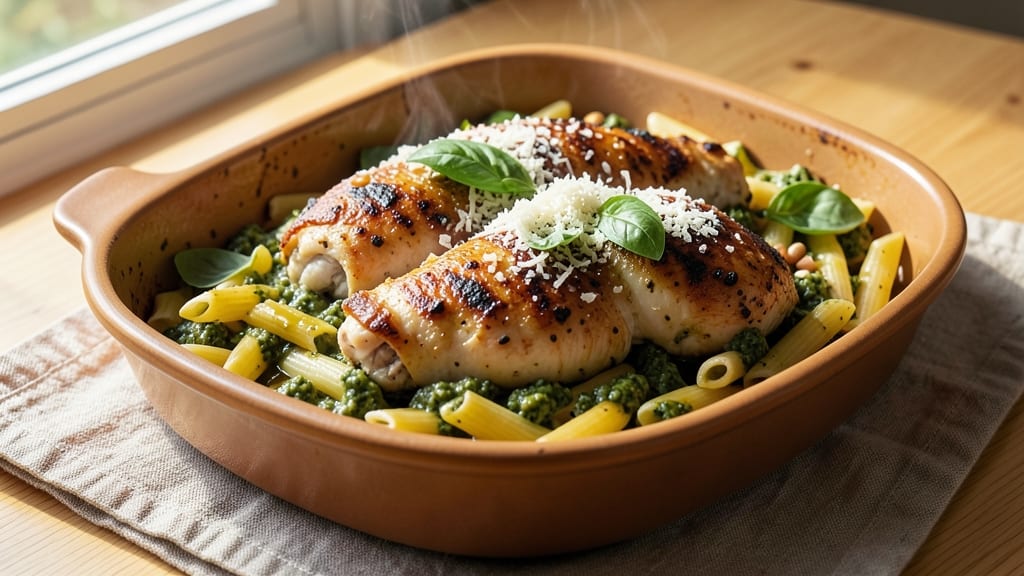
This baked chicken pesto pasta recipe transforms weeknight dinners into restaurant-quality meals with minimal effort. The secret lies in combining tender chicken, creamy pesto sauce, and perfectly cooked pasta—all baked together in one pan for hands-off simplicity.
I developed this method after years of testing, ensuring every bite delivers rich herb flavors without sacrificing texture.
The beauty of this dish is its 35-minute preparation, where chicken thighs (or breasts) bake alongside al dente pasta, absorbing the vibrant pesto sauce as it cooks. No need for complicated techniques—just a few fresh ingredients, a splash of cream, and a sprinkle of parmesan to elevate everything.
The result? Juicy chicken, tender pasta, and a sauce that clings perfectly to each strand.
What sets this recipe apart is how the flavors meld during baking—herbaceous pesto infuses the chicken while the pasta soaks up the creamy sauce, creating a cohesive dish that’s both elegant and effortless.
The aroma alone will have everyone at the table anticipating dinner, and the leftovers? Even better the next day.
Perfect for busy weeknights, meal prep, or impressing guests, this one-pan wonder proves that restaurant-quality meals don’t require hours in the kitchen. Let’s get started—your taste buds will thank you.
Ingredients for baked chicken pesto pasta
Fourteen ingredients blend effortlessly to create this restaurant-worthy one-pan dinner featuring herb-infused chicken and al dente pasta.
| Ingredient | Amount | Notes |
|---|---|---|
| Boneless, Skinless Chicken Thighs 🍗 | 1 ½ lb | Trimmed of excess fat for cleaner flavor |
| Penne Pasta 🍝 | 12 oz | Dry weight, al dente texture preferred |
| Fresh Basil Leaves 🌿 | 2 cups | Packed, stems removed for vibrant flavor |
| Pine Nuts 🥜 | ½ cup | Toasted lightly for nutty depth |
| Garlic Cloves 🧄 | 4 cloves | Peeled, roughly chopped for aromatic base |
| Parmesan Cheese 🧀 | ¾ cup | Freshly grated from a block |
| Heavy Cream 🥛 | ½ cup | Full-fat for optimal creaminess |
| Extra-Virgin Olive Oil 🫒 | ½ cup | High-quality, fruity variety |
| Lemon Juice 🍋 | 2 tbsp | Freshly squeezed for brightness |
| Diamond Crystal Kosher Salt 🧂 | 1 ½ tsp | Fine grain for even seasoning |
| Freshly Ground Black Pepper 🌶️ | ½ tsp | Coarsely cracked for texture |
| All-Purpose Flour 🌾 | 2 tbsp | For light dusting and thickening |
| Red Bell Pepper 🌶️ | ½ cup | Diced small for color and crunch |
| Sun-Dried Tomatoes 🍅 | ¼ cup | Chopped, oil-packed for depth |
The chicken thighs are the foundation of this dish—chicken breasts work but thighs stay juicier during the longer bake. Look for fresh, plump thighs with minimal bruising at Whole Foods or your local butcher. If using breasts, pound them to an even thickness for consistent cooking. The pasta must be al dente—undercook slightly before baking to finish perfectly. Barilla or De Cecco brands are my go-to for reliable texture. For the basil, farmers' market varieties pack the most flavor, but grocery store basil works if it's bright green and free of wilting. Toast the pine nuts in a dry pan for 30 seconds until fragrant—this enhances their nutty flavor without burning.
No fresh basil? Dried basil at half the amount works in a pinch, though it lacks the vibrant punch. Substitute pine nuts with walnuts or cashews for a different texture, but toast them first. The Parmesan should be freshly grated—pre-grated clumps and loses flavor quickly. For a dairy-free option, nutritional yeast adds a cheesy note, though it won't melt like traditional Parmesan. The sun-dried tomatoes can be oil-packed or dried—just chop them finely. If you're short on time, pre-made pesto (like Trader Joe's or Bella Italia) saves steps, though homemade delivers superior flavor. The red bell pepper adds color and crunch—roasted first intensifies its sweetness, but raw works too.
This dish reheats beautifully—cover with foil and warm for 5 minutes to retain moisture. Store leftovers in an airtight container for up to 3 days in the fridge, though the flavors deepen overnight. For meal prep, portion into individual containers before baking—each serving stays cohesive. The pesto sauce thickens as it sits, so add a splash of warm water if it becomes too stiff when reheating. Freeze for up to 2 months by wrapping tightly in plastic wrap and foil, though texture may change slightly upon thawing. Always let the dish cool slightly before refrigerating to prevent condensation.
Why You'll Love This Recipe
- Here’s what sold me: this dish reheats like a dream. Pack leftovers for work or school, and it’s still ridiculously good cold or warmed up. My kid brings it back with half eaten—proof it’s a winner for picky eaters too.
- One-Pan Magic: I swear by this recipe because it’s literally one pan—no boiling pasta in a separate pot, no messy sauces splattering everywhere. Just toss the chicken, penne, and pesto on a sheet, bake, and let the oven do the work. (Yes, even on a Tuesday night.)
- Herb Bomb Flavor: That fresh basil and garlic? Chef’s kiss. The pine nuts add a nutty crunch that makes every bite feel like a little Italian vacation. Between us, the chicken stays juicy while the pasta soaks up all the flavor—no dry strands here.
- Lunchbox Hero: Here’s what sold me: this dish reheats like a dream. Pack leftovers for work or school, and it’s still ridiculously good cold or warmed up. My kid brings it back with half eaten—proof it’s a winner for picky eaters too.
Step-by-step instructions for baked chicken pesto pasta
Here's the method for a one-pan masterpiece combining tender chicken, vibrant pesto, and al dente pasta.
Prepare the Chicken and Pesto Base
Preheat your oven to 400°F. In a large oven-safe skillet, heat 0.5 cup extra-virgin olive oil over medium-high heat. Season the 1.5 lb boneless, skinless chicken thighs with 1.5 tsp diamond crystal kosher salt and 0.5 tsp freshly ground black pepper, then sear for 4-5 minutes per side until golden brown and cooked through to 165°F internally. Remove chicken and set aside.
In the same skillet, add 4 cloves roughly chopped garlic cloves and cook for 30 seconds until fragrant. Immediately remove from heat and stir in 2 cups fresh basil leaves, 0.5 cup toasted pine nuts, 0.25 cup chopped sun-dried tomatoes, and 0.5 cup diced red bell pepper. Let cool slightly while you prepare the pasta.
Cook the Pasta and Build the Sauce
Return the skillet to medium heat and add 12 oz penne pasta along with 4 cups water (or enough to cover). Cook for 8 minutes until pasta is al dente. Drain, reserving 1 cup pasta water, then return pasta to the skillet.
Add the pesto mixture to the skillet with the pasta, along with 0.5 cup heavy cream, 2 tbsp lemon juice, and 2 tbsp all-purpose flour. Stir vigorously, adding reserved pasta water 1 tablespoon at a time until you achieve a creamy, clinging consistency. The sauce should coat the back of a spoon without being overly thick.
Combine and Bake to Perfection
Return the seared chicken thighs to the skillet, spooning sauce over them to coat evenly. Sprinkle with 0.75 cup freshly grated parmesan cheese and stir gently to distribute. Transfer the skillet to the preheated oven and bake for 10-12 minutes until the chicken is reheated and the sauce has thickened slightly.
Watch for the sauce to bubble and the edges to turn lightly golden. The pasta should be thoroughly coated with sauce, and the chicken should be heated through to 170°F internally. Remove from oven and let rest for 2 minutes before serving to allow the sauce to set slightly.
Garnish and Serve Immediately
Divide the pasta among serving plates, ensuring each portion has chicken and sauce. Garnish with additional fresh basil leaves if desired, and finish with a final sprinkle of freshly ground black pepper and extra grated parmesan cheese. Serve immediately while the sauce is still creamy and the pasta maintains its al dente texture.
The dish should deliver vibrant green pesto flavors balanced with sweet sun-dried tomatoes, nutty pine nuts, and the rich creaminess of the sauce. Each bite should offer tender chicken, perfectly cooked pasta, and a harmonious blend of all components.
Pro Tips For Making Baked Chicken Pesto Pasta
- CRISP THE THIGHS FIRST: Skip the raw chicken straight into the sauce—it’ll turn rubbery. Pat the thighs dry with paper towels, then sear them in a hot pan for 3-4 minutes per side until golden. This locks in flavor and keeps them juicy when baked later. (Yes, even if you’re impatient like me, don’t rush this.)
- TOAST THE PINE NUTS: Raw pine nuts? Bitter and sad. Pulse them in a food processor with the garlic and a pinch of salt, then spread on a dry pan over low heat. Stir constantly for 2-3 minutes until fragrant and golden—burnt nuts ruin the whole dish. (I learned this the hard way after one disastrous batch.)
- DON’T OVERMIX THE PASTA: Toss the cooked penne with pesto just until the sauce clings—overworking it turns the pasta mushy. Reserve a splash of pasta water first, then fold it in after the chicken is baked. The sauce should coat, not drown. (Your future self will thank you.)
- BAKE THE CHICKEN SEPARATELY: Tossing raw chicken with pasta in the oven? Nope. Season the thighs with salt and pepper, bake them uncovered at 400°F (200°C) for 20-22 minutes until 165°F (74°C) internal temp. Then mix with the pasta—this keeps the chicken juicy and the sauce from steaming the chicken. (I was skeptical until I tried it.)
Wine and beer pairings for baked chicken pesto pasta
White Wine Pairings
A crisp Pinot Grigio from Italy is my go-to choice for this dish—its bright acidity and citrus notes cut through the richness of the pesto and heavy cream while complementing the basil's herbal freshness.
Look for a Veneto or Friuli-Venezia Giulia region bottle, like Santa Margherita Pinot Grigio, which balances elegance with approachable price. The wine's subtle floral undertones harmonize beautifully with the sun-dried tomatoes and red bell pepper. 🍷
For something with a bit more body, try a Chardonnay with minimal oak influence—think Meursault or Chablis from France. The stone fruit and mineral notes in these wines mirror the dish's herbal and nutty complexity.
Avoid heavily oaked Chardonnays, as they'll clash with the dish's delicate flavors. Serve both wines slightly chilled at 50-55°F for optimal balance.
Red Wine Options
If you prefer red, a light-bodied Chianti from Tuscany offers a perfect match with its cherry and herbaceous notes. The acidity in Castellina Chianti cleanses the palate between bites of creamy pasta.
The wine's earthy undertones also pair wonderfully with the sun-dried tomatoes and pine nuts. Decant for 15-20 minutes before serving to soften its tannins.
Beer Pairings
A Belgian Witbier like Hoegaarden or Stella Artois brings refreshing citrus and spice notes that contrast the dish's richness. The effervescence also helps cut through the creaminess of the sauce.
For a local option, try an American pale ale with subtle hop bitterness—New Belgium Fat Tire works well to balance the dish's sweet and savory elements. Serve beers at 45-50°F for the best experience.
Non-Alcoholic Choices
For a non-alcoholic option, sparkling apple cider like Martinelli's adds a crisp, fruity contrast to the dish's creamy texture. The bubbles help cleanse the palate between bites.
Alternatively, a sparkling water infused with cucumber and mint provides a refreshing, palate-cleansing experience that complements the dish's herbal notes. Serve both at 40-45°F for optimal refreshment.
Serving Temperature
Regardless of your choice, always serve wines at the correct temperature to enhance their flavors. Whites and beers should be chilled, while reds should be room temperature or slightly below.
I keep a wine fridge set to 50°F for whites and a cooling rack in the freezer for quick beer chilling. Proper temperature ensures every sip complements the dish perfectly. ✨
Nutrition facts
Frequently asked questions
Can I use chicken breasts instead of thighs?
Yes, but with one key adjustment: pound chicken breasts to an even ½-inch thickness to ensure even cooking. Thighs stay juicier during the longer bake, while breasts may dry out if overcooked. For breasts, reduce oven time to 8-10 minutes after adding them back to the skillet.
How do I make this dish ahead of time?
Prepare everything up to baking, then refrigerate the assembled skillet (covered) for up to 12 hours. When ready to bake, add 5-7 minutes to the baking time. For meal prep, portion into individual containers before baking—each serving reheats beautifully with extra sauce added.
What if I don't have fresh basil?
Use ½ cup dried basil (not the flaky kind) or 1 tbsp basil pesto powder in a pinch. For extra flavor, add 1 tsp dried oregano or ½ tsp red pepper flakes to compensate. The dish will still taste amazing, though fresh basil gives that signature vibrant punch.
Can I make this vegetarian?
Swap chicken for 14 oz firm tofu or 1 lb mushrooms (like portobello or cremini). Sauté tofu in olive oil until golden, or roast mushrooms at 400°F for 15 minutes before adding to the pasta. The pesto sauce will still cling beautifully to your protein substitute.
Why is my sauce too thick after baking?
This happens when pasta water evaporates too much. To fix it, stir in 2-3 tbsp warm water or reserved pasta water during the final 5 minutes of baking. For next time, cover the skillet loosely with foil during baking to retain moisture—just uncover for the last 2 minutes to let it bubble.