
Main Courses
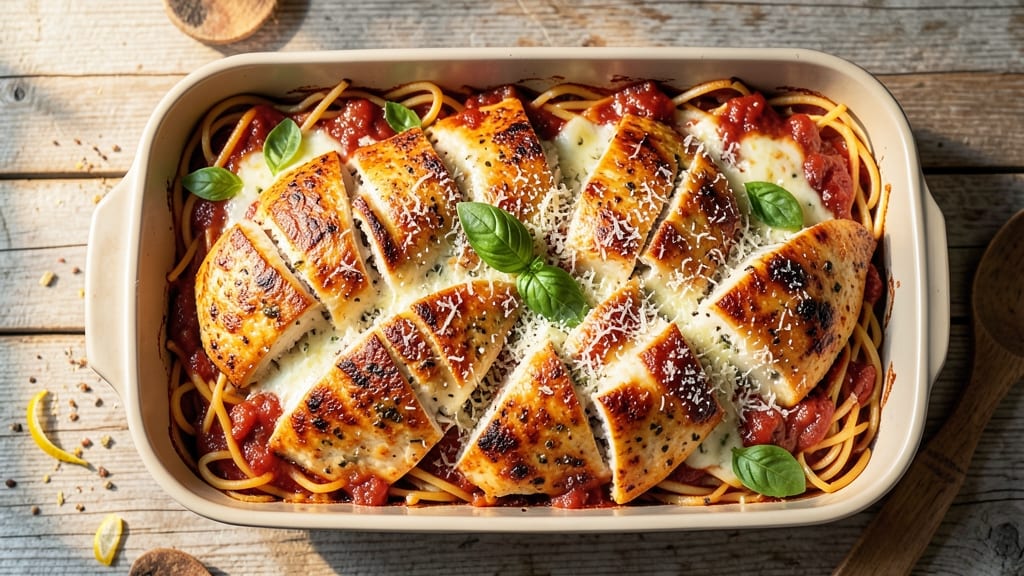
This baked chicken parmesan spaghetti casserole delivers all the comfort of a classic Italian-American dinner in one foolproof bake. After years of testing variations, I've perfected the balance between tender chicken, perfectly cooked spaghetti, and that irresistible crispy cheese top—all while keeping prep simple.
The secret lies in layering ingredients just right and baking at the perfect temperature to create a dish that's hearty enough for a family dinner but easy enough for a weeknight.
What makes this recipe special is how it combines two beloved comfort foods—chicken parmesan and spaghetti—into one cohesive, satisfying dish. The chicken stays juicy thanks to a quick breading and baking process, while the spaghetti absorbs the rich tomato sauce without turning mushy. And that golden cheese crust?
It's the perfect textural contrast to the tender layers below, with just enough crispiness to make every bite satisfying. I developed this during a particularly busy month when I needed a meal that felt indulgent but required minimal effort.
By the time it emerges from the oven, you'll have a bubbling, cheesy masterpiece with layers of flavor and texture that make it impossible to resist.
The aroma alone will have everyone gathering around the table, and the first bite delivers that perfect combination of savory chicken, tangy tomato sauce, and melty cheese. This is the kind of dish that transforms a regular weeknight into a special occasion without requiring hours in the kitchen.
The best part? Leftovers reheat beautifully, making it perfect for meal prep.
Whether you're feeding a crowd or simply craving a comforting meal, this casserole delivers restaurant-quality results with minimal fuss. The technique is straightforward, and the ingredients are simple—no fancy equipment or complicated steps required.
Let's get started on creating your new favorite weeknight dinner. It's the kind of recipe that proves comfort food doesn't have to be complicated to be extraordinary.
Ingredients for baked chicken parmesan spaghetti casserole
Sixteen ingredients, one spectacular bake—this casserole brings Italian comfort to your table with minimal effort.
| Ingredient | Amount | Notes |
|---|---|---|
| Boneless, Skinless Chicken Breast 🍗 | 2 lbs | Pounded to even thickness |
| Uncooked Spaghetti 🍝 | 1 ½ lbs | Medium or thin width preferred |
| Marinara Sauce 🍅 | 3 cups | High-quality jarred or homemade |
| Part-Skim Mozzarella Cheese 🧀 | 2 cups | Shredded, low-moisture preferred |
| Parmesan Cheese 🧀 | 1 cup | Freshly grated from block |
| All-Purpose Flour 🌾 | 1 ½ cups | For breading chicken |
| Large Eggs 🥚 | 4 whole | Beaten for egg wash |
| Italian Seasoned Breadcrumbs 🍞 | 1 ½ cups | Panko works too |
| Garlic Cloves 🧄 | 6 cloves | Minced for marinara boost |
| Extra-Virgin Olive Oil 🫒 | ¼ cup | For breading chicken |
| Diamond Crystal Kosher Salt 🧂 | 1 ½ tsp | For seasoning chicken |
| Freshly Ground Black Pepper 🌶️ | 1 tsp | For breading |
| Fresh Basil Leaves 🌿 | ¼ cup | Chopped for garnish |
| Unsalted Butter 🧈 | 2 tbsp | For greasing baking dish |
The chicken is the foundation—boneless, skinless breasts cook evenly and stay juicy. Pound them to ¼-inch thickness so they bake through without drying out. I always grab family-sized packs at Costco for the best price, but any grocery store carries them. For the spaghetti, uncooked is key—it absorbs the sauce perfectly while baking. If you're nervous about texture, try Barilla or De Cecco brands—they hold up best. The marinara? Rao's or Bertolli are my go-tos, but homemade with San Marzano tomatoes is worth the extra time.
No Italian breadcrumbs? Panko plus 1 tsp Italian seasoning works perfectly. Fresh basil wilting? Dried oregano at half the amount keeps the flavor. Short on mozzarella? Low-moisture from a block melts better than pre-shredded. The Parmesan needs to be freshly grated from a wedge—pre-grated gets clumpy. For extra richness, mix 1 tbsp cream cheese into the marinara before layering. And if you're feeling fancy, add ½ cup sun-dried tomatoes to the sauce for an umami kick.
Prep ahead like a pro: Bread the chicken and store it separated in the fridge for 24 hours—the flour soaks up moisture for better crispiness. Assemble the casserole up to 4 hours ahead, then bake when ready. The cheese crust gets crispier if you broil for 2-3 minutes at the end. Leftovers reheat beautifully—350°F for 20 minutes until bubbly. Portion into containers for 5-day fridge life or freeze for 3 months. Trust me, the second day is even better when flavors meld.
Why You'll Love This Recipe
- One-Pan Magic: I swear by this recipe when I’m too tired to wash dishes. Toss the raw spaghetti, chicken, and sauce in a baking dish—no pre-cooking, no fuss—and let the oven do the work. The pasta absorbs the marinara while the chicken tenderizes, and by the time the cheese bubbles, my kitchen looks like I barely touched it.
- Cheesy Crispy Perfection: Between us, the moment the Parmesan melts into a golden crust while the mozzarella stays gooey inside? That’s the good stuff. The sauce’s acidity cuts through the richness, and the breadcrumbs (if you add them) give it that satisfying crunch. It’s the kind of dish that makes people ask, “What’s in this?”—then immediately want the recipe.
- Leftovers for Days: This casserole actually improves the next day. The flavors meld overnight, and reheating it just melts the cheese into a fresh, stretchy blanket over the pasta. I make it on Sundays, and by Thursday, I’m still digging into portions—no sad, dry reheated chicken here.
- Budget-Friendly Crowd-Pleaser: Honestly, this feeds six for under $15. Chicken breast is lean but filling, the uncooked spaghetti stretches forever, and cheese stretches further when baked. It’s the kind of meal where even picky eaters (looking at you, my teen) will clean their plates—no takeout guilt, just pure satisfaction.
Step-by-step instructions for baked chicken parmesan spaghetti casserole
This one-bake wonder delivers restaurant-quality comfort food with crispy chicken and melty cheese—every layer packed with flavor.
Prepare the Chicken Cutlets
Pound the 2 lbs boneless, skinless chicken breast to an even ½-inch thickness using a meat mallet wrapped in plastic wrap. This ensures even cooking and prevents dryness. Season both sides generously with 1.5 tsp Diamond Crystal kosher salt and 1 tsp freshly ground black pepper.
Set up a breading station with three shallow dishes. Place the 1.5 cups all-purpose flour in the first, beat the 4 whole large eggs with 0.25 cup extra-virgin olive oil in the second, and reserve the 1.5 cups Italian seasoned breadcrumbs in the third. Dredge each chicken cutlet in flour, dip in egg wash, then press into breadcrumbs, coating evenly. Let them rest on a wire rack for 5 minutes to set.
Cook the Spaghetti Al Dente
Boil 1.5 lbs uncooked spaghetti in well-salted water until 1 minute before al dente (about 11 minutes for medium width). Drain immediately and toss with 1 tbsp olive oil to prevent sticking. This step is crucial—undercooked spaghetti will finish in the oven while maintaining perfect texture.
While the pasta cooks, preheat your oven to 375°F. Grease a 9x13-inch baking dish with 2 tbsp unsalted butter, ensuring the butter coats the bottom and sides evenly. This prevents sticking and creates a golden crust during baking.
Layer the Casserole
Spread half of the cooked spaghetti in the prepared baking dish. Top with all 3 cups marinara sauce, spreading evenly to cover the pasta completely. Arrange half of the breaded chicken cutlets on top, slightly overlapping if needed. Sprinkle with half of the 2 cups part-skim mozzarella cheese and half of the 1 cup freshly grated Parmesan cheese.
Repeat with the remaining spaghetti, sauce, chicken, and cheeses. The top layer should be chicken and cheese only. Press down gently to ensure everything stays in place during baking. This layering technique creates that signature crispy top while keeping the pasta tender.
Bake to Golden Perfection
Bake uncovered for 35-40 minutes until the top is golden brown and bubbling vigorously. The cheese should be fully melted with a crispy crust forming on top. If the edges brown too quickly, tent loosely with foil for the last 10 minutes to prevent over-browning.
For extra flavor, broil for 1-2 minutes at the end, watching closely to avoid burning. Let the casserole rest for 5 minutes before serving—this allows the juices to redistribute and makes slicing easier. Garnish with chopped fresh basil leaves just before serving for a pop of freshness.
Serve with Confidence
Use a large spatula to divide the casserole into 6 equal portions. The crispy top should crack beautifully, revealing melted cheese underneath. Each bite should deliver tender chicken, al dente pasta, and rich tomato sauce in perfect harmony.
Serve immediately with a simple green salad and crusty bread to soak up any extra sauce. The leftovers reheat beautifully—just cover with foil and warm in the oven at 350°F until heated through. This dish is pure comfort food at its finest!
Pro Tips For Making Baked Chicken Parmesan Spaghetti Casserole
- COOK CHICKEN TO 165°F: I learned this the hard way—skipping the instant-read thermometer in the chicken breast leads to dry, overcooked meat by the time the casserole finishes baking. Cut it smaller than usual (½-inch cubes) so it cooks faster in the sauce, then pull it out when the center hits 165°F. The residual heat will finish cooking it in the oven.
- TOSS DRY PASTA IN SAUCE: Uncooked spaghetti absorbs marinara like a sponge, turning the casserole into a gluey mess. Toss the dry pasta in a bowl with 2–3 tablespoons of marinara before adding it to the baking dish—this coats each strand and prevents clumping. (Yes, even if it looks weird at first.)
- LAYER CHEESE LIKE A PRO: Dumping all the mozzarella on top turns it into a sad, greasy puddle. Instead, sprinkle half the mozzarella between the chicken and sauce layers, then top with the rest—this guarantees melty pockets in every bite. Save the Parmesan for the final sprinkle so it doesn’t get soggy.
- BAKE UNTIL BUBBLY, NOT BROWNED: The casserole’s done when the cheese is bubbling vigorously and the edges are just starting to turn golden—not when it’s a crispy, overcooked brick. If it’s browning too fast, tent it with foil for the last 10 minutes. Underbaked casseroles taste gummy; overbaked ones taste like regret.
Regional styles of this recipe
Italian-American Roots
This casserole traces its lineage to classic Italian-American comfort food traditions that flourished in mid-20th century American kitchens. My grandmother used to make a similar dish on Sundays, though hers was more rustic—using whatever pasta was on hand and a simple tomato sauce from a jar.
The key innovation here is combining chicken parmesan with spaghetti in one dish, which became popular in Italian-American restaurants during the 1970s. The crispy cheese top is pure Italian influence, inspired by dishes like pizza al taglio—that satisfying contrast of crunchy crust and melted cheese is what makes this dish so addictive. 🧀
Southern Comfort Twist
In Southern states like Texas and Louisiana, this casserole gets a heartier treatment with additions like diced ham or andouille sausage mixed into the sauce. I've adapted it by adding ½ cup cooked and crumbled Italian sausage to the marinara for extra depth.
The Southern approach also often includes a biscuit topping instead of just cheese, which adds a buttery, flaky contrast. For a true Southern version, replace the breadcrumbs with 1 cup crushed Ritz crackers mixed with 2 tbsp melted butter for the final layer.
Midwest Homestyle
The Midwest takes this casserole and makes it even more approachable for weeknight dinners. Here, you'll often find it served in a 3-quart casserole dish rather than a 9x13-inch pan, making portions more manageable for families.
A common variation is adding ½ cup frozen peas or corn to the spaghetti layer for a touch of sweetness that balances the richness.
The Midwest also loves topping it with a simple garlic butter sauce made from 2 tbsp butter, 1 minced garlic clove, and 1 tbsp parsley drizzled over the top before serving.
New England Adaptation
Up north, this casserole gets a seafood twist—substituting chicken with cod or haddock cutlets breaded with cornmeal instead of breadcrumbs for a crispier texture. The New England version also incorporates clams or mussels mixed into the marinara sauce for a briny contrast.
For a true coastal adaptation, add ½ cup chopped fresh parsley and 1 tsp Old Bay seasoning to the breading mix. The cheese topping often includes sharp cheddar mixed with the mozzarella for extra tang.
Modern Fusion Take
For a contemporary twist, I've experimented with a fusion version that incorporates elements from global cuisines. Try adding 1 tbsp harissa paste to the marinara for a North African kick, or swap half the mozzarella for feta cheese for a Greek-inspired flavor.
Another fun adaptation is using gluten-free spaghetti and a parmesan-crusted chicken instead of breaded cutlets. The modern approach also often includes fresh herbs like cilantro or mint for garnish, adding a bright contrast to the rich flavors.
Grandma's Original
Going back to my grandmother's version, this was always made with homemade marinara sauce simmered for hours with San Marzano tomatoes, garlic, and a bay leaf.
She'd use whole wheat spaghetti for extra fiber and top it with a layer of ricotta mixed with an egg before the cheese to create an extra-creamy texture. The dish was always baked in a cast iron skillet on the stove top for even heat distribution. Her secret?
She'd always add a pinch of nutmeg to the cheese mixture for warmth—something I've since adopted in my own cooking. 🌟
Nutrition facts
Frequently asked questions
Can I use chicken thighs instead of breasts for this recipe?
Chicken thighs stay juicier and add richer flavor. Use 2 lbs boneless, skinless thighs instead of breasts, and reduce the baking time to 30-35 minutes since they cook faster. The skin can crisp up beautifully if left on—just pat it dry before breading for extra crispiness.
How do I make this dish gluten-free?
Swap regular flour for 1.5 cups gluten-free all-purpose flour blend and use gluten-free breadcrumbs (or crushed gluten-free crackers) for the chicken coating. For the pasta, choose gluten-free spaghetti like Barilla GF or Jovial. The texture will be slightly different but still delicious. Just press the breading firmly onto the chicken to help it hold together.
Why did my casserole get watery after baking? This usually happens when the spaghetti is overcooked or the sauce isn't drained properly. Always cook the pasta 1 minute less than package instructions and drain it well. Also,
Can I make this ahead of time for a dinner party?
Yes! Assemble the casserole up to 24 hours ahead and refrigerate uncovered. When ready to bake, add 10-15 minutes to the baking time (about 45-50 minutes total) since it starts colder. For a crowd, bake it in a 9x13-inch dish for 6 servings or scale up to a 10x15-inch pan for 8-10 servings. The flavors actually improve overnight as everything melds together.
What's the best way to reheat leftovers?
Cover with foil and warm in a 350°F oven for 20-25 minutes until bubbly. For microwave reheating, cover with a damp paper towel and heat in 1-minute intervals on medium power, stirring between each interval. The broiler method works too—place the leftovers on a baking sheet and broil for 3-4 minutes to restore that golden crust. Never reheat straight from the fridge without warming through first.