
Main Courses
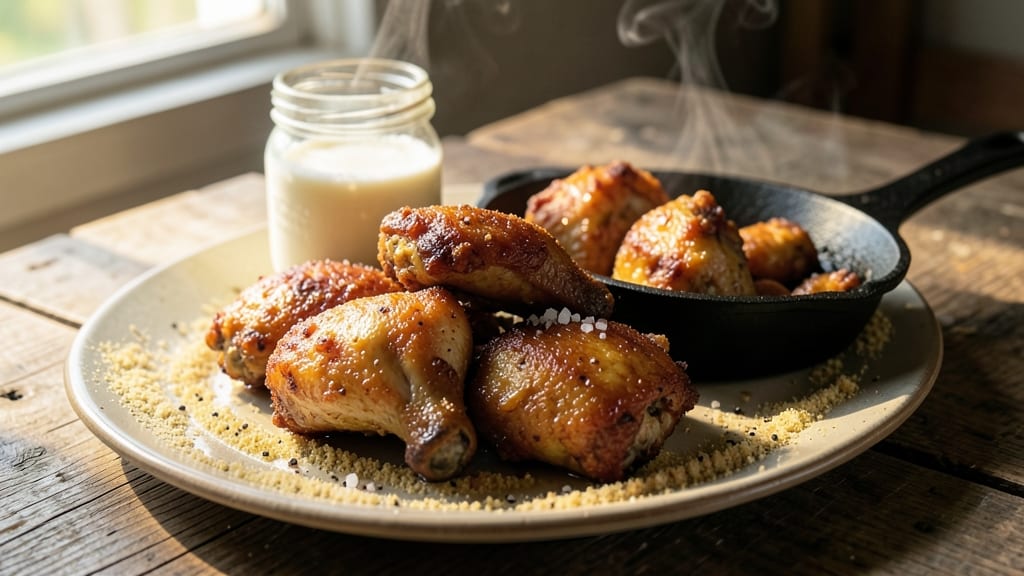
This authentic Southern fried chicken recipe delivers the crispy, golden crunch and tender meat that makes it legendary. 💛 After years of perfecting my grandmother's method, I've cracked the code for that signature texture—double-dredging, buttermilk brining, and hot oil frying.
The secret lies in the buttermilk marinade, which tenderizes the meat while creating the ideal surface for the breading to stick.
What sets this recipe apart is the foolproof technique that ensures crispy skin without compromising juicy centers. We'll use a simple buttermilk brine, followed by a double-dredge in seasoned flour that creates a shield-like crust.
The key is frying at the right temperature—350°F—for even cooking and maximum crispiness. This isn't just fried chicken; it's a celebration of Southern comfort food done right.
By the time you're done, you'll have restaurant-quality fried chicken with a shatteringly crispy exterior and moist, flavorful meat inside. The breading stays crunchy even after resting, and the buttermilk marinade infuses every bite with subtle tang.
Serve with classic sides like pickles, mashed potatoes, or cornbread to complete the Southern feast.
This recipe delivers on the promises of authentic Southern flavor and crispy perfection—no shortcuts, just the real deal. The method is straightforward, but the results will impress even the most discerning fried chicken fans. Let's get started on creating the crispy, golden pieces your family will beg for.
Ingredients for authentic southern fried chicken
Six essential ingredients transform ordinary chicken into legendary Southern fried perfection.
| Ingredient | Amount | Notes |
|---|---|---|
| Chicken Thighs (bone-in, skin-on) 🍗 | 3 lb | Cut into even 8-10 pieces each |
| Buttermilk 🥛 | 2 cups | Whole-fat preferred for richness |
| All-Purpose Flour 🌾 | 3 cups | White or whole wheat blend |
| Cornstarch 🌽 | ½ cup | For ultra-crispy coating |
| Diamond Crystal Kosher Salt 🧂 | 2 tbsp | Plus extra for seasoning |
| Ground Black Pepper 🌶️ | 1 ½ tbsp | Freshly cracked preferred |
| Garlic Powder 🧄 | 1 ½ tbsp | For depth of flavor |
| Onion Powder 🧅 | 1 ½ tbsp | For aromatic base |
| Paprika (smoked) 🌶️ | 1 tbsp | For signature Southern color |
| Vegetable Oil (or Peanut Oil) 🫒 | 4 cups | High smoke point essential |
| Lemon Juice 🍋 | 1 tbsp | Brightens the buttermilk |
| Fresh Rosemary 🌿 | ½ tbsp | Finely chopped, optional |
| Fresh Thyme 🌿 | ½ tbsp | Finely chopped, optional |
The chicken thighs are non-negotiable—bone-in, skin-on pieces create the signature crispy skin and juicy meat. Look for free-range thighs at Whole Foods or your local butcher shop for superior flavor and texture. The buttermilk marinade is where the magic begins; Whole Foods or Kroger stock the best quality, and always opt for whole-fat to ensure maximum richness. Fresh herbs like rosemary and thyme elevate the flavor profile, so Trader Joe's or local farmers markets are ideal sources for vibrant, aromatic options. If you're short on time, dried herbs work at half the quantity, but fresh is always preferred for that authentic Southern touch.
No buttermilk? Substitute 2 cups whole milk with 1 tbsp lemon juice or vinegar—let it sit for 5 minutes to curdle. The flour blend is crucial; King Arthur or Gold Medal brands provide the best texture. For extra crispiness, swap half the flour for cornstarch. Smoked paprika is essential for that signature Southern hue, but regular paprika works in a pinch. Running low on vegetable oil? Peanut oil has a higher smoke point and adds a subtle nutty flavor. Don't skip the lemon juice—it brightens the buttermilk and balances the richness of the chicken and oil.
Prep the chicken and buttermilk marinade up to 24 hours ahead for maximum flavor infusion. Store the buttermilk mixture in the fridge, and keep the chicken pieces submerged in a sealed container. The seasoned flour blend stays fresh for 1 week in an airtight container. Fry the chicken immediately after heating the oil to 350°F—the oil retains heat for about 10 minutes, so work quickly. Once fried, place the chicken on a wire rack over a baking sheet to maintain crispiness. Serve immediately for the best texture, but leftovers keep for 3 days in the fridge.
Why You'll Love This Recipe
- No-Fuss Marination: I swear by the 12-hour buttermilk soak—just toss the thighs in a bag, refrigerate, and forget about it. That’s it. The acid tenderizes while you’re at work, with zero effort.
- Double-Crisp Magic: The cornstarch in the flour mix? Chef’s kiss. It’s what gives you that shatteringly crisp crust outside while keeping the meat juicy inside—no dry, sad chicken here.
- Game for Any Gathering: Between us, this feeds a crowd without breaking the bank. Serve it at tailgates, potlucks, or even a lazy Sunday with biscuits—it’s the star every time.
- Leftovers That Still Win: Honestly, the second fry is almost as good as the first. Reheat in the oven with a splash of buttermilk, and you’ve got crispy, golden perfection again—no one will guess it’s reheated.
Step-by-step instructions for authentic Southern fried chicken
Here's the time-tested method for restaurant-quality fried chicken with that signature crispy crust and juicy interior.
👨🍳 Step 1: Prepare the Buttermilk Brine
In a large bowl, combine the 2 cups buttermilk, 1 tablespoon lemon juice, 0.5 tablespoon finely chopped fresh rosemary, and 0.5 tablespoon finely chopped fresh thyme. Stir gently to distribute the herbs evenly. This acidic brine tenderizes the chicken while adding subtle herbal notes that elevate the flavor profile.
Cut the 3 lb chicken thighs into even 8-10 pieces each, removing any excess fat or connective tissue. Submerge the chicken pieces completely in the buttermilk mixture, ensuring every surface is coated. Cover and refrigerate for at least 4 hours or overnight - this extended brining is what creates that signature Southern tenderness. The chicken should absorb the buttermilk completely, becoming slightly opaque in color.
👨🍳 Step 2: Create the Dry Coating
In a large bowl, whisk together the 3 cups all-purpose flour, 0.5 cup cornstarch, 2 tablespoons Diamond Crystal kosher salt, 1.5 tablespoons ground black pepper, 1.5 tablespoons garlic powder, 1.5 tablespoons onion powder, and 1 tablespoon smoked paprika. The cornstarch is crucial here - it creates that ultra-crispy crust while maintaining moisture inside. Sift the mixture through a fine-mesh strainer to eliminate any lumps that could prevent even coating.
Remove the chicken from the buttermilk, allowing any excess to drip off. Working in batches, press each piece firmly into the flour mixture, coating all sides completely. The pressure helps the seasoning adhere better and creates that signature thick crust. Place the coated chicken on a wire rack set over a baking sheet to allow air circulation on all sides - this prevents soggy bottoms during frying.
🔥 Step 3: Heat the Oil to Ideal Temperature
Fill a deep fryer or heavy pot with 4 cups vegetable oil (or peanut oil) to a depth of about 2 inches. Heat the oil to 350°F using a deep-fry thermometer - this precise temperature is critical. Too low and the chicken will absorb oil; too high and it will burn before cooking through. The oil should shimmer gently when properly heated, with small bubbles forming around the thermometer.
Real talk: don't use the oil until it reaches exactly 350°F. I've seen home cooks try to eyeball it, and that's how you end up with greasy, unevenly cooked chicken. The cornstarch in our coating needs this specific temperature to create that perfect crispy shell while keeping the interior juicy.
🍳 Step 4: Fry to Golden Perfection
Carefully lower the chicken into the hot oil using tongs, working in batches that don't crowd the fryer. Fry for 12-15 minutes, turning occasionally, until the chicken reaches an internal temperature of 165°F and the coating is deep golden brown. The cornstarch will create a thick, lacy crust that should release easily from the chicken when you lift it with tongs.
Here's the thing about Southern fried chicken - the crust should be crisp enough to stand up to a toothpick but still have a slight give when pressed. If you're frying multiple batches, maintain the oil temperature consistently between 345°F and 355°F. Each piece should cook through completely before removing - undercooked chicken will steam when you add it to the second fry.
🔥 Step 5: Double-Fry for Ultimate Crunch
Transfer the fried chicken to a wire rack set over a baking sheet to drain excess oil. Let it rest for 2 minutes while you reheat the oil to 375°F. This second fry is what creates that legendary Southern crunch. Working quickly, return the chicken to the hot oil and fry for an additional 3-4 minutes, just until the coating becomes extra crispy and dark golden brown.
Remove the chicken and transfer to a paper towel-lined plate to drain any remaining oil. Serve immediately while the crust is at its peak crispiness. The internal temperature should now be 170°F - the combination of the high heat and double-fry creates that perfect balance of crispy exterior and juicy interior that defines authentic Southern fried chicken.
Pro Tips For Making Authentic Southern Fried Chicken
- BRINE THIGHS OVERNIGHT: Toss the raw thighs in a mix of 1 cup buttermilk, 1 tablespoon Diamond Crystal salt, and 1 tablespoon sugar in a sealed bag. Let them sit 12–24 hours in the fridge—this keeps them juicy and tender. I used to skip this, but now it’s non-negotiable for that melt-in-your-mouth texture.
- SEPARATE FLOUR AND CORNSTARCH: Mix the all-purpose flour with 1 teaspoon salt separately from the cornstarch (another 1 teaspoon salt). The cornstarch is your secret weapon for a crispier crust—don’t just blend it in with the flour. Trust me, the difference is noticeable.
- DOUBLE-DREDGE WITH PATIENCE: After the first flour dip, let the excess drip off for 30 seconds before hitting the buttermilk again. Then, back into the flour mix—press firmly to adhere. Rushing this step means a messy, uneven crust. I learned this the hard way when my first batch looked like it was half-done.
- FRIES IN BATCHES: Cook the thighs in small batches—no more than 3 at a time—so the oil stays hot (350°F). Overcrowding drops the temp and steams the chicken instead of frying it. Yes, it takes longer, but the result is worth it. (Your future self will thank you.)
Make-ahead tips for this authentic southern fried chicken
Prep Ahead
Start the buttermilk marinade up to 24 hours in advance—I swear by this timing. Store the chicken pieces completely submerged in the buttermilk mixture in an airtight container in the fridge.
The longer it marinates, the more tender and flavorful the meat becomes. I've done this overnight and woken up to chicken that practically falls apart when breaded. 💛
Breading Station
Mix your dry coating ingredients—the flour, cornstarch, and spices—up to 1 week ahead and store in an airtight container. This saves time on cooking day, and the spices will still be fresh.
Just give it a quick stir before using to break up any clumps. I keep mine in a glass jar with a tight lid on my pantry shelf for easy access.
Oil Prep
Measure and pour your frying oil into a deep pot or fryer the night before—just don't heat it yet. This gives you one less thing to worry about on cooking day.
Use a deep-fry thermometer to monitor the temperature, and keep it handy. I like to place it near my stovetop so I can check it frequently without losing my place.
Double-Fry Strategy
Here's a pro tip: If you're making a big batch, fry all the chicken in the first round, then let it rest on a wire rack while you reheat the oil for the second fry. This keeps everything crispy and ensures you don't overcrowd the pot.
I've fried up to 12 pieces at once in my 6-quart deep fryer, and it works perfectly as long as you keep the oil hot.
Resting Time
After frying, let the chicken rest on a wire rack for 3-5 minutes before serving. This allows the juices to redistribute, keeping the meat moist while the crust stays crisp.
I've learned the hard way that skipping this step leads to soggy breading. Trust me, the wait is worth it for that perfect texture. 🔥
Storage Tips
Leftovers? Store in an airtight container in the fridge for up to 3 days, but reheat carefully. I recommend warming in a 350°F oven for 10-15 minutes to restore crispiness.
For longer storage, freeze the fried chicken (unbreaded) before frying—just thaw in the fridge overnight and fry fresh for the best results. The breading won't hold up well to freezing after frying, unfortunately.
Nutrition facts
Frequently asked questions
Why does your recipe use buttermilk instead of regular milk?
The buttermilk creates that signature Southern tenderness while adding subtle tang that balances the richness of the fried chicken. The acidity in buttermilk breaks down muscle fibers, making the meat juicier. Plus, it helps the breading adhere better than milk would. For a quick substitute, mix 2 cups whole milk with 1 tbsp lemon juice or vinegar and let it sit for 5 minutes.
Can I use chicken breasts instead of thighs?
Chicken breasts will work, but they're leaner and more prone to drying out during frying. If you must use them, pound them to an even ½-inch thickness and reduce frying time to 10-12 minutes total (including double-fry). For authentic Southern results, thighs are ideal—they stay juicy and have more flavor.
What's the secret to keeping the breading crispy?
Three things: double-frying, proper oil temperature (350°F first fry, 375°F second fry), and resting on a wire rack. The cornstarch in the coating is also key—it creates that ultra-crispy texture. Never skip the second fry! Even professional Southern kitchens use this technique to maintain that legendary crunch.
How do I know when the oil is ready?
Use a deep-fry thermometer—it's the only reliable way. The oil should read exactly 350°F for the first fry. When properly heated, it will shimmer gently with small bubbles forming around the thermometer. Too low? The chicken will absorb oil and be greasy. Too high? It'll burn before cooking through.
Can I make this recipe in an air fryer?
Not for authentic Southern fried chicken—air fryers can't replicate the deep-frying process that creates that signature crispy crust. However, you can get close by spraying the breaded chicken with oil and air frying at 375°F for 12-15 minutes, flipping halfway. The texture won't be identical, but it's a lighter alternative for health-conscious cooks.