
Main Courses
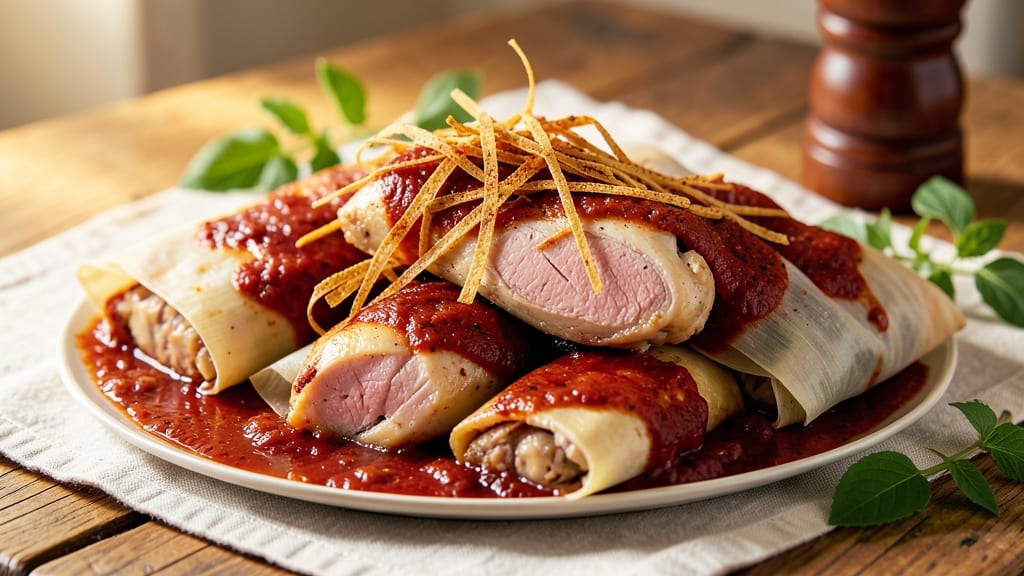
This authentic Mexican red chicken tamales recipe brings the heart of Mexican tradition to your kitchen—rich, spiced masa wrapped around tender, achiote-marinated chicken. ✨ I've spent years perfecting this recipe, inspired by my grandmother's handwritten notes and the vibrant flavors of Oaxaca's markets.
The secret lies in the masa's texture and the deep, smoky red color from the chicken's marinade, which transforms simple ingredients into something truly special.
The process begins with preparing the masa from scratch—nixtamalized corn softened just right, mixed with lard for that signature tender bite. Meanwhile, the chicken marinates in achiote paste, garlic, and spices until it's infused with bold, earthy flavor.
This isn't just a recipe; it's a celebration of technique, where every step—from filling the masa to wrapping the tamales—matters. The result? Tamales that steam to golden perfection, with layers of flavor in every bite.
What makes these tamales truly authentic is the balance of textures—soft, slightly chewy masa hugging juicy chicken, all wrapped in tender corn husks. The red color isn't just for show; it's a testament to the achiote's warmth, which pairs beautifully with traditional sides like salsa roja or crema.
This is the kind of dish that turns a simple meal into a festive gathering, whether it's for Día de la Candelaria or a cozy Sunday dinner.
Ready to master the art? I'll walk you through every step—from preparing the masa to steaming the tamales—with tips to ensure they're never dry or tough. And don't worry; even if you're new to tamales, this recipe breaks down the process into manageable, foolproof techniques.
Let's get started on creating something truly memorable.
Ingredients for authentic mexican red chicken tamales
Twelve essential ingredients transform into twelve tamales steeped in tradition.
| Ingredient | Amount | Notes |
|---|---|---|
| Dried Corn Husks 🌽 | 24 whole | Soaked in warm water for 1 hour |
| Dried Masa Harina 🌾 | 4 cups | Maseca brand preferred for authenticity |
| Lard 🧈 | 1 cup | Leaf or leaf lard for best texture |
| Chicken Broth 💧 | 1 ½ cups | Homemade or low-sodium store-bought |
| Achiote Paste 🌶️ | 3 tbsp | Authentic Mexican achiote, not annatto |
| Boneless Chicken Thighs 🍗 | 3 lb | Skin-on for extra flavor |
| Garlic Cloves 🧄 | 8 cloves | Freshly minced for maximum aroma |
| White Onion 🧅 | 1 whole | Medium size, quartered |
| Guajillo Chiles 🌶️ | 4 whole | Stems/seeds removed, toasted |
| Cumin Seeds 🌿 | 1 tbsp | Toasted for deeper flavor |
| Bay Leaves 🍃 | 2 whole | Dried, for subtle earthy depth |
| Ground Cinnamon 🍃 | 1 tsp | Mexican cinnamon preferred |
| Salt 🧂 | 2 tsp | Diamond Crystal preferred |
| Vegetable Oil 🫒 | ½ cup | For cooking chicken |
| Fresh Cilantro 🌿 | ¼ cup | Chopped, for garnish |
The masa harina and lard form the tamales' soul—Maseca brand delivers authentic texture, while leaf lard ensures that signature tender bite. For achiote paste, Mexican specialty stores carry the real deal, not the annatto substitute found in regular markets. The chicken thighs must be skin-on; the crispy skin adds layers of flavor. Soak those corn husks in warm water for at least one hour—they need to be pliable but not mushy. Guajillo chiles should be toasted until fragrant, then soaked to soften before blending into the marinade. Penzeys Spices is my go-to for high-quality cumin seeds—just toast them briefly in a dry pan to deepen their aroma.
No achiote paste? Annatto seeds steeped in oil is a decent substitute, though it lacks the smoky depth. Running short on guajillo chiles? Ancho chiles work at a 1:1 ratio, but they're milder. The chicken can be swapped for pork shoulder if preferred, though purists will argue for poultry. Fresh cilantro is ideal, but dried works at half the amount if you're in a pinch. For the masa, if you can't find masa harina, nixtamalized cornmeal works in a bind—just add an extra tablespoon of lard. The broth should be homemade if possible; store-bought versions often contain hidden salt that can overpower the delicate flavors.
Store dried masa harina in an airtight container for up to 6 months—it absorbs moisture quickly. Soaked husks can be refrigerated in their soaking water for up to 2 days, but change the water daily. The cooked chicken filling keeps well for 3 days in the fridge, making this a perfect make-ahead recipe. For longer storage, freeze the assembled tamales on a tray before transferring to bags—they'll keep for 3 months. When reheating, steam for 20-30 minutes until piping hot, never microwave, or the masa will turn gummy.
Why You'll Love This Recipe
- No Lard Wastage: I swear by this trick—every last bit of lard gets used, even the scraps. After rendering the chicken, I strain the fat and mix it right into the masa, giving those tamales a rich, buttery depth that store-bought shortcuts can’t touch. (Yes, even the crust gets tender.)
- Achiote’s Magic Touch: That deep, smoky red hue isn’t just for show—the achiote paste transforms this into something special. One teaspoon of this earthy, slightly peppery paste infuses the broth and filling with a warmth that’s unmistakably Mexican comfort in every bite.
- Steam-and-Go Leftovers: Tamales reheat like a dream—just a splash of broth and a quick steam in foil. I make a double batch on Sundays, and by Wednesday, I’m still pulling them out for quick lunches or tossing them in tacos. No sad, dry reheats here.
- Weekend Project, Weeknight Payoff: Sure, soaking husks takes time, but here’s the secret: I do it while I’m watching a movie. The rest—mixing masa, assembling, steaming—is oddly satisfying, like wrapping little flavor bombs. And the best part? They stay fresh for days, so you’re not stuck cooking every night.
Step-by-step instructions for authentic Mexican red chicken tamales
Master the traditional technique that delivers tender masa pockets with rich, spiced chicken filling.
👨🍳 Step 1: Prepare the Corn Husks and Chicken Filling Base
Begin by soaking the 24 whole dried corn husks in warm water for 1 hour until pliable but not mushy. While they soak, heat 0.5 cup vegetable oil in a large skillet over medium-high heat. Add the 3 lb boneless chicken thighs (skin-on) and cook until golden brown on both sides, about 8-10 minutes per side. Remove and set aside.
In the same skillet, add 1 whole white onion (quartered) and 8 cloves garlic cloves (minced). Sauté for 3-4 minutes until softened. Add 4 whole guajillo chiles (toasted and seeded), 1 tbsp cumin seeds (toasted), 2 whole bay leaves, 1 tsp ground cinnamon, and 2 tsp salt. Cook for 1 minute to toast the spices. Pour in 1.5 cups chicken broth and scrape up any browned bits from the bottom of the pan.
🍳 Step 2: Simmer the Chicken and Create the Masa Paste
Return the chicken to the skillet and add the 3 tbsp achiote paste. Stir well to coat the chicken in the vibrant red spice mixture. Bring to a simmer, cover, and cook for 20-25 minutes until the chicken is fork-tender and the liquid has reduced by half. Shred the chicken directly in the skillet using two forks, discarding the skin and bones.
In a separate bowl, combine 4 cups dried masa harina and 1 cup lard (softened but not melted). Gradually add 1 cup of the hot chicken broth from the skillet while stirring with a wooden spoon. The mixture should form a thick, spreadable paste—similar to hummus in consistency. If it's too dry, add 1 tablespoon at a time of the remaining broth until it reaches the perfect texture.
🥘 Step 3: Assemble the Tamales with Precision
Drain the corn husks and pat them dry with paper towels. Lay each husk flat on a clean work surface with the pointed end facing you. Spoon 2 tablespoons of the masa paste onto the wider end of the husk, about 1 inch from the edge. Top with 2 tablespoons of the shredded chicken mixture, leaving a ½-inch border at the top. Fold the sides inward, then fold the bottom up over the filling, and finally roll the tamale tightly toward the pointed end, sealing it completely.
Place the assembled tamales seam-side down in a large steamer pot. Arrange them in a single layer, standing upright. Pour 1 cup hot water into the bottom of the steamer, ensuring it doesn't touch the tamales. Cover tightly with a clean kitchen towel and the steamer lid.
⏰ Step 4: Steam to Perfection and Rest Before Serving
Bring the water to a boil over medium-high heat, then reduce to medium-low heat and steam the tamales for 60-75 minutes. You'll know they're done when the corn husks pull away from the masa easily and the filling is hot throughout. Avoid opening the lid during steaming—this releases steam and can make the tamales soggy.
Let the tamales rest for 10 minutes after steaming before serving. This resting period allows the flavors to meld and the masa to set slightly. Garnish with 0.25 cup chopped fresh cilantro just before serving. For authenticity, serve with warm tortillas and a side of salsa verde or pico de gallo.
Pro Tips For Making Authentic Mexican Red Chicken Tamales
- SOAK HUSKS 2 HOURS: I learned this the hard way—skipping the long soak means brittle, crack-prone wrappers. Fill a large pot with water, add husks, and let them sit covered at room temp for at least 2 hours (overnight is better). The extra time makes them pliable without turning mushy.
- MEASURE LARD BY WEIGHT: That jar of lard won’t lie—use a kitchen scale for the masa dough. For every 1 cup of masa harina, you need ¼ cup (60g) of lard, no guesswork. Too little and the tamales crumble; too much and they’re greasy. (Yes, even if you’re impatient like me.)
- STEAM ON MEDIUM HEAT: Low and slow ruins them, but high heat burns the edges before the center cooks. Keep your steamer at a steady medium simmer—enough to see small bubbles but not a rolling boil. Check after 45 minutes; if the husks aren’t separating easily, you’re not there yet.
- SALT THE BROTH LATE: Add the salt to your chicken broth after cooking the chicken, not before. The achiote paste needs time to bloom in the broth without competing with salt, and adding it later keeps the flavor balanced. (Your future self will notice the difference.)
Common mistakes when making this dish
Husk Prep Pitfalls
Skipping the 1-hour soak for corn husks is the fastest way to end up with cracked or unevenly wrapped tamales. I learned this the hard way—my first batch had husks that split when I tried to fold them.
Always test pliability by gently bending a husk; it should bend without snapping. Change the soaking water halfway if it cools, as warm water keeps them supple. 🌽
Masa Texture Troubles
The masa paste is finicky—too dry, and your tamales will be crumbly; too wet, and they'll fall apart. I fix dry masa by adding 1 tbsp broth at a time until it reaches a thick, spreadable consistency (like hummus).
For wet masa, mix in 1 tbsp masa harina gradually. Pro tip: Use your hands to test—it should hold shape when pressed but still be pliable.
Overfilling Disasters
Stuffing tamales too full is a rookie mistake that leads to messy, unsealed packages. Measure 2 tbsp masa and 2 tbsp filling per tamale—any more, and the husk won't close properly. Leave that ½-inch border at the top; it’s your safety net.
I once had a tamale burst open during steaming because I ignored this rule. Trust me, the extra few seconds to measure pays off. 💡
Steaming Mistakes
Peeking under the lid while steaming is tempting, but it’s a surefire way to dry out your tamales. The steam needs to build pressure, and opening the lid releases it, causing the masa to toughen.
If you’re unsure, use a toothpick to test one tamale—it should slide out cleanly when done. Also, never stack tamales; they need airflow to steam evenly. I once ruined a batch by overcrowding the pot.
Chicken Overcooking
Shredding chicken that’s still slightly underdone ensures it stays juicy in the tamales. Aim for an internal temp of 165°F—any hotter, and it’ll dry out. I’ve learned to pull the chicken just before it’s fully cooked, then finish it in the simmering broth.
This keeps the filling moist and flavorful. Reserve some of that broth to adjust the masa paste’s consistency later—it’s liquid gold. 🍗
Resting Time Skipped
Skipping the 10-minute rest after steaming is a cardinal sin. Tamales need time to set, or they’ll fall apart when sliced. I once served them immediately and watched in horror as the masa crumbled.
Let them rest on a wire rack to cool slightly—this also prevents soggy bottoms. Garnish with cilantro only after resting, so it stays fresh and vibrant. 🌿
Nutrition facts
Frequently asked questions
Can I make these tamales without lard?
For a healthier version, substitute the 1 cup lard with ½ cup softened butter or ½ cup neutral oil (like vegetable or canola). The texture will be slightly less rich, but still delicious. If you're avoiding dairy, use 100% vegetable shortening—it mimics lard's texture best. Just reduce the total fat by 1 tbsp if using oil, since it's less dense.
How do I store leftover tamales?
Leftover tamales keep beautifully for 3 days in the fridge, wrapped tightly in plastic. For longer storage, freeze them unopened for up to 3 months. To reheat, steam for 20-30 minutes until piping hot—never microwave, or the masa will turn gummy. Pro tip: Freeze them standing upright in a single layer before transferring to bags to prevent sticking.
What's the secret to perfectly wrapped tamales?
The key is patience and precision! First, make sure your husks are pliable but not soggy—they should bend without cracking. Spread the masa 1 inch from the edge, leaving a ½-inch border at the top. Fold the sides inward first, then the bottom, and finally roll tightly toward the point. The seam should be on the bottom—this keeps everything contained during steaming.
Can I make the masa ahead of time?
Yes, but with a caveat: the masa paste can be mixed 1 day ahead and stored in an airtight container in the fridge. However, it's best used within 24 hours—the longer it sits, the more likely it is to dry out. If you're prepping for a big gathering, mix the masa the morning of and keep it at room temperature while you work. Never refrigerate assembled tamales before steaming.
What's the best way to serve these tamales?
Traditionally, tamales are served with warm corn tortillas, salsa roja, and a dollop of crema. For extra authenticity, add radishes (thinly sliced) and avocado on the side. These tamales pair beautifully with black beans and Mexican rice for a complete meal. Garnish with fresh cilantro right before serving to keep it vibrant.