
Main Courses
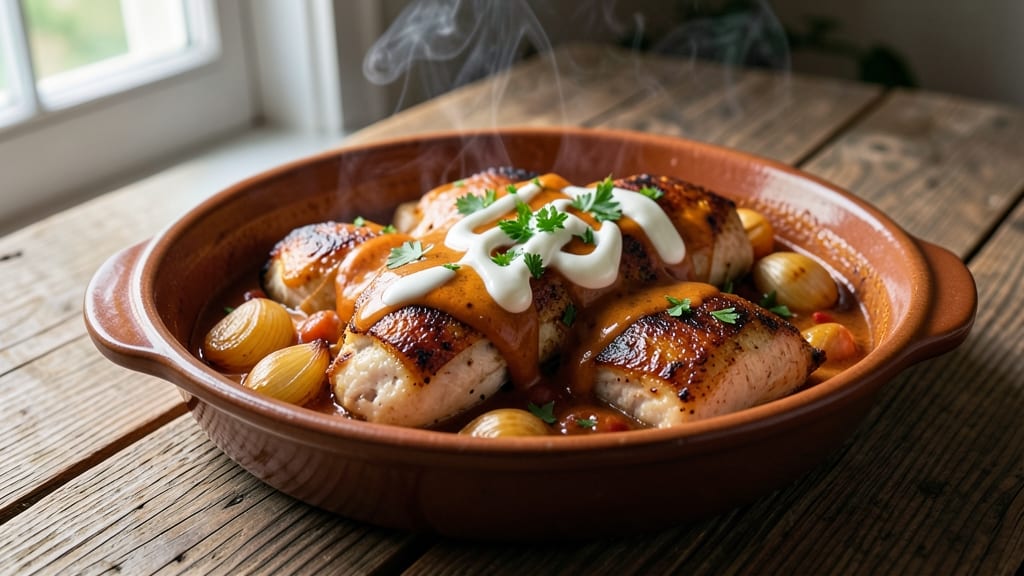
This authentic Hungarian chicken paprikash recipe brings the soul-warming flavors of Budapest to your kitchen with its deep, smoky paprika and tender chicken. After years of perfecting this dish—including one memorable (and slightly charred) attempt—I’ve distilled the essential techniques for rich, slow-braised perfection.
The key lies in the layers: sweet paprika for color, sour cream for balance, and a long simmer to develop that unmistakable Hungarian depth.
The process begins with browning the chicken to build flavor, then simmering it in a sauce made from tomatoes, onions, and a blend of sweet and hot paprika.
This isn’t a quick weeknight meal—it’s a labor of love that rewards patience with melt-in-your-mouth chicken and a sauce so velvety it clings to every bite. Traditional Hungarian cooking relies on slow methods, and this recipe stays true to that philosophy while adapting to home kitchens.
By the time you serve it, you’ll have a dish that’s rich, aromatic, and deeply satisfying—perfect with buttery nokedli dumplings or crusty bread to soak up every last drop of sauce.
The sour cream finishing touch adds a bright contrast that cuts through the richness, just like in my grandmother’s kitchen. This is comfort food at its finest, a recipe that connects you to Hungary’s culinary traditions.
Ready to make it? The ingredients are simple, but the technique is what transforms them into something extraordinary. Let’s get started—your taste buds will thank you.
Ingredients for authentic hungarian chicken paprikash
Rich paprika, tender chicken, and layers of slow-braised flavor—this is Hungary’s soul in a pot.
| Ingredient | Amount | Notes |
|---|---|---|
| Boneless, Skinless Chicken Thighs 🍗 | 1 ½ lb | Cut into 1-inch pieces |
| Sweet Hungarian Paprika 🌶️ | 2 tbsp | Essential for authentic flavor |
| Hot Hungarian Paprika 🔥 | 1 tbsp | For depth and heat |
| Yellow Onions 🧅 | 1 whole | Thinly sliced, about 2 cups |
| Garlic Cloves 🧄 | 4 cloves | Minced for aromatic base |
| Tomato Paste 🍅 | ½ cup | High-quality for richness |
| Fresh Thyme Leaves 🌿 | ½ tsp | Dried works at 1/4 tsp |
| Bay Leaves 🍃 | 2 whole | Remove before serving |
| Chicken Broth 💧 | 1 ½ cups | Homemade preferred |
| Sour Cream 🥛 | ½ cup | Full-fat for best texture |
| Extra-Virgin Olive Oil 🫒 | 2 tbsp | For browning chicken |
| Diamond Crystal Kosher Salt 🧂 | 1 ½ tsp | Adjust to taste |
| Freshly Ground Black Pepper 🌶️ | ½ tsp | For finishing |
| All-Purpose Flour 🌾 | 1 tbsp | For thickening sauce |
The paprika makes or breaks this dish. Sweet Hungarian paprika is non-negotiable—it’s sweeter and more aromatic than regular paprika. Grab it at Hungarian markets or specialty stores like Penzeys if you can’t find it locally. The hot paprika adds depth without overpowering. For chicken, thighs are best—they stay juicy during the long braise. Cut them into even pieces so they cook uniformly. If you’re using chicken breasts, pound them to even thickness to prevent dryness. The onions should be yellow, not red—they caramelize better and add a subtle sweetness that balances the paprika’s heat.
No Hungarian paprika? Sweet paprika plus a pinch of cayenne gets you close, but it won’t be authentic. Short on thyme? Dried thyme at one-fourth the amount works, but fresh is worth the effort. The tomato paste can be swapped for 1 cup crushed tomatoes, though it’ll be slightly less concentrated. For a vegetarian twist, use mushrooms and eggplant instead of chicken—just add them later in the cooking process. The flour is just for thickening at the end, so don’t skip it if your sauce needs body. If you’re serving with nokedli dumplings, make a double batch—they disappear fast.
This dish tastes even better the next day, so make it ahead if you can. Store the sauce and chicken separately in the fridge for up to 4 days, then reheat gently on the stove. The sauce thickens as it cools, so add a splash of broth if it’s too stiff. Freezes beautifully for 3 months—portion into containers for easy lunches. The sour cream should be stirred in at the very end, so keep it separate until serving. Serve with crusty bread or buttery dumplings to soak up every last drop of that velvety sauce.
Why You'll Love This Recipe
- One-Pan Magic: I swear by this—just brown the chicken, toss in onions and garlic, then dump in that paprika blend. No extra pans, no fuss, and the flavors meld together like they’ve been simmering all day.
- Paprika Powerhouse: That mix of sweet and hot Hungarian paprika? It’s the secret weapon—earthy, slightly sweet, with just enough kick to wake up your taste buds. The onions caramelize into something rich and sticky, while the garlic adds that deep, aromatic punch.
- Leftovers That Shine: Make a double batch and thank me later. This dish tastes even better the next day—thicker, richer, and perfect for quick lunches or a cozy dinner when you’re too tired to cook.
- Budget-Friendly Feast: Chicken thighs are affordable, onions and garlic are pantry staples, and a little paprika goes a long way. It’s a hearty, satisfying meal that won’t break the bank, but feels like a restaurant-worthy dish.
Step-by-step instructions for authentic Hungarian chicken paprikash
Here's how to craft this classic Hungarian dish with rich, smoky depth and tender chicken.
Prepare the Chicken and Aromatics
Cut the 1.5 lb boneless, skinless chicken thighs into 1-inch pieces—this ensures even cooking and maximum flavor absorption. Pat them dry with paper towels, then season generously with 1.5 tsp diamond crystal kosher salt and 0.5 tsp freshly ground black pepper. The dry surface helps create a better sear later.
In a separate bowl, combine the 2 tbsp sweet Hungarian paprika and 1 tbsp hot Hungarian paprika. This blend is the soul of paprikash—sweet for balance, hot for depth. Set aside for now. Thinly slice the 1 whole yellow onion (about 2 cups) and mince the 4 cloves garlic. The onions should be paper-thin for quick cooking and sweetness, while the garlic will infuse aromatic magic.
Sear the Chicken and Build the Base
Heat 2 tbsp extra-virgin olive oil in a heavy Dutch oven over medium-high heat. Add the seasoned chicken pieces in a single layer, leaving space between them. Let them sear undisturbed for 3-4 minutes until golden brown on one side—this creates a flavorful crust. Flip and sear the other side for another 3-4 minutes. Remove the chicken and set it aside.
In the same pot, reduce heat to medium and add the sliced onions. Cook for 5-6 minutes until softened and just beginning to caramelize. Add the minced garlic and cook for 30 seconds until fragrant—don't let it brown or it'll turn bitter. Stir in the 0.5 cup tomato paste and cook for 1 minute to deepen its flavor. This forms the rich, velvety base of the paprikash.
Develop the Paprika Sauce
Return the chicken to the pot and sprinkle the reserved paprika mixture evenly over the top. Stir gently to coat the chicken and onions in the paprika—this is where the authentic flavor develops. Add the 0.5 tsp fresh thyme leaves, 2 whole bay leaves, and pour in the 1.5 cups chicken broth. Bring to a gentle simmer, then reduce heat to low. Here's the thing—this dish needs patience. Let it simmer uncovered for 45-50 minutes, stirring occasionally, until the chicken is fork-tender and the sauce has thickened slightly.
Here's what to watch for: the sauce should coat the back of a spoon and the chicken should pull apart easily. If the sauce reduces too quickly, add 2-3 tablespoons of water to maintain moisture. The bay leaves will infuse subtle earthy notes, while the thyme adds a bright herbal touch.
Finish with Sour Cream and Rest
Remove the 2 whole bay leaves from the pot—they've done their job. Stir in the 0.5 cup sour cream and the 1 tbsp all-purpose flour. The flour helps thicken the sauce slightly, while the sour cream adds a luxurious creaminess that balances the paprika's richness. Simmer gently for 2-3 minutes until the sauce is smooth and velvety. Taste and adjust seasoning—you might need a pinch more salt or pepper, depending on your broth.
Let the paprikash rest for 5-10 minutes off the heat. This allows the flavors to meld completely and the sauce to thicken further. The chicken will be even more tender, and the sour cream will blend seamlessly into the sauce. Serve immediately with crusty bread or egg noodles to soak up every last bit of that luscious paprika-infused sauce.
Pro Tips For Making Authentic Hungarian Chicken Paprikash
- Bloom the Paprika: Toss your sweet and hot paprika with a splash of water or broth first—about 1 tablespoon per 2 teaspoons of spice—before adding it to the pot. I learned this the hard way: dry paprika clumps like cement if you just dump it in. Stir it into a paste, then cook it down with the onions until it deepens in color. That’s when you know it’s working.
- Brown the Chicken First: Skip the "quick sear" myth—give those thighs 8-10 minutes per side in a hot pan until they’re deep golden, not just pink. Crowd the pan? They’ll steam instead of crisp. Use enough oil (about 2 tablespoons) to coat the bottom, and don’t move them until they release easily. This step locks in flavor that no amount of paprika can replace.
- Sweat the Onions Slow: Low heat here is non-negotiable. Onions should caramelize into a thick, jammy base—about 15 minutes—before you even think about adding garlic. If they’re sizzling, you’re cooking too fast. The longer they cook, the deeper the flavor, and that’s the foundation of your paprikash. (Yes, even if you’re impatient like me.)
- Use Both Paprikas: Mix equal parts sweet and hot paprika (start with 1 teaspoon each per pound of chicken), but save a pinch of the hot one to add at the very end. The sweet gives body, the hot adds complexity, and that final sprinkle brightens the dish without overpowering. I was skeptical until I tried it—now I never skip it.
Essential equipment for this recipe
Dutch Oven Essentials
A heavy Dutch oven is non-negotiable for this recipe—it distributes heat evenly and prevents burning during the long simmer. I swear by a Lodge 5.5-quart cast iron Dutch oven because it retains heat like a dream and lasts forever.
If you don’t have one, a stainless steel Dutch oven (like All-Clad) works too, but preheat it longer to avoid cold spots. Avoid nonstick—it can’t handle the high heat needed for proper browning. 🔥
Paprika Must-Haves
Your Hungarian paprika is the star, so invest in quality. Sweet Hungarian paprika (like Penzeys brand) is sweeter and more aromatic than regular paprika—it’s worth the splurge. For heat, hot Hungarian paprika (from the same brand) adds depth without overpowering.
Store them in airtight containers away from light to preserve their vibrant color and flavor. I keep mine in the freezer for extra freshness. 🌶️
Precision Tools
A meat thermometer (like ThermoWorks Smoke) ensures your chicken reaches 165°F without overcooking. I also recommend a sharp chef’s knife for even chicken pieces and a wooden spoon for stirring—it won’t scratch your Dutch oven.
A fine-mesh strainer comes in handy if you want to remove bay leaves cleanly before serving. Don’t skip these—small tools make a big difference. ✨
Optional Upgrades
For extra convenience, a microplane helps finely grate garlic without mincing it (faster and more aromatic). If you love homemade broth, a slow cooker can build flavor for your chicken broth ahead of time.
And if you’re serving with nokedli dumplings, a dumpling press (or a fork and flour) works—just don’t stress perfection. These upgrades aren’t required, but they’ll elevate your dish. 💡
Nutrition facts
Frequently asked questions
Why does this recipe use both sweet and hot paprika?
The combination creates the authentic Hungarian flavor profile. The sweet paprika provides vibrant color and mild sweetness, while the hot paprika adds subtle heat and depth that balances the dish. Together, they create that signature smoky-sweet taste you crave in traditional paprikash.
Can I substitute chicken breasts instead of thighs?
You can, but thighs are ideal for this slow-braised dish. Chicken breasts cook faster and can dry out during the 45-minute simmer. If using breasts, pound them to even thickness and add them to the pot only 20 minutes before the end to prevent overcooking.
What's the best way to serve leftover paprikash?
Leftover paprikash is even better the next day! Store components separately in the fridge for up to 4 days. Reheat gently on the stove, adding a splash of broth if the sauce thickens too much. Serve with crusty bread, egg noodles, or fresh nokedli dumplings to soak up the rich sauce.
How do I make this dish vegetarian?
Replace the chicken with 1.5 lbs mushrooms (cremini or portobello) and 1 lb eggplant cut into chunks. Sauté the mushrooms first until golden, then add eggplant and proceed with the recipe. Add these vegetables 15 minutes before the end to prevent overcooking.
Can I make this in a slow cooker?
Brown the chicken and onions as directed, then transfer everything to a 6-quart slow cooker. Add all remaining ingredients except sour cream. Cook on low for 6-7 hours or high for 3-4 hours. Stir in sour cream at the end. The slow cooker's gentle heat develops the flavors beautifully.