
Soups & Stews
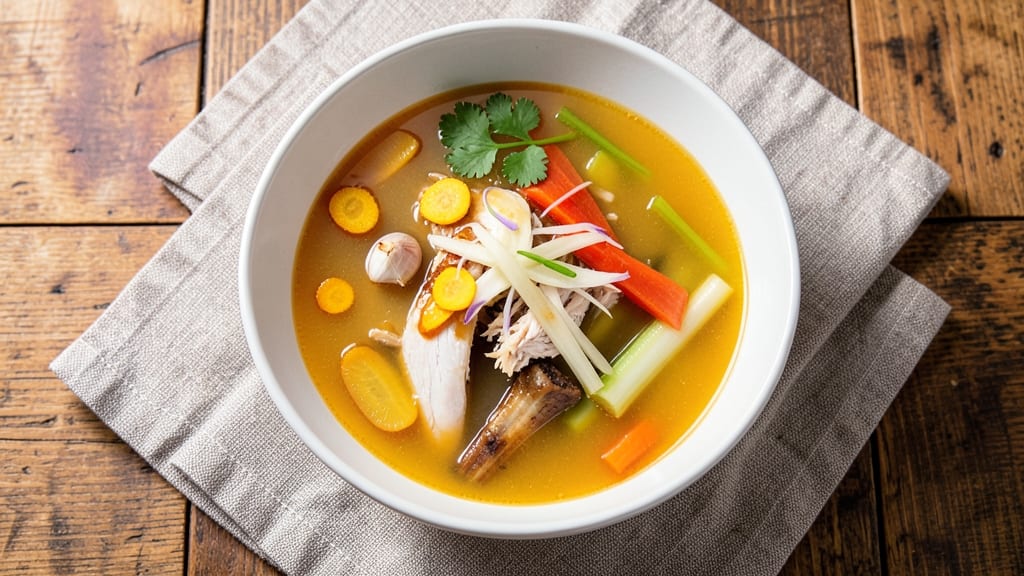
This alkaline chicken soup recipe transforms ordinary broth into a gut-healing elixir packed with turmeric, ginger, and bone-nourishing chicken. The secret lies in alkaline preparation—using baking soda to balance the broth's pH while unlocking deep anti-inflammatory benefits.
I developed this after years of experimenting with alkaline cooking, and it's now my go-to when I need comfort and healing in one bowl.
The magic starts with the broth: simmered chicken bones release collagen while alkaline water (or baking soda) preserves nutrients and reduces acidity. Add fresh turmeric, ginger, and garlic for their potent healing properties—each ingredient works together to soothe digestion and boost immunity.
This isn't just soup; it's a restorative experience that tastes as good as it makes you feel.
By the time you're done, you'll have a golden, aromatic broth with tender chicken, soft vegetables, and herbs that infuse every spoonful with warmth. The texture is velvety yet light, and the flavor profile is complex—earthy, slightly sweet, with a gentle kick from the spices.
It's the kind of meal that feels like a hug for your body, perfect for cold days or whenever you need a nourishing reset.
Serve with a sprinkle of fresh cilantro and a drizzle of sesame oil for extra depth. This recipe doubles beautifully for leftovers, making it ideal for meal prep. The alkaline preparation means it stays fresh longer while retaining its healing properties. Let's get cooking—your gut will thank you!
Ingredients for alkaline chicken soup
Pantry staples meet healing herbs—just 14 ingredients for a gut-soothing elixir.
| Ingredient | Amount | Notes |
|---|---|---|
| Chicken Bones 🍗 | 2 lb | Organic, free-range preferred |
| Fresh Turmeric Root 🌿 | 1 tbsp | Grated, fresh for potency |
| Fresh Ginger Root 🌿 | 1 tbsp | Grated, peeled ginger |
| Garlic Cloves 🧄 | 4 cloves | Peeled, roughly chopped |
| Medium Carrots 🥕 | 3 whole | Organic, peeled if preferred |
| Celery Stalks 🧅 | 3 whole | Organic, cleaned well |
| Medium Onion 🧅 | 1 whole | Yellow or white onion |
| Fresh Cilantro 🌿 | ¼ cup | Chopped, for garnish |
| Baking Soda 🧂 | ½ tsp | Alkaline agent, pure |
| Sesame Oil 🫒 | 1 tbsp | For finishing drizzle |
| Salt 🧂 | 1 tsp | Sea salt, for seasoning |
| Black Peppercorns 🌶️ | ½ tsp | Freshly cracked |
| Fresh Chicken Breast 🍗 | 1 ½ lb | Boneless, skinless |
| Green Onions 🧅 | 2 whole | Sliced, for garnish |
The chicken bones are the heart of this soup—organic or free-range makes all the difference. Look for bones with a little meat still attached at Whole Foods or Trader Joe's—they sell them pre-packaged in the freezer section. If you can't find them, chicken thighs with bones work too, but you'll need more. Fresh turmeric and ginger are non-negotiable here—they lose potency fast once dried. Indian grocery stores usually have the freshest roots, but any well-stocked supermarket works. For the carrots and celery, organic is ideal to avoid pesticides, but regular produce is fine if you wash it well.
No fresh turmeric? Ground turmeric at half the amount (so 0.5 tbsp) works in a pinch, but it's not the same. Same goes for ginger—dried ginger powder at one-third the amount. Short on baking soda? Apple cider vinegar (1 tsp) or lemon juice (2 tsp) can help balance pH, though it won't be identical. The cilantro can be subbed with flat-leaf parsley if you hate cilantro (no judgment). For the sesame oil, toasted sesame oil adds more depth, but regular works too. And if you're making a big batch, double the herbs—they're what make this soup special.
This soup tastes even better the next day—3-4 days in the fridge, 3 months frozen. I always make a double batch and freeze half in portions. Store the broth separately if you want to use it for other meals. The herbs can be added fresh later. For extra collagen boost, add 1 tbsp apple cider vinegar to the broth when reheating—it helps preserve nutrients. And trust me, the sesame oil drizzle at the end is worth the extra minute.
Why You'll Love This Recipe
- Bone-Broth Magic: I swear by this recipe because it turns chicken bones into liquid gold with almost no effort—just simmer, then strain. No fancy equipment, no stress, just rich, alkaline goodness that tastes like love poured into a pot.
- Golden-Ginger Heat: That fresh turmeric and ginger? They don’t just flavor—they transform the soup into something warm, earthy, and just spicy enough to wake up your taste buds. (Yes, even on a Tuesday night.)
- Meal-Prep MVP: Make a big batch on Sunday, and you’ve got lunch covered for days—whether it’s reheated for quick lunches or turned into noodle bowls when cravings hit. My freezer’s always stocked with this stuff.
- Pocketbook Hero: Chicken bones and veggies stretch this soup into a full meal without breaking the bank. Honestly, it’s the kind of recipe that makes me feel like I’m feeding my family like royalty—without the grocery bill to match.
Step-by-step instructions for alkaline chicken soup
Let's create a nourishing, gut-soothing broth that balances alkaline properties with bold turmeric-ginger flavor.
Prepare the Chicken Bones and Aromatics
Begin by rinsing the 2 lb chicken bones thoroughly under cold water to remove any impurities. Place them in a large stockpot and cover with cold water by about 2 inches. Add the 1 whole medium onion, 3 whole medium carrots, 3 whole celery stalks, and 4 peeled garlic cloves—these will form the aromatic base of your broth.
Bring the pot to a boil over high heat, then immediately reduce to a gentle simmer. Skim off any foam or impurities that rise to the surface during the first 10 minutes—this ensures a clear, clean broth. The goal is to remove any scum while preserving the natural flavors of the bones and vegetables.
Add Turmeric, Ginger, and Alkaline Agent
Once the broth has simmered for 10 minutes, add the 1 tbsp grated fresh turmeric root and 1 tbsp grated fresh ginger root. These roots are the heart of this alkaline soup—they provide anti-inflammatory benefits and a warm, earthy depth. Stir gently to distribute them evenly throughout the broth.
Next, sprinkle in the 0.5 tsp baking soda—this is the alkaline agent that helps balance the pH of the soup. Stir well and let the broth continue to simmer uncovered for 2 hours. This slow simmering allows the flavors to meld and the bones to release their collagen-rich marrow, creating a velvety texture. Keep the heat at a gentle simmer—you should see small bubbles breaking the surface, but not a rolling boil.
Cook the Chicken Breast and Season
After 2 hours, add the 1.5 lb fresh chicken breast to the pot. The broth should now be rich and fragrant, with a golden hue from the turmeric. Season with 1 tsp salt and 0.5 tsp freshly cracked black peppercorns, then let the chicken cook for an additional 20-25 minutes, or until it reaches an internal temperature of 165°F and is no longer pink in the center.
While the chicken cooks, prepare the 0.25 cup chopped fresh cilantro and 2 sliced green onions for garnish. These will add a bright, fresh finish to the soup, balancing the warmth of the turmeric and ginger. Once the chicken is fully cooked, remove it from the broth and let it rest for 5 minutes before shredding or slicing it into bite-sized pieces.
Strain and Finish the Broth
Carefully strain the broth through a fine-mesh sieve or cheesecloth into a clean pot or large bowl. This step removes any remaining solids, leaving you with a smooth, silky broth. Discard the solids or save them for compost. Return the strained broth to the pot and stir in the shredded chicken.
To finish, drizzle in the 1 tbsp sesame oil and stir gently. The oil adds a nutty richness and helps carry the flavors of the broth. Taste and adjust the seasoning if needed—you might want to add a pinch more salt or a splash of water to reach your desired consistency. The soup should be warm, aromatic, and deeply flavorful, with a subtle alkaline tang from the baking soda.
Serve Warm with Fresh Garnishes
Ladle the soup into bowls and garnish each serving with a sprinkle of chopped fresh cilantro and sliced green onions. The bright green herbs not only add visual appeal but also enhance the soup’s fresh, vibrant qualities. Serve immediately while the broth is still steaming hot—this ensures the flavors are at their peak and the alkaline properties are fully activated.
This gut-healing turmeric-ginger elixir is perfect for any time of day. The alkaline properties help soothe digestion, while the rich, savory broth provides comfort and nourishment. Enjoy it as a light meal or pair it with steamed rice or crusty bread for a more substantial dish.
Pro Tips For Making Alkaline Chicken Soup
- BLANCH BONES FIRST: Skip the raw bone soak—give those chicken bones a quick 5-minute blanch in boiling water before simmering. This removes surface impurities and speeds up collagen extraction, so your broth turns rich faster. (Yes, even if you’re impatient like me, the extra 5 minutes here save you hours later.)
- GRATE TURMERIC FINE: Fresh turmeric root needs to be grated very finely—almost like a paste—to dissolve properly. I used to chop it roughly, and half the flavor just sat at the bottom. A microplane or the smallest holes on a box grater makes all the difference. (And don’t skip the zest—it’s where the magic hides.)
- DON’T CROWD THE PAN: When searing garlic and ginger, give them space—they’ll burn before they brown if you pile them on. A single layer in a hot pan for 2–3 minutes until fragrant but not crispy is what you want. Overcrowding = bitter soup. (Trust me, I’ve tasted the regret.)
- SIMMER LOW AND LONG: Alkaline broths need patience—keep the heat at a gentle simmer, just bubbles breaking the surface, no rolling. High heat breaks down collagen too fast, leaving you with a thin, cloudy liquid instead of a velvety, mineral-rich broth. (I learned this the hard way after a 6-hour marathon that yielded sad results.)
Perfect pairings for this alkaline chicken soup
Herbal Tea Pairings
This alkaline soup pairs beautifully with chamomile tea—its mild, floral notes complement the turmeric’s warmth without overpowering the broth. I like to steep organic chamomile tea bags from Harney & Sons for 5-7 minutes to enhance relaxation benefits.
The tea’s natural sweetness balances the soup’s earthy spices, creating a soothing combination perfect for digestion. 💛
Citrus-Infused Water
Serve the soup alongside lemon-infused water to amplify the alkaline effects. Slice 1 organic lemon (peeled) and add it to a pitcher of cold water with a pinch of sea salt—let it sit for 30 minutes before serving.
The bright citrus cuts through the soup’s richness while supporting liver detoxification. I always keep a pitcher in my fridge for quick hydration. ✨
Miso Soup Add-On
For a deeper umami experience, serve the alkaline chicken soup with a small bowl of white miso soup on the side. Use 1 tbsp white miso paste (like Honten) dissolved in 1 cup hot water, then add ½ cup silken tofu and 1 tsp scallions.
The miso’s fermented goodness enhances the broth’s alkaline properties while adding a creamy contrast. 🍜
Ginger-Turmeric Shot
Boost the healing benefits by serving a pre-meal ginger-turmeric shot—just ½ tsp grated fresh ginger, ¼ tsp grated fresh turmeric, and ½ cup warm water. Stir in a pinch of black pepper (it activates curcumin) and sip before enjoying the soup.
This prep-meal ritual primes your body for maximum nutrient absorption from the alkaline broth. 💡
Crusty Sourdough
Pair the soup with artisan sourdough bread for a hearty meal. The bread’s tangy crust soaks up the broth beautifully, while its natural fermentation aids digestion—perfect for balancing the alkaline soup’s effects.
I recommend Breads Bakery’s sourdough if you’re near a grocery store, or make your own with a 24-hour starter. 🥖
Warm Spiced Apple Cider
For a cozy touch, serve the soup with spiced apple cider made by simmering 1 cup apple cider with 1 cinnamon stick, 2 cloves, and a pinch of nutmeg for 10 minutes.
The warm spices echo the ginger-turmeric flavors while adding a comforting sweetness. This pairing feels especially magical during colder months. 🍎
Nutrition facts
Frequently asked questions
Why does this recipe use baking soda in the broth?
The baking soda creates an alkaline environment that helps preserve nutrients and reduces acidity in the broth. This method enhances the healing properties of turmeric and ginger while making the soup gentler on digestion. Just 0.5 tsp is enough to balance the pH without altering the flavor.
Can I substitute baking soda with another alkaline ingredient?
Yes! You can use 1 tsp apple cider vinegar or 2 tsp lemon juice instead, though the flavor will be slightly different. For true alkaline effects, baking soda is most effective. If you're sensitive to sodium, reduce the salt by 0.25 tsp when using baking soda.
How do I know when the broth is properly alkaline?
You can test the pH using litmus paper—aim for a reading between 7.0-8.0. Visually, the broth should have a golden hue from turmeric and a smooth texture. The baking soda will create a subtle effervescence when first added, but this settles as it simmers. Taste should be savory, not metallic.
What if I don't have fresh turmeric or ginger?
Use half the amount of ground spices (so 0.5 tbsp each) but know the flavor will be less potent. For maximum benefits, fresh roots are ideal—they contain higher concentrations of anti-inflammatory compounds. If using dried, toast the spices in a dry pan for 1 minute to enhance their aroma.
Is this soup safe for people with acid reflux?
Yes! The alkaline preparation and soothing ingredients like ginger and turmeric make this excellent for acid reflux sufferers. The broth's gentle pH and anti-inflammatory properties help calm stomach irritation. Serve warm (not hot) and avoid adding vinegar or citrus-based garnishes.